


Waking up exhausted after getting a full night’s sleep can feel frustrating and confusing. Many people assume that sleeping for eight hours automatically guarantees good rest, but sleep quantity and sleep quality are not always the same thing.
If you constantly wake up tired, groggy, mentally drained, or struggle with daytime fatigue despite sleeping enough hours, your body may not be getting truly restorative sleep. Problems like fragmented sleep, stress, sleep apnea, poor sleep hygiene, irregular sleep schedules, nutritional deficiencies, or underlying health conditions can quietly interfere with the quality of deep sleep without you even realizing it.
Non-restorative sleep is a condition in which sleep does not feel refreshing, and is becoming increasingly common due to stress, screen time, modern lifestyle habits, and hidden sleep disruptions.
In this guide, you’ll learn:
- Why you still feel tired after 8 hours of sleep
- What causes unrefreshing sleep
- Symptoms of poor sleep quality
- How to improve restorative sleep naturally
- When persistent fatigue may signal an underlying sleep disorder
Sleep Quantity vs Sleep Quality: Why 8 Hours May Not Feel Restful
Sleeping for eight hours does not always mean your body and brain are fully recovering overnight. While sleep duration matters, sleep quality plays an equally important role in how refreshed and energized you feel the next day.
While most adults are generally advised to get around 7–9 hours of sleep per night, sleep duration alone does not guarantee restorative sleep or proper recovery.
During healthy sleep, your body cycles through multiple sleep stages, including deep sleep and REM sleep, which help restore energy levels, support memory, regulate hormones, and repair the body. However, disrupted sleep patterns, frequent micro-awakenings, stress, breathing interruptions, or poor sleep habits can reduce sleep efficiency and prevent restorative sleep from happening properly.
As a result, you may technically sleep for enough hours but still experience:
- morning grogginess
- brain fog
- low energy
- excessive daytime sleepiness
- poor concentration
- waking up exhausted
This is commonly referred to as non-restorative sleep or unrefreshing sleep.
What Is Non-Restorative Sleep?
Non-restorative sleep, also called unrefreshing sleep, happens when you sleep for enough hours but still wake up feeling exhausted, groggy, or mentally drained. In simple terms, your body may be asleep, but the quality of sleep is not restorative enough to fully recharge your brain and body.
People with non-restorative sleep often experience:
- waking up tired after a full night’s sleep
- morning headaches
- daytime fatigue
- brain fog
- poor concentration
- low motivation
- excessive daytime sleepiness
This can happen when your sleep cycle becomes disrupted by frequent micro-awakenings, stress, anxiety, sleep apnea, irregular sleep schedules, or poor sleep habits. As a result, your body may not spend enough time in deep sleep and REM sleep, which are essential for physical recovery, hormone regulation, memory processing, and energy restoration.
Even though you may technically sleep for 7–9 hours, fragmented or low-quality sleep can still leave you feeling unrefreshed throughout the day.
Common Reasons You Wake Up Tired After 8 Hours of Sleep
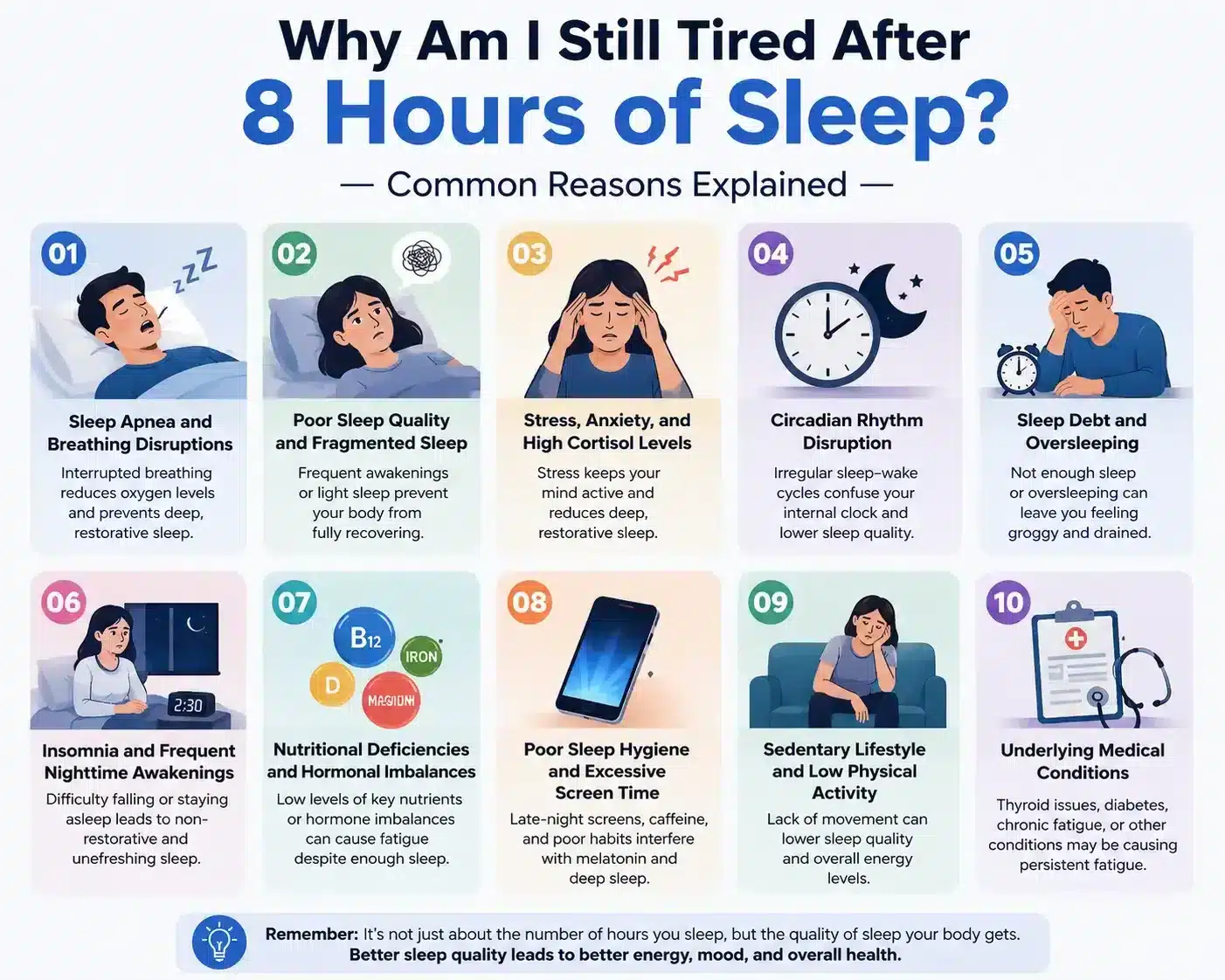
Feeling tired after a full night’s sleep is often linked to poor sleep quality rather than sleep duration alone. Even if you spend enough hours in bed, hidden sleep disruptions, stress, breathing problems, hormonal imbalances, or unhealthy sleep habits can prevent your body from getting restorative sleep.
People searching for answers to “Why am I still tired after 8 hours of sleep?” are often dealing with hidden sleep disruptions that affect sleep quality rather than sleep duration alone.
According to the American Academy of Sleep Medicine, millions of adults experience sleep-related problems such as insomnia and obstructive sleep apnea, both of which can contribute to non-restorative sleep, excessive daytime fatigue, and waking up unrefreshed despite getting enough hours of sleep. If persistent morning exhaustion continues to affect your daily functioning, it may be worth discussing your symptoms with a healthcare professional to identify any underlying sleep disorders or health conditions.
Below are some of the most common causes of waking up tired despite sleeping 8 hours.
Sleep Apnea and Breathing Disruptions
Sleep apnea is one of the most common causes of waking up exhausted after a full night’s sleep. This sleep disorder repeatedly interrupts breathing during sleep, causing brief micro-awakenings that reduce sleep quality and prevent restorative deep sleep.
Many people with obstructive sleep apnea (OSA) do not realize their sleep is constantly disrupted because these awakenings are often too short to remember. However, the body still experiences fragmented sleep, reduced oxygen levels, and excessive daytime fatigue.
Common symptoms of sleep apnea may include:
- loud snoring
- choking or gasping during sleep
- morning headaches
- brain fog
- dry mouth
- daytime sleepiness
- poor concentration
Sleep apnea can significantly affect energy levels, productivity, mood, and long-term health if left untreated.
Research published in the highly reputable medical science database PubMed has also highlighted that snoring and daytime drowsiness stand out as prevalent indicators among individuals with sleep apnea. Additionally, obstructive sleep apnea (OSA) has been linked to diminished focus, decreased productivity, and an increased risk of workplace or road accidents.
Poor Sleep Quality and Fragmented Sleep
You can sleep for eight hours and still feel tired if your sleep quality is poor. Frequent awakenings during the night, even brief ones, can interrupt your natural sleep cycles and reduce the amount of deep sleep and REM sleep your body receives.
This is known as fragmented sleep and is one of the biggest reasons people experience non-restorative sleep and morning grogginess.
Poor sleep quality may be caused by:
- noise and light exposure
- stress and hypervigilance
- uncomfortable sleeping environments
- nighttime bathroom trips
- inconsistent sleep schedules
- excessive screen time before bed
When restorative sleep becomes disrupted night after night, it can lead to chronic fatigue, low energy, and waking up unrefreshed.
Stress, Anxiety, and High Cortisol Levels
Chronic stress and anxiety can quietly interfere with sleep quality, even when you spend enough hours in bed. Elevated cortisol levels, especially at night, may keep the brain in a hyper-alert state, making sleep lighter and less restorative.
Stress-related sleep disruption can increase:
- nighttime awakenings
- racing thoughts
- morning fatigue
- mental exhaustion
- daytime brain fog
Many people experiencing burnout, emotional stress, or anxiety report waking up tired no matter how long they sleep.
Circadian Rhythm Disruption and Irregular Sleep Schedules
Your body follows a natural internal clock called the circadian rhythm, which regulates sleep and wake cycles. Irregular sleep schedules, shift work, inconsistent bedtimes, or sleeping in on weekends can disrupt this rhythm and negatively affect sleep quality.
When your circadian rhythm becomes misaligned, you may:
- struggle to feel refreshed in the morning
- experience excessive daytime sleepiness
- feel mentally sluggish
- wake up groggy despite sleeping enough hours
Consistent sleep and wake times are important for maintaining restorative sleep and stable energy levels.
Sleep Debt and Oversleeping
Even if you sleep for eight hours one night, accumulated sleep debt from previous nights of poor sleep may still leave you feeling exhausted. Sleep debt occurs when the body consistently receives less sleep than it needs over time.
In some cases, oversleeping can also increase feelings of fatigue and sleep inertia, leaving you feeling sluggish or mentally foggy after waking up.
This is especially common after:
- chronic sleep deprivation
- stressful periods
- illness recovery
- irregular sleep schedules
Insomnia and Frequent Nighttime Awakenings
Insomnia does not always mean staying awake all night. Some people with insomnia fall asleep normally, but experience repeated awakenings or lighter sleep that prevents full physical and mental recovery.
Frequent nighttime awakenings reduce sleep efficiency and may contribute to:
- non-restorative sleep
- poor concentration
- irritability
- low daytime energy
- waking up feeling unrested
Over time, chronic insomnia may significantly affect both physical and mental health.
7-Nutritional Deficiencies and Hormonal Imbalances
Certain nutritional deficiencies and hormonal changes can affect sleep quality, energy production, and daytime alertness. Low levels of magnesium, iron, vitamin B12, or vitamin D may contribute to fatigue, muscle weakness, poor concentration, and waking up tired despite getting enough sleep.
Hormonal imbalances involving the thyroid, cortisol, or blood sugar regulation may also interfere with restorative sleep and increase daytime exhaustion.
If persistent fatigue continues even after improving sleep habits, bloodwork and medical evaluation may help identify underlying deficiencies or hormonal issues.
Poor Sleep Hygiene and Excessive Screen Time
Poor sleep hygiene is one of the most overlooked causes of waking up tired after a full night’s sleep. Habits like inconsistent bedtimes, excessive caffeine intake, late-night eating, alcohol consumption, or prolonged screen exposure before bed can interfere with the body’s natural sleep-wake cycle.
Blue light exposure from phones, tablets, and computers may suppress melatonin production and make sleep lighter, less restorative, and more fragmented.
Common sleep habits that may reduce sleep quality include:
- scrolling on devices before bed
- drinking caffeine late in the day
- irregular sleep schedules
- sleeping in a noisy or bright room
- eating heavy meals close to bedtime
Over time, these habits may contribute to non-restorative sleep, morning grogginess, and daytime fatigue.
Sedentary Lifestyle and Low Physical Activity
Physical inactivity can negatively affect both sleep quality and daytime energy levels. Spending long hours sitting, working at a desk, or remaining inactive throughout the day may reduce circulation, disrupt circadian rhythm balance, and increase feelings of sluggishness.
Regular physical activity helps support:
- deeper sleep
- stress reduction
- hormone regulation
- energy production
- better sleep efficiency
Even moderate exercise, walking, or mobility-focused movement during the day may help improve restorative sleep and reduce daytime tiredness.
Symptoms That May Indicate an Underlying Sleep Disorder
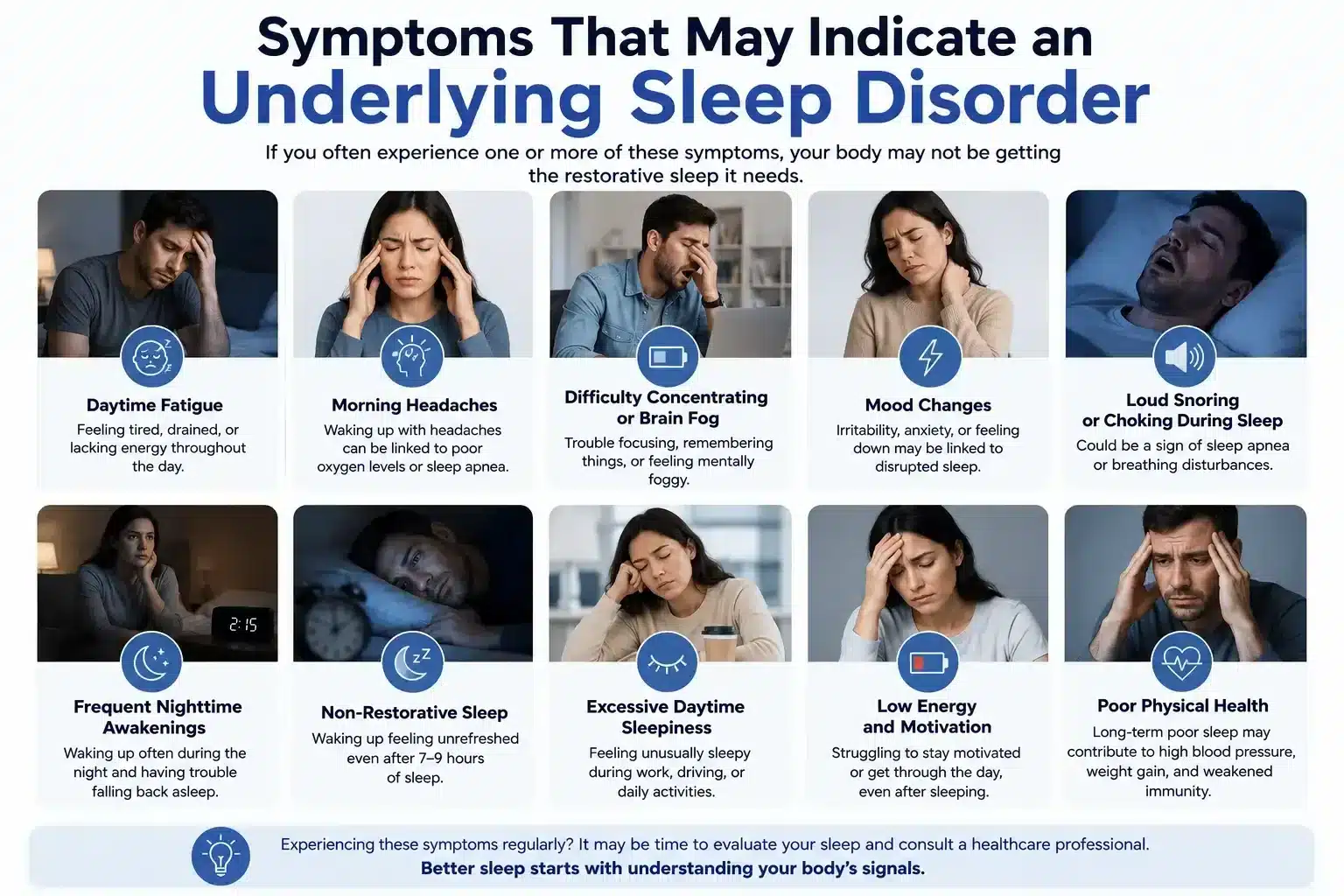
Occasionally waking up tired after a poor night’s sleep is normal. However, persistent morning fatigue combined with certain symptoms may indicate an underlying sleep disorder or health condition affecting sleep quality.
You should pay closer attention if you regularly experience:
- loud snoring
- choking or gasping during sleep
- morning headaches
- excessive daytime sleepiness
- brain fog
- difficulty concentrating
- waking up with dry mouth
- irritability or mood changes
- memory problems
- frequent nighttime awakenings
- low energy despite sleeping enough hours
These symptoms are commonly associated with conditions such as sleep apnea, insomnia, restless legs syndrome, circadian rhythm disorders, chronic stress, or hormonal imbalances.
If fatigue continues for weeks despite improving your sleep habits, a medical evaluation or sleep study may help identify the root cause.
How To Stop Waking Up Tired After 8 Hours of Sleep
Improving sleep quality often requires addressing both lifestyle habits and potential underlying health issues. Small but consistent changes to your sleep routine, stress levels, and daily habits can significantly improve restorative sleep and daytime energy.
Here are some practical ways to stop waking up tired and improve sleep quality naturally.
Maintain a Consistent Sleep Schedule
Going to bed and waking up at the same time every day helps regulate your circadian rhythm and improves sleep efficiency. Irregular sleep schedules, weekend sleep-ins, and inconsistent bedtimes can disrupt your body’s internal clock and contribute to morning grogginess.
Aim for a stable sleep schedule, even on weekends, to help your body develop healthier sleep patterns.
Reduce Stress and Calm Your Nervous System Before Bed
Chronic stress and elevated cortisol levels can make sleep lighter and less restorative. Creating a relaxing nighttime routine may help your body transition into deeper sleep more easily.
Helpful habits may include:
- deep breathing exercises
- meditation or mindfulness
- limiting work before bedtime
- reading instead of scrolling on devices
- reducing mental stimulation at night
Lowering stress levels may improve both sleep quality and daytime energy.
Limit Screen Time and Late-Night Stimulation
Blue light exposure from phones, tablets, and computers may interfere with melatonin production and delay deeper sleep stages. Excessive screen time before bed can also overstimulate the brain and increase nighttime alertness.
Try reducing screen exposure at least 30–60 minutes before bedtime to support more restorative sleep.
Improve Your Sleep Environment
A cool, dark, and quiet bedroom can significantly improve sleep quality. Even small environmental disruptions may increase nighttime awakenings and fragmented sleep.
To create a better sleep environment:
- keep the room cool and comfortable
- minimize noise and bright light
- use blackout curtains if needed
- choose supportive pillows and a comfortable mattress
- avoid sleeping with the television on
Exercise Regularly During the Day
Regular physical activity may help improve sleep quality, reduce stress, and support deeper sleep cycles. Even moderate exercise, such as walking, mobility exercises, yoga, or light cardio, may help reduce daytime fatigue and improve morning alertness.
However, intense exercise very close to bedtime may overstimulate some individuals and interfere with sleep.
Evaluate Possible Underlying Health Conditions
If you consistently wake up tired despite improving your sleep habits, underlying conditions such as sleep apnea, insomnia, thyroid disorders, nutritional deficiencies, or hormonal imbalances may be contributing to your fatigue.
Persistent symptoms may require:
- bloodwork
- sleep evaluation
- stress assessment
- medical consultation
- sleep study testing
Identifying the root cause is often the key to improving long-term sleep quality and energy levels.
When To See a Doctor
Occasional tiredness after sleep is common, especially during stressful periods or after poor sleep habits. However, persistent fatigue despite getting enough sleep may indicate an underlying sleep disorder or medical condition that requires professional evaluation.
Consider speaking with a healthcare professional if you:
- wake up tired every day for several weeks
- experience loud snoring or breathing interruptions during sleep
- struggle with excessive daytime sleepiness
- frequently wake up with headaches or dry mouth
- notice worsening brain fog or memory problems
- experience sudden fatigue, dizziness, or unexplained weakness
- have symptoms affecting work, mood, or daily functioning
A doctor may recommend bloodwork, sleep studies, hormone testing, or further evaluation to identify conditions such as sleep apnea, insomnia, thyroid disorders, anemia, or other health concerns contributing to non-restorative sleep.
Early diagnosis and proper treatment can significantly improve both sleep quality and overall health.
Frequently Asked Questions
Why am I still tired after sleeping for 8 hours?
Feeling tired after sleeping for eight hours is often linked to poor sleep quality rather than sleep duration alone. Conditions such as sleep apnea, fragmented sleep, stress, insomnia, irregular sleep schedules, or non-restorative sleep can prevent the body from reaching deep restorative sleep stages.
What is non-restorative sleep?
Non-restorative sleep refers to sleep that does not leave you feeling refreshed or energized, even after getting enough hours of rest. People with non-restorative sleep often wake up groggy, mentally exhausted, or experience excessive daytime fatigue.
Can sleep apnea cause morning fatigue?
Yes. Sleep apnea repeatedly interrupts breathing during sleep, causing micro-awakenings that reduce sleep quality and disrupt restorative sleep cycles. Many people with sleep apnea experience daytime sleepiness, brain fog, headaches, and waking up exhausted.
Can sleep apnea be dangerous if left untreated?
Yes. Untreated sleep apnea can increase the risk of serious health problems over time, including high blood pressure, heart disease, stroke, daytime fatigue, poor concentration, and accidents caused by excessive sleepiness. Severe obstructive sleep apnea may also reduce oxygen levels during sleep and place long-term strain on the cardiovascular system.
If you experience symptoms such as loud snoring, choking during sleep, waking up exhausted, or excessive daytime sleepiness, it is important to seek medical evaluation and appropriate treatment.
Why do I wake up tired every day?
Persistent morning fatigue may be caused by poor sleep quality, chronic stress, insomnia, sleep apnea, circadian rhythm disruption, nutritional deficiencies, hormonal imbalances, or unhealthy sleep habits.
Can stress and anxiety make you feel tired after sleeping?
Yes. Chronic stress and anxiety can increase cortisol levels and keep the nervous system in a hyper-alert state, leading to lighter, fragmented sleep and reduced restorative sleep quality.
Is oversleeping bad for energy levels?
In some cases, yes. Oversleeping may increase sleep inertia and morning grogginess, especially when combined with irregular sleep schedules, poor sleep quality, or accumulated sleep debt.
What are the signs of poor sleep quality?
Common signs of poor sleep quality include:
waking up exhausted
excessive daytime sleepiness
brain fog
difficulty concentrating
irritability
morning headaches
low daytime energy
frequent nighttime awakenings
How can I improve restorative sleep naturally?
Improving restorative sleep may involve maintaining a consistent sleep schedule, reducing stress, limiting screen exposure before bed, exercising regularly, improving sleep hygiene, and addressing underlying medical or sleep-related conditions.
Conclusion
Waking up tired after 8 hours of sleep is often a sign that sleep quality, not just sleep duration, needs attention. Problems such as non-restorative sleep, stress, sleep apnea, fragmented sleep, poor sleep hygiene, hormonal imbalances, or irregular sleep schedules can quietly prevent the body from getting truly restorative rest.
The good news is that improving sleep quality is often possible through consistent sleep habits, stress management, healthier nighttime routines, regular physical activity, and identifying underlying medical conditions when necessary.
If persistent fatigue, daytime sleepiness, brain fog, or morning exhaustion continue despite lifestyle improvements, seeking professional medical guidance may help uncover the root cause and improve long-term sleep health.
Prioritizing restorative sleep is not just about feeling less tired — it plays a major role in mental clarity, energy levels, mood, productivity, and overall well-being.
Take Action Today!
Start by making small changes to your daily routine and sleep environment. Remember, consistency is key! The more you prioritize good sleep hygiene, the more your body will naturally adjust to a healthy sleep pattern.
So ditch the daytime drag and embrace the power of quality sleep. A good night’s rest is just a few adjustments away – and a healthier, more energized you awaits!