

Have you ever wondered why some men build muscle effortlessly while others struggle to gain weight despite eating more? Or why some people lose body fat quickly while others have to work much harder to achieve the same results? Although training, nutrition, and lifestyle all play important roles, your natural body type can influence how your body responds to them.
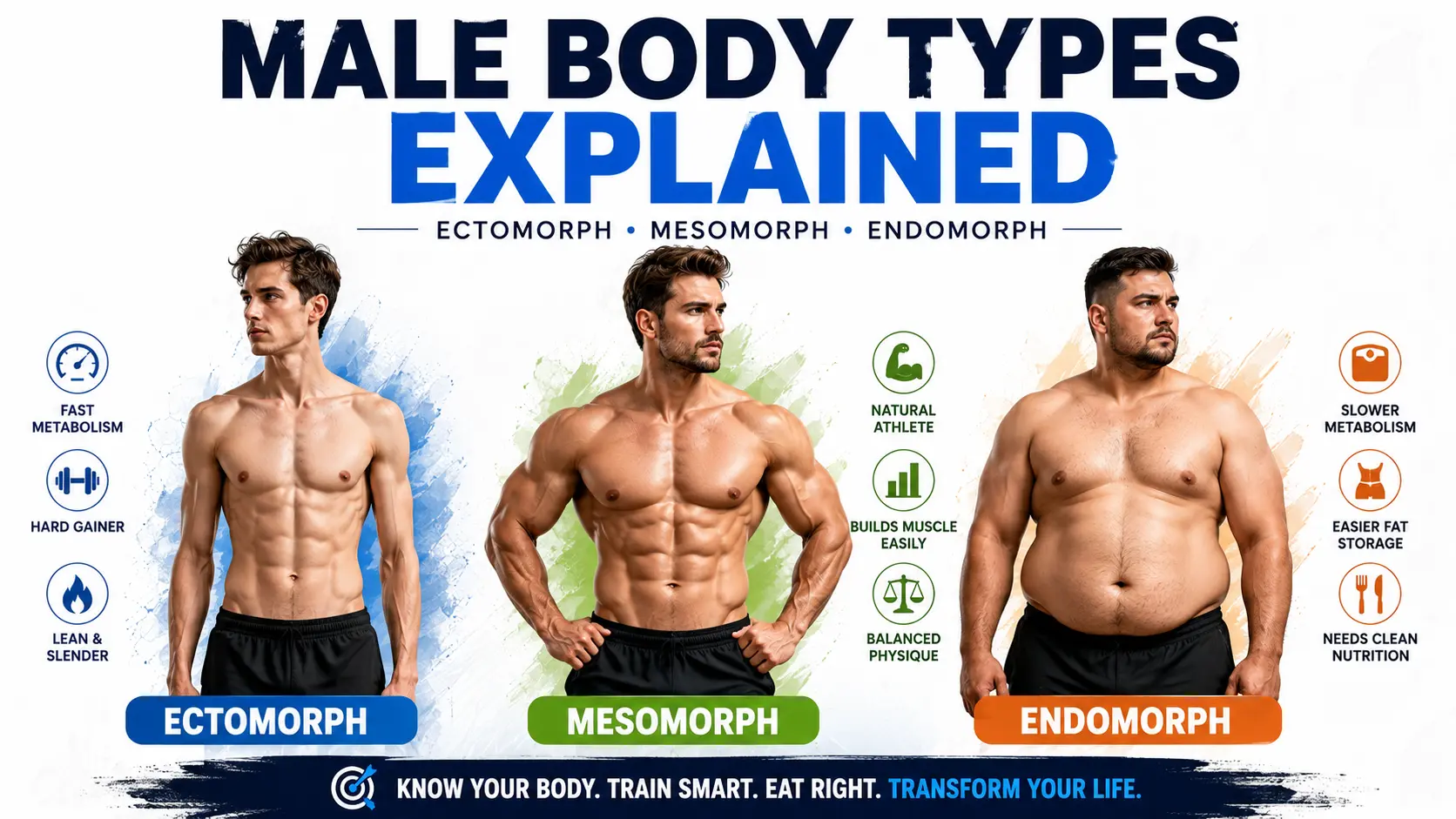
Male body types, also known as somatotypes, describe general patterns of body composition, metabolism, and muscle-building tendencies. The three primary somatotypes, including ectomorph, mesomorph, and endomorph, provide a useful framework for understanding your body’s natural strengths and challenges. However, most men are not a perfect example of just one type and often display characteristics of two or more.
In this comprehensive guide, you’ll learn how to identify your body type, understand the differences between body types and body shapes, discover the best diet and workout strategies for each, and find practical tips to help you make smarter fitness decisions based on your individual physique.
What Are Male Body Types?
The Somatotype Theory Explained
Male body types are commonly described using the somatotype theory, a classification system introduced by psychologist Dr. William H. Sheldon in the 1940s. The theory groups people into three primary body types based on their natural physique, body composition, and tendency to gain muscle or body fat:
- Ectomorph – Lean, slim, and naturally light-framed.
- Mesomorph – Athletic, muscular, and well-proportioned.
- Endomorph – Broader, stockier, and more likely to store body fat.
Although modern sports science no longer considers somatotypes a precise scientific classification, they remain a practical framework used by many fitness professionals to help individuals understand their natural tendencies and develop more personalized nutrition and training strategies.
Why Understanding Your Body Type Matters
Knowing your body type can help you make more informed decisions about your fitness journey. Instead of following the same workout or diet plan as everyone else, understanding your natural build helps you set realistic expectations and choose strategies that better suit your body’s characteristics.
Recognizing your dominant body type may help you:
- Select a workout program suited to your physique.
- Plan calorie and macronutrient intake more effectively.
- Understand why you gain muscle or body fat at different rates.
- Set realistic fitness goals based on your body’s natural tendencies.
- Avoid comparing your progress with people who have very different body compositions.
While genetics influence your starting point, your lifestyle, nutrition, consistency, sleep, and training habits ultimately play a much larger role in determining your long-term results.
Body Type vs Body Shape: What’s the Difference?
Many people mistakenly use body type and body shape interchangeably, but they describe two different concepts.
Body type (somatotype) refers to how your body naturally stores fat, builds muscle, and responds to training. It focuses on metabolism, body composition, and overall physique tendencies.
Body shape, on the other hand, describes your body’s proportions, such as shoulder width, waist size, and hip measurements. Common male body shapes include rectangle, triangle, inverted triangle, oval, and trapezoid.
For example, two men may both be mesomorphs because they build muscle easily, yet one may have a trapezoid body shape while the other has a rectangle shape. Understanding both concepts gives a more complete picture of your physique and helps you choose the right training, nutrition, and even clothing styles.
Male Body Types Chart
| Feature | Ectomorph | Mesomorph | Endomorph |
|---|---|---|---|
| Body Frame | Slim, narrow | Athletic, medium | Broad, stocky |
| Bone Structure | Small | Medium | Large |
| Shoulder Width | Narrow | Broad | Broad |
| Metabolism | Fast | Moderate | Slow |
| Muscle Gain | Difficult | Easy | Moderate |
| Fat Gain | Low | Moderate | High |
| Strength Potential | Moderate | High | High |
| Best Training | Heavy strength training with longer recovery | Balanced strength and hypertrophy | Strength training + cardio |
| Nutrition Focus | Calorie surplus with high protein | Balanced macronutrients | Calorie control with high protein and fiber |
| Common Fitness Goal | Build muscle | Maintain muscle and definition | Reduce body fat while preserving muscle |
How to Use This Male Body Types Chart
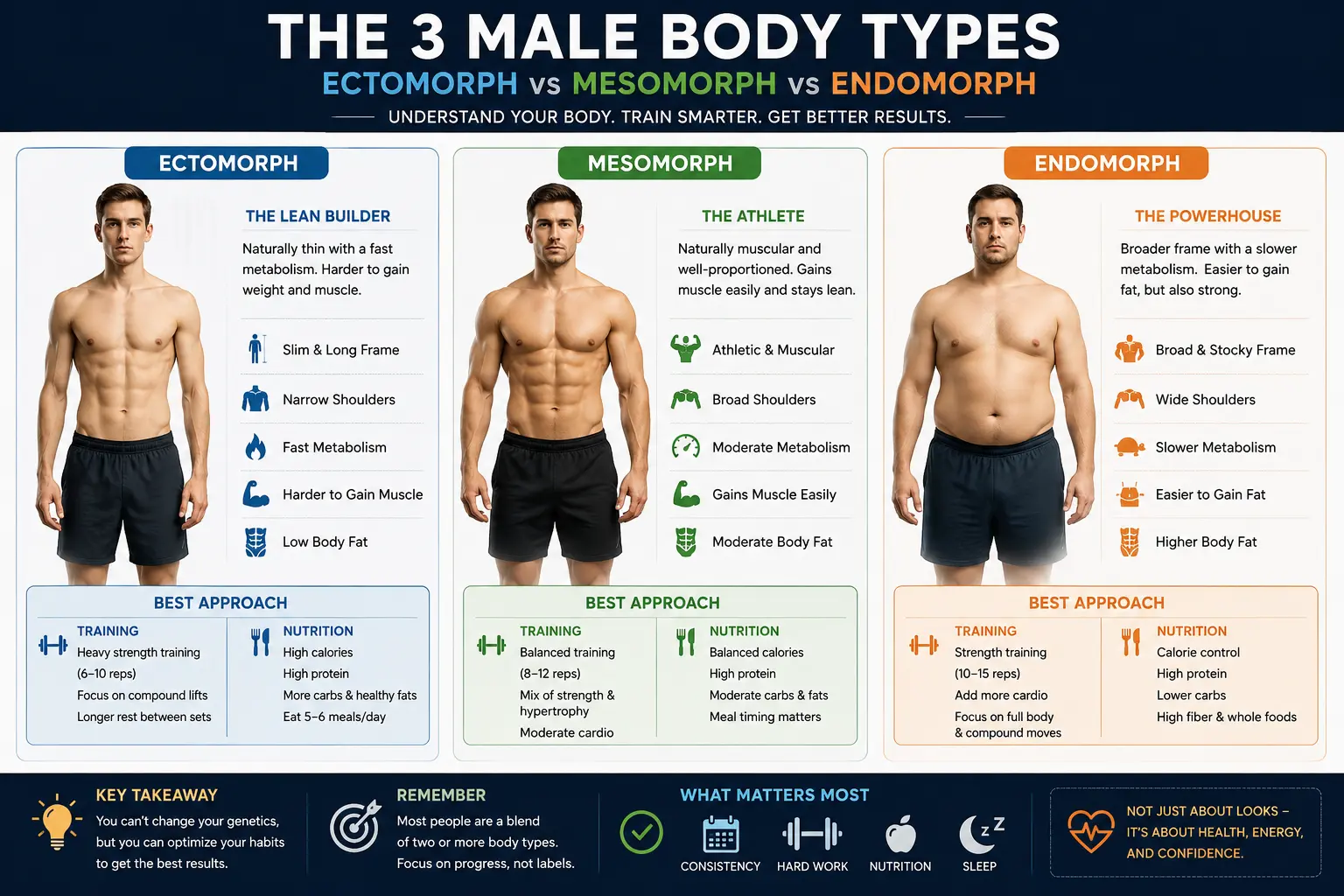
The comparison chart above provides a quick overview of the three primary male body types and their typical characteristics. While it can help you identify the body type you most closely resemble, remember that very few men fit perfectly into a single category. Most people display a combination of traits, such as an ecto-mesomorph or meso-endomorph, influenced by genetics, lifestyle, training experience, and nutrition.
Rather than using these labels to limit yourself, think of them as a practical starting point. Understanding your body’s natural tendencies can help you choose more effective training methods, adjust your nutrition, and set realistic fitness goals. The following sections explore each body type in greater detail, including its characteristics, strengths, challenges, and the most suitable diet and workout strategies.
Understanding the Three Main Male Body Types
Although every person has a unique physique, most men share characteristics that align more closely with one of the three primary somatotypes: ectomorph, mesomorph, or endomorph. These body types differ in body composition, metabolism, muscle-building potential, and fat storage tendencies.
It’s important to remember that body types are not fixed labels or indicators of athletic ability. They simply describe your body’s natural tendencies. With consistent training, balanced nutrition, quality sleep, and healthy lifestyle habits, men of every body type can build muscle, lose fat, and improve their overall fitness.
Let’s take a closer look at each body type and the strategies that work best for them.
Ectomorph Body Type
Physical Characteristics
An ectomorph is typically characterized by a naturally lean physique, a light bone structure, and a fast metabolism. Men with this body type often find it difficult to gain weight or build muscle mass, even when they consume more calories than average. Their bodies burn energy efficiently, making them naturally slim but sometimes limiting muscle growth.
Common physical characteristics of an ectomorph include:
- Lean and slender body frame
- Narrow shoulders and hips
- Long arms and legs
- Smaller joints and bone structure
- Low body fat percentage
- Fast metabolism
- Difficulty gaining weight or muscle mass
Although ectomorphs are often referred to as “hard gainers,” they can build an impressive physique through consistent resistance training, adequate calorie intake, and sufficient recovery.
Advantages of an Ectomorph Body Type
Although ectomorphs may struggle to build muscle, they also benefit from several natural advantages that can support long-term health and fitness goals.
Some of the most common advantages include:
- Naturally lean physique: Ectomorphs typically maintain a low body fat percentage with less effort than many other body types.
- Faster metabolism: Their bodies generally burn calories more efficiently, making unwanted weight gain less common.
- Good endurance potential: A lighter body weight may improve performance in activities such as running, cycling, and other endurance-based sports.
- Defined muscle appearance: Even modest muscle development can appear more noticeable because of lower body fat levels.
- Greater dietary flexibility: Many ectomorphs can consume slightly more calories while maintaining a relatively lean physique, although overall nutrition quality remains important.
These strengths can provide an excellent foundation for fitness. However, ectomorphs often need a more structured training and nutrition plan to maximize muscle growth and strength.
Challenges of an Ectomorph Body Type
While ectomorphs enjoy several natural advantages, they also face unique challenges that can make certain fitness goals more difficult to achieve. Building muscle mass and increasing body weight often require greater consistency in training, nutrition, and recovery than many people expect.
Common challenges faced by ectomorphs include:
- Difficulty gaining muscle: A naturally fast metabolism means calories are burned quickly, making it harder to create the energy surplus needed for muscle growth.
- Slow weight gain: Even with increased food intake, gaining healthy body weight may take time and patience.
- Lower strength in the beginning: Less muscle mass often means new trainees start with lower strength levels, although this improves steadily with progressive training.
- Higher calorie requirements: Maintaining a calorie surplus consistently can be challenging for naturally lean individuals.
- Greater risk of overtraining: Excessive cardio or insufficient recovery may make muscle gain even more difficult.
Despite these challenges, ectomorphs can achieve significant improvements in muscle size, strength, and overall fitness by following a structured resistance-training program, eating enough nutrient-dense calories, and allowing adequate time for recovery.
Best Diet for Ectomorphs
A well-planned nutrition strategy is just as important as strength training for ectomorphs. Because they naturally burn calories quickly, eating enough high-quality food is essential for supporting muscle growth, recovery, and long-term performance.
Here are the key nutrition principles for ectomorphs:
- Eat in a moderate calorie surplus: Consuming slightly more calories than your body burns provides the energy needed to build muscle and gain healthy weight gradually.
- Prioritize high-quality protein: Include lean meats, poultry, fish, eggs, dairy products, legumes, and other protein-rich foods to support muscle repair and growth. Aim to include a protein source with every meal.
- Choose complex carbohydrates: Whole grains, oats, brown rice, sweet potatoes, fruits, and vegetables provide a steady source of energy for workouts and recovery.
- Include healthy fats: Foods such as avocados, nuts, seeds, olive oil, and fatty fish increase calorie intake while supporting hormone production and overall health.
- Eat consistently throughout the day: Three balanced meals combined with one to three nutritious snacks can make it easier to meet your daily calorie and protein goals.
- Stay hydrated: Proper hydration supports muscle function, exercise performance, and recovery, even when your primary goal is gaining muscle.
Rather than relying on highly processed or sugary foods to increase calories, focus on nutrient-dense whole foods that provide the protein, vitamins, minerals, and healthy fats your body needs to build lean muscle effectively.
Best Workout for Ectomorphs
Because ectomorphs have a naturally fast metabolism and often struggle to gain muscle, their training should focus on building strength and stimulating muscle growth rather than burning large amounts of calories. A structured resistance-training program combined with adequate recovery generally produces the best results.
To maximize muscle growth, ectomorphs should:
- Prioritize compound exercises: Focus on movements such as squats, deadlifts, bench presses, overhead presses, pull-ups, and rows that train multiple muscle groups simultaneously.
- Train with progressive overload: Gradually increase the weight, repetitions, or training volume over time to continually challenge your muscles.
- Limit excessive cardio: While cardiovascular exercise supports heart health, performing long-duration cardio every day may make it more difficult to maintain the calorie surplus needed for muscle growth. Two to three moderate cardio sessions per week are usually sufficient for overall fitness.
- Allow adequate recovery: Muscles grow during recovery, not while lifting weights. Aim to train each muscle group at least twice per week while allowing enough rest between intense sessions.
- Maintain consistency: Building muscle is a gradual process. Following a well-designed workout plan consistently for several months is far more effective than frequently changing exercises or training styles.
A balanced program that combines compound lifts, controlled progression, sufficient nutrition, and quality sleep offers ectomorphs the best opportunity to increase lean muscle mass and overall strength.
Quick Tips for Ectomorphs
If you’re an ectomorph, focus on consistency rather than quick results. Small improvements in your daily habits can make a significant difference over time.
Train with heavy compound exercises such as squats, deadlifts, bench presses, and rows.
Eat enough calories every day to maintain a moderate calorie surplus that supports muscle growth.
Include protein in every meal to maximize muscle repair and recovery.
Prioritize sleep and recovery by aiming for 7–9 hours of quality sleep each night.
Track your progress by monitoring body weight, strength gains, and body measurements instead of relying only on the scale.
Stay patient and consistent. Muscle growth is gradual, and long-term commitment always produces better results than chasing quick fixes.
Mesomorph Body Type
Physical Characteristics
A mesomorph is naturally athletic and muscular, making this body type well-suited for strength training and many sports. Men with a mesomorphic physique typically gain muscle more easily than ectomorphs while maintaining moderate body fat levels. Their balanced metabolism and well-proportioned frame often allow them to respond quickly to both resistance training and conditioning exercises.
Common physical characteristics of a mesomorph include:
- Broad shoulders with a naturally tapered waist
- Medium to large bone structure
- Naturally athletic appearance
- Well-developed muscles with relatively little training
- Moderate metabolism
- Easier muscle gain than other body types
- Moderate body fat levels
Although mesomorphs often have a genetic advantage for building muscle, long-term results still depend on consistent training, balanced nutrition, and healthy lifestyle habits.
Advantages of a Mesomorph Body Type
Mesomorphs are often considered the most naturally athletic of the three primary body types because they generally respond well to both strength training and cardiovascular exercise.
Some common advantages include:
- Build muscle efficiently with progressive resistance training.
- Lose body fat more easily when following a balanced nutrition plan.
- Naturally athletic physique with broad shoulders and good muscle definition.
- Adapt well to different training styles, including strength, hypertrophy, and functional fitness.
- Balanced metabolism that supports both muscle growth and fat management.
These advantages provide an excellent starting point for fitness, but they should never replace proper programming, nutrition, and recovery.
Challenges of a Mesomorph Body Type
Despite their natural athleticism, mesomorphs still face challenges that can slow progress if training and nutrition are neglected.
Common challenges include:
- Overconfidence in genetics, leading to inconsistent training habits.
- Fat gain during prolonged calorie surpluses, especially with highly processed foods.
- Training plateaus caused by repeating the same workout routine for long periods.
- Reduced mobility if flexibility and recovery are ignored.
- Difficulty maintaining peak physique without regular exercise and healthy eating.
To maximize their natural potential, mesomorphs should combine structured resistance training, balanced nutrition, cardiovascular exercise, and adequate recovery throughout the year.
Best Diet for Mesomorphs
Mesomorphs generally respond well to a balanced eating pattern that supports muscle maintenance, exercise performance, and overall health. Unlike ectomorphs or endomorphs, they often benefit from adjusting calorie intake according to their fitness goals rather than following extreme diets.
Key nutrition recommendations include:
- Consume adequate protein from lean meats, fish, eggs, dairy products, legumes, and other high-quality protein sources.
- Prioritize complex carbohydrates such as oats, brown rice, whole grains, fruits, and vegetables to fuel training sessions.
- Include healthy fats from avocados, nuts, seeds, olive oil, and fatty fish.
- Adjust total calorie intake depending on whether the goal is muscle gain, fat loss, or weight maintenance.
- Stay hydrated and distribute meals evenly throughout the day to support energy levels and recovery.
A balanced, nutrient-dense diet combined with regular exercise usually provides the best long-term results for mesomorphs.
Best Workout for Mesomorphs
Mesomorphs typically respond well to a combination of strength training, hypertrophy, and cardiovascular exercise. Their naturally athletic build allows them to progress steadily, but continued improvement still requires progressive overload and variety.
For optimal results, mesomorphs should:
- Perform strength training 4–5 days per week using compound and isolation exercises.
- Focus on progressive overload by gradually increasing weight, repetitions, or training volume.
- Include moderate cardiovascular exercise two to three times per week to support heart health and body composition.
- Train all major muscle groups evenly to prevent muscular imbalances.
- Schedule regular recovery days to reduce injury risk and improve long-term performance.
Combining structured programming with consistency helps mesomorphs build strength, maintain muscle definition, and support overall fitness.
Quick Tips for Mesomorphs
Quick Tips for Mesomorphs
✔ Follow a structured workout program instead of relying on natural genetics.
✔ Match your calorie intake to your current fitness goal—muscle gain, fat loss, or maintenance.
- Progress your workouts gradually to continue building strength and muscle.
- Include flexibility and mobility exercises to improve movement quality and reduce injury risk.
- Prioritize recovery, hydration, and sleep to maximize training performance.
- Stay consistent year-round rather than relying on short periods of intense training.
Endomorph Body Type
Physical Characteristics
An endomorph typically has a broader frame, larger bone structure, and a greater tendency to store body fat than the other two primary body types. Men with this body type often gain both muscle and body weight more easily, but they may also find it more challenging to lose excess body fat due to a relatively slower metabolism.
Common physical characteristics of an endomorph include:
- Broad shoulders and wider waist
- Medium to large bone structure
- Naturally higher body fat percentage
- Strong lower body and solid build
- Slower metabolism
- Easier weight gain
- Good potential for developing muscle mass
Although endomorphs may face challenges with fat loss, they can develop impressive strength and muscular physiques through consistent training, balanced nutrition, and sustainable lifestyle habits.
Advantages of an Endomorph Body Type
Endomorphs possess several natural strengths that can support both athletic performance and long-term fitness when combined with an appropriate training and nutrition plan.
Some common advantages include:
- Strong muscle-building potential when following a progressive strength-training program.
- Naturally powerful physique, making many endomorphs well suited for strength-based sports.
- Good muscle retention, particularly during periods of calorie reduction.
- High absolute strength potential due to their larger frame and muscle mass.
- Ability to make significant body composition improvements through consistent nutrition and exercise.
With proper planning, endomorphs can successfully reduce body fat while preserving or increasing lean muscle mass.
Challenges of an Endomorph Body Type
One of the biggest challenges for endomorphs is balancing muscle growth with body fat management. Because they often store calories more efficiently, maintaining a healthy body composition usually requires greater attention to nutrition and physical activity.
Common challenges include:
- Higher tendency to gain body fat when calorie intake consistently exceeds energy needs.
- Slower fat loss, requiring patience and consistency during weight-loss phases.
- Reduced insulin sensitivity in some individuals, making food quality especially important.
- Difficulty maintaining a calorie deficit over long periods.
- Greater risk of relying on restrictive diets instead of developing sustainable eating habits.
These challenges should not discourage progress. A realistic nutrition strategy combined with resistance training, cardiovascular exercise, and long-term consistency can produce excellent results.
Best Diet for Endomorphs
Endomorphs generally benefit from a balanced eating plan that emphasizes nutrient-dense foods, adequate protein, and portion awareness rather than extreme dietary restrictions. The goal is to support fat loss while maintaining lean muscle mass and steady energy levels.
Key nutrition recommendations include:
- Prioritize lean protein from poultry, fish, eggs, legumes, low-fat dairy, and lean meats.
- Choose high-fiber carbohydrates such as vegetables, fruits, legumes, oats, and whole grains to improve satiety.
- Include healthy fats from avocados, olive oil, nuts, seeds, and fatty fish.
- Monitor total calorie intake based on your activity level and body composition goals.
- Limit highly processed foods and sugar-sweetened beverages, which can make it easier to exceed daily calorie needs.
- Stay hydrated and maintain consistent meal timing to support healthy eating habits.
Rather than following restrictive fad diets, endomorphs usually achieve better long-term results through sustainable nutrition and regular physical activity.
Best Workout for Endomorphs
A well-rounded training program helps endomorphs increase strength, preserve muscle mass, and improve overall body composition. Combining resistance training with cardiovascular exercise is often the most effective long-term approach.
For the best results, endomorphs should:
- Perform resistance training 3–5 days per week to build and maintain lean muscle.
- Include regular cardiovascular exercise such as brisk walking, cycling, swimming, or interval training to support cardiovascular health and calorie expenditure.
- Prioritize compound exercises including squats, deadlifts, presses, rows, and lunges.
- Increase daily physical activity by staying active outside the gym through walking, taking the stairs, or other lifestyle movement.
- Allow sufficient recovery while maintaining a consistent weekly training schedule.
A combination of strength training, cardio, healthy nutrition, and patience offers the most sustainable path to improving body composition.
Quick Tips for Endomorphs
Quick Tips for Endomorphs
- Focus on long-term habits rather than rapid weight-loss programs.
- Prioritize protein and high-fiber foods to help control hunger and support muscle maintenance.
- Combine strength training with regular cardio for balanced fitness.
- Monitor portion sizes without eliminating entire food groups.
- Stay physically active every day, even outside structured workouts.
- Be patient and consistent, as sustainable body composition changes take time.
Can You Have More Than One Body Type?
One of the most common misconceptions about male body types is that every person fits perfectly into a single category. In reality, most men display characteristics of two or even all three somatotypes. Genetics, age, training experience, nutrition, and body composition all influence how your physique develops over time.
For example, you may naturally have the slim frame of an ectomorph while building muscle like a mesomorph after years of resistance training. Likewise, someone with a mesomorphic build may also gain body fat easily, displaying several endomorphic characteristics.
Rather than viewing body types as fixed labels, think of them as a spectrum that helps explain your body’s natural tendencies. Understanding this allows you to choose training and nutrition strategies that suit your individual needs rather than following a one-size-fits-all approach.
Hybrid Body Types
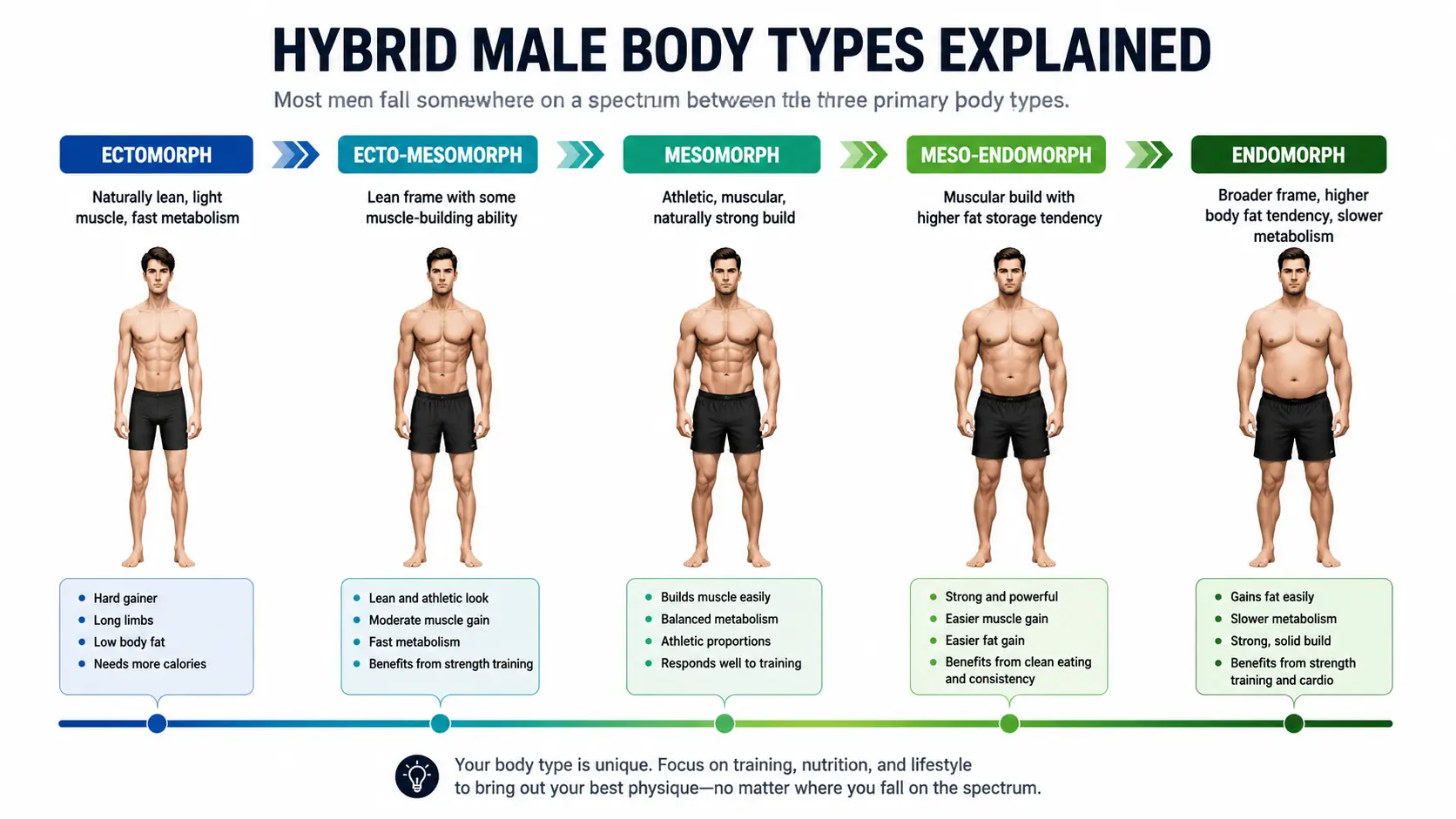
Many people fall somewhere between two primary somatotypes. These combinations are often called hybrid body types because they combine characteristics of more than one category.
Ecto-Mesomorph
An ecto-mesomorph typically has a lean frame with naturally visible muscle definition. They build muscle more easily than a pure ectomorph while maintaining relatively low body fat.
Typical characteristics:
- Lean athletic build
- Moderate muscle gain
- Lower body fat
- Faster metabolism
- Responds well to strength training
Meso-Endomorph
A meso-endomorph combines the muscular frame of a mesomorph with the stronger fat-storing tendency of an endomorph. They often gain muscle quickly but also need to monitor calorie intake to avoid excess body fat.
Typical characteristics:
- Broad shoulders
- Strong muscular frame
- Builds muscle rapidly
- Gains body fat more easily
- Benefits from combining strength training with regular cardio
Ecto-Endomorph
Although less common, some men display a lean upper body while storing more body fat around the waist and hips. This combination often results from genetics, inactivity, aging, or lifestyle factors rather than body type alone.
The focus for ecto-endomorphs should be on progressive strength training, improving body composition, and maintaining balanced nutrition rather than trying to fit perfectly into one category.
Can Your Body Type Change?
Your genetic body type remains relatively stable throughout life, but your physique can change significantly through consistent training, healthy eating, sleep, and other lifestyle habits.
For example:
- An ectomorph can develop a muscular physique through progressive strength training and adequate calorie intake.
- An endomorph can reduce body fat while preserving lean muscle through balanced nutrition and regular exercise.
- A mesomorph can lose muscle definition if they become inactive or consistently consume excess calories.
Instead of trying to change your body type, focus on improving your body composition by building muscle, reducing unnecessary body fat, and maintaining healthy daily habits. This approach produces more meaningful and sustainable fitness results than chasing a particular body type.
The Five Common Male Body Shapes
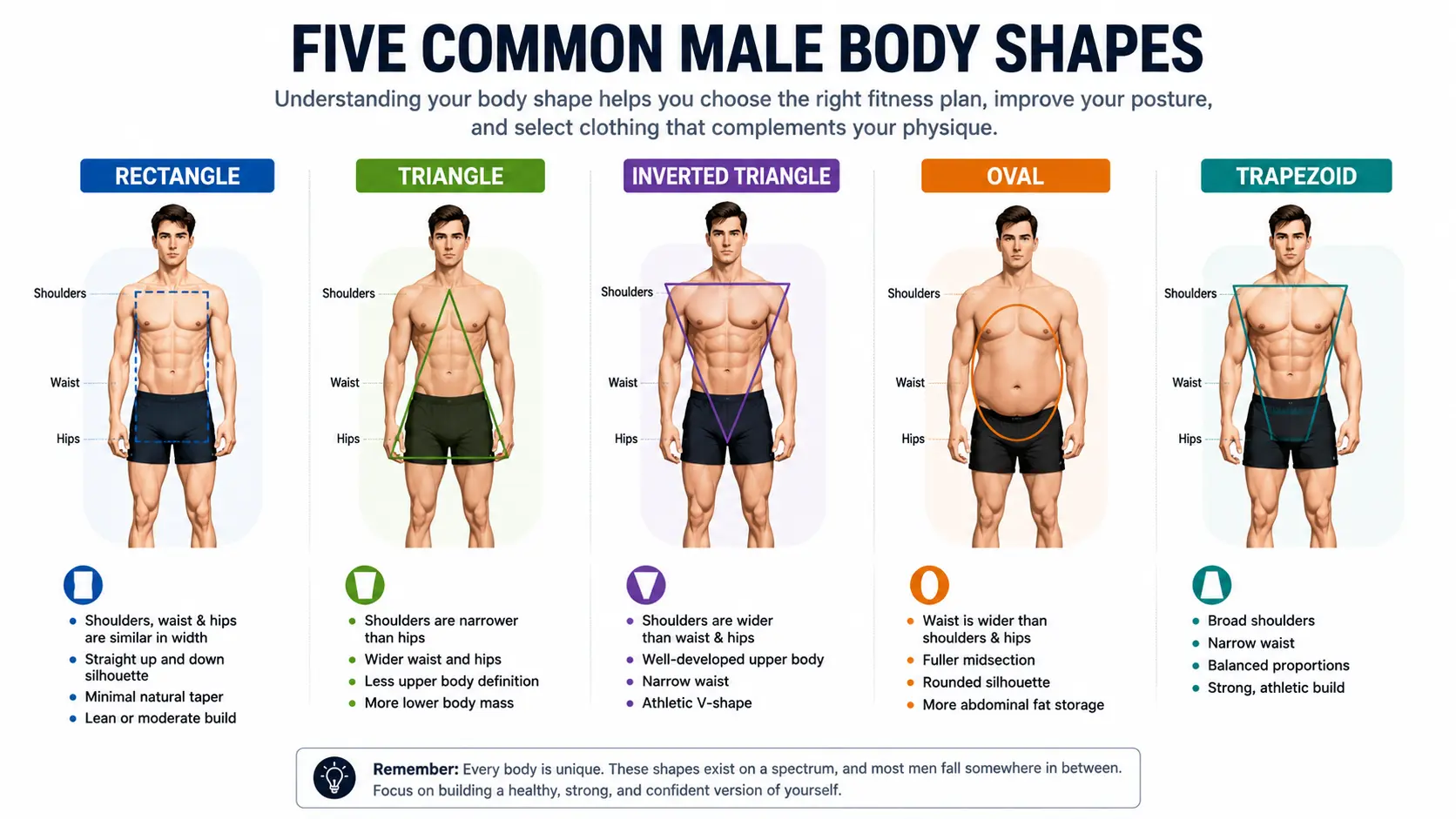
Although body type and body shape are often confused, they describe different aspects of your physique. Your body type (somatotype) explains how your body naturally builds muscle, stores fat, and responds to diet and exercise. Your body shape, however, refers to your physical proportions, including the relationship between your shoulders, chest, waist, and hips.
Understanding your body shape can help you choose more effective workout strategies, improve posture, and even select clothing that complements your physique.
Rectangle Body Shape
The rectangle body shape is characterized by shoulders, waist, and hips that are similar in width, creating a straight silhouette with little natural taper.
Common Characteristics
- Straight torso
- Similar shoulder and waist width
- Lean appearance
- Moderate muscle definition
Fitness Goal
Build broader shoulders, a more defined chest, and stronger back muscles to create a noticeable V-shaped physique.
Triangle Body Shape
Men with a triangle body shape carry more weight around the waist and hips than the upper body.
Common Characteristics
- Narrow shoulders
- Wider waist
- Fuller hips
- Less upper-body definition
Fitness Goal
Increase upper-body muscle while reducing body fat through resistance training, cardiovascular exercise, and balanced nutrition.
Inverted Triangle Body Shape
Often associated with athletic physiques, the inverted triangle features broad shoulders that gradually narrow toward the waist.
Common Characteristics
- Broad shoulders
- Well-developed chest
- Narrow waist
- Athletic appearance
Fitness Goal
Maintain balanced muscle development and flexibility while avoiding excessive upper-body dominance.
Oval Body Shape
The oval body shape stores more body fat around the abdomen, making the waist appear wider than the shoulders.
Common Characteristics
- Fuller midsection
- Rounded torso
- Less waist definition
- Broader abdominal area
Fitness Goal
Improve body composition by combining calorie awareness, regular cardiovascular exercise, and progressive strength training while preserving lean muscle.
Trapezoid Body Shape
The trapezoid is widely considered the most proportionate male body shape, featuring broad shoulders with a naturally narrower waist.
Common Characteristics
- Broad shoulders
- Defined chest
- Narrow waist
- Balanced muscular proportions
Fitness Goal
Maintain muscle balance, mobility, and overall conditioning through a combination of strength training, flexibility work, and proper nutrition.
Why Body Shape and Body Type Are Different
Body shape describes how your body looks, whereas body type describes how your body naturally functions.
For example, two men may both have an inverted triangle body shape, but one may be a mesomorph who gains muscle easily, while the other may be an ectomorph who developed broad shoulders through years of dedicated strength training.
Understanding both concepts provides a more complete picture of your physique and helps you choose realistic fitness goals, effective training strategies, and clothing that complements your natural proportions.
How to Identify Your Body Type
Examine Your Natural Body Frame
Many people can estimate their body type simply by observing their natural physique before years of dedicated training or significant weight changes. While no single characteristic determines your body type, your overall body frame provides useful clues.
Ask yourself the following questions:
- Are your shoulders naturally narrow or broad?
- Do you have a small, medium, or large bone structure?
- Is your waist naturally slim or wider?
- Do you appear lean even without regular exercise?
Generally, ectomorphs have a slimmer frame with narrower shoulders, mesomorphs have an athletic and well-balanced build, while endomorphs tend to have a broader frame with a greater tendency to store body fat.
Consider Your Metabolism
Your metabolism also provides valuable insight into your body type. Although metabolism varies from person to person, many people notice consistent patterns in how their bodies respond to food and exercise.
For example:
- If you struggle to gain weight despite eating plenty of food, you may have more ectomorphic characteristics.
- If you can gain muscle relatively quickly while maintaining moderate body fat, you likely display mesomorphic traits.
- If you gain both muscle and body fat easily, you may lean more toward an endomorphic body type.
Remember that metabolism changes with age, activity level, and lifestyle, so body type should never be determined by one factor alone.
Observe How Your Body Responds to Training
Your response to exercise is another useful indicator of your natural body type.
Consider these questions:
- Do you build muscle quickly after starting resistance training?
- Do you lose body fat easily?
- Do you need to eat significantly more calories to gain weight?
- Does your body respond quickly or slowly to changes in training?
These patterns often provide a clearer picture than appearance alone because they reflect how your body naturally adapts to physical activity.
Evaluate Fat Distribution
Where your body naturally stores fat can also provide useful information.
While genetics, hormones, and lifestyle all influence fat distribution, common patterns include:
- Ectomorphs: generally remain lean with relatively low body fat.
- Mesomorphs: often store fat evenly throughout the body.
- Endomorphs: commonly accumulate more fat around the abdomen, hips, and thighs.
Keep in mind that body fat percentage can change over time, so this should be considered alongside other characteristics.
Quick Self-Assessment Checklist
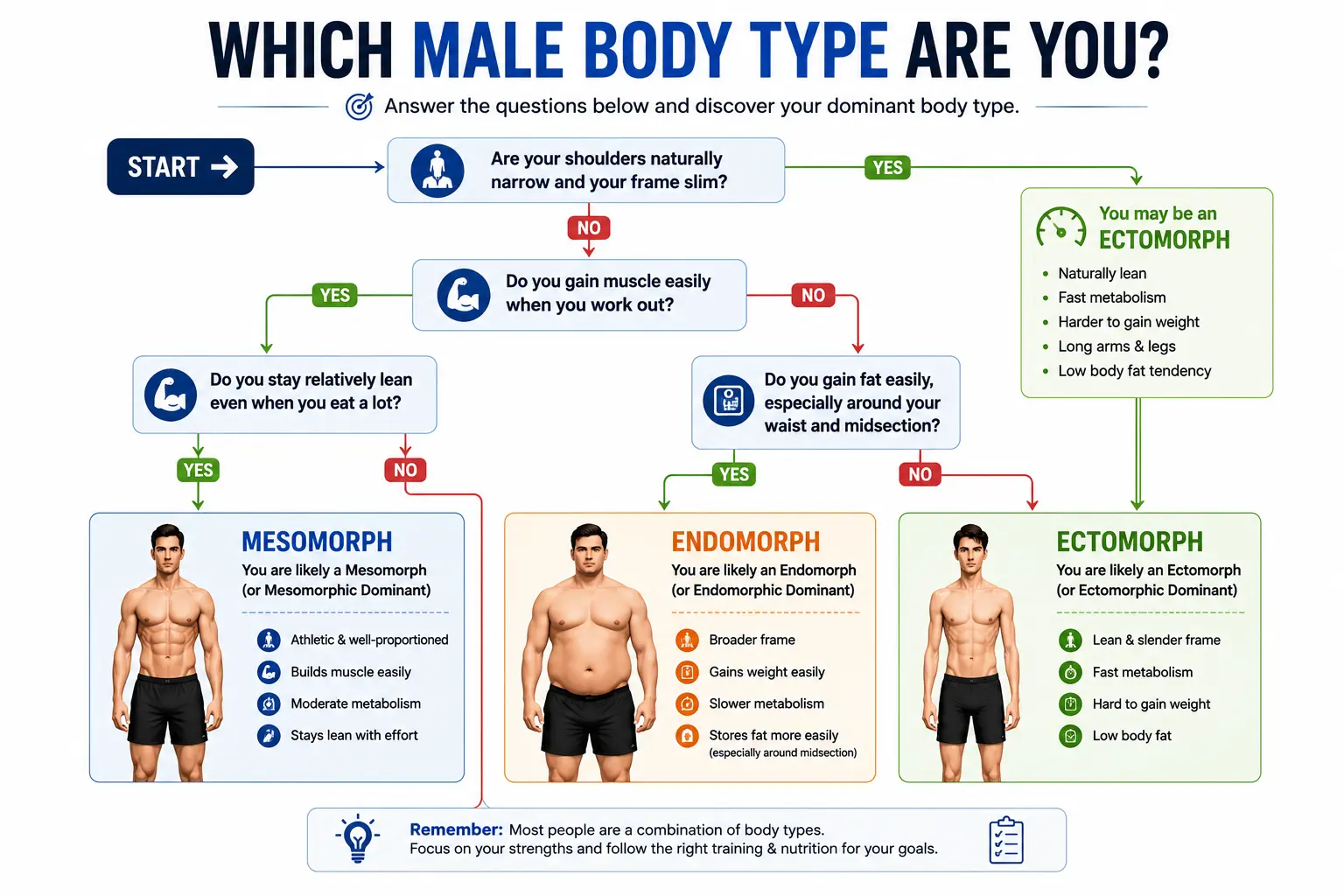
If you identify with most of the statements below, you can estimate your dominant body type.
Mostly Ectomorph
- Naturally slim
- Fast metabolism
- Difficulty gaining weight
- Long arms and legs
- Narrow shoulders
Mostly Mesomorph
- Naturally athletic
- Broad shoulders
- Builds muscle easily
- Moderate metabolism
- Balanced body composition
Mostly Endomorph
- Broad frame
- Gains weight easily
- Stores fat more readily
- Strong muscular build
- Slower metabolism
Remember, many people will recognize traits from more than one category. Rather than fitting perfectly into a single body type, most individuals display a combination of characteristics that fall somewhere along a spectrum.
Best Diet and Workout Plan for Each Male Body Type
Quick Workout Comparison
Choosing the right workout program depends on your natural body type, current fitness level, and personal goals. The table below summarizes the primary training focus for each somatotype.
| Body Type | Primary Goal | Recommended Training | Cardio |
|---|---|---|---|
| Ectomorph | Build muscle and strength | Heavy compound lifts with progressive overload | 2–3 moderate sessions/week |
| Mesomorph | Build or maintain lean muscle | Balanced strength and hypertrophy training | 2–3 sessions/week |
| Endomorph | Reduce body fat while preserving muscle | Strength training combined with regular cardio | 3–5 sessions/week |
Quick Nutrition Comparison
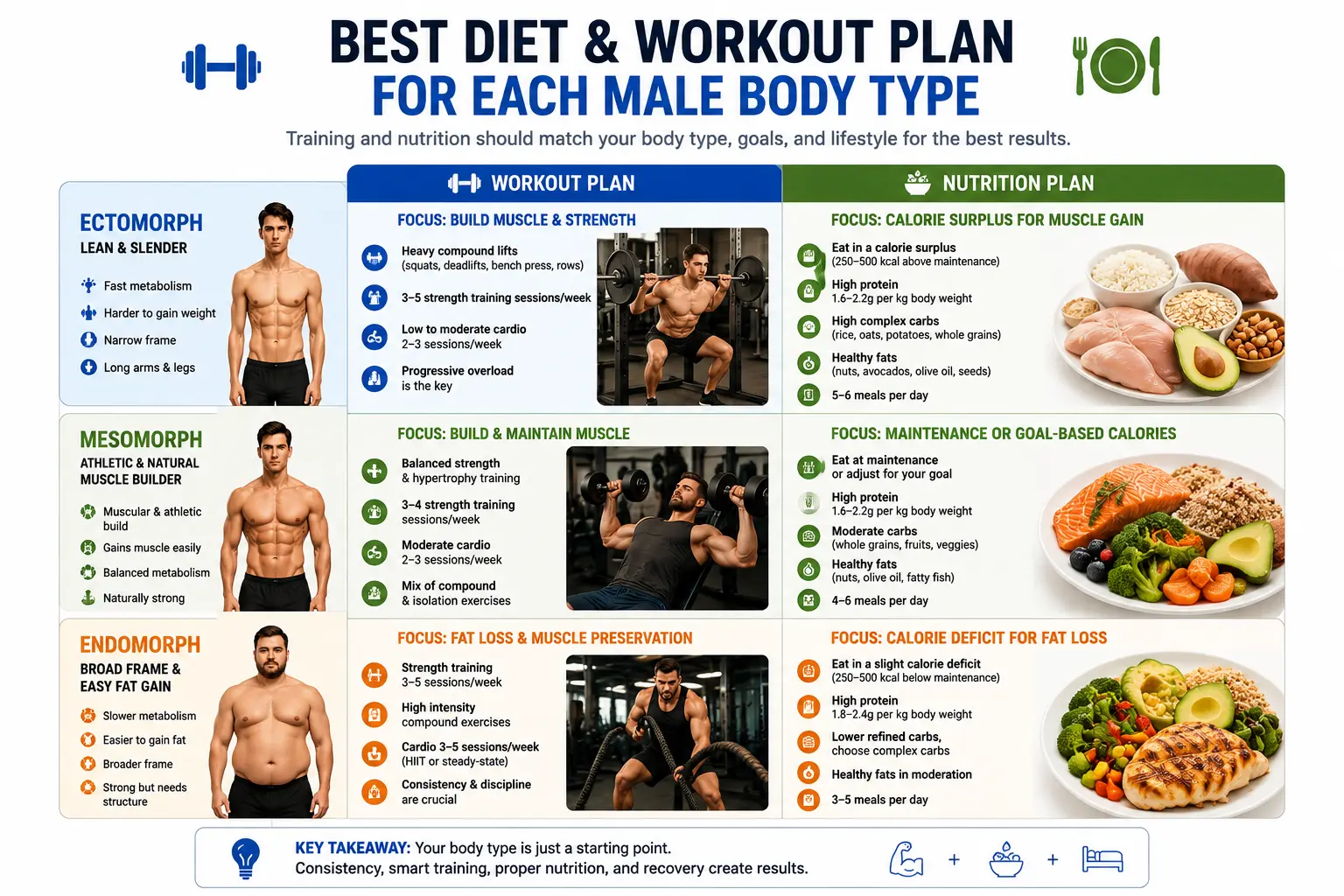
Nutrition should complement your training program rather than follow a one-size-fits-all approach. While everyone’s calorie needs differ, the following guidelines provide a practical starting point.
| Body Type | Calories | Protein | Carbohydrates | Healthy Fats |
|---|---|---|---|---|
| Ectomorph | Moderate surplus | High | High | Moderate |
| Mesomorph | Maintenance or goal-based | High | Moderate | Moderate |
| Endomorph | Slight calorie deficit (if fat loss is the goal) | High | Moderate to lower | Moderate |
Key Takeaways
Regardless of your body type, long-term success depends on building sustainable habits rather than chasing quick results. Keep these principles in mind:
- Train consistently using progressive overload.
- Eat enough high-quality protein to support muscle maintenance and recovery.
- Choose mostly whole, nutrient-dense foods.
- Prioritize quality sleep and adequate recovery.
- Adjust your calorie intake according to your fitness goals.
- Track your progress and make gradual improvements over time.
Remember that body type is only one factor influencing your fitness journey. Genetics provide the starting point, but your daily habits determine your long-term results.
Common Myths About Male Body Types
Myth 1: Your Body Type Determines Your Fitness Success
One of the biggest misconceptions is that your body type determines how successful you’ll be in fitness. While genetics influence factors such as metabolism, muscle-building potential, and fat distribution, they do not determine your final results.
Consistent strength training, balanced nutrition, quality sleep, and long-term adherence have a much greater impact on your physique than body type alone. Men of all body types can build muscle, lose body fat, and improve their overall health with the right approach.
Myth 2: Body Type Can Never Change
Your underlying genetic tendencies remain relatively stable throughout life, but your body composition can change dramatically. Building muscle, reducing body fat, improving posture, and increasing strength can significantly alter your appearance, even though your natural somatotype remains similar.
Rather than trying to change your body type, focus on improving your body composition through sustainable nutrition and regular exercise.
Myth 3: Ectomorphs Can’t Build Muscle and Endomorphs Can’t Lose Fat
This myth discourages many people before they even begin their fitness journey.
Ectomorphs can successfully build muscle by following progressive strength training, consuming adequate calories, and prioritizing recovery. Likewise, endomorphs can lose body fat effectively through a balanced calorie-controlled diet, regular resistance training, cardiovascular exercise, and consistent lifestyle habits.
Your body type may influence the speed of progress, but it does not limit what you can achieve.
Myth 4: Everyone Fits Perfectly Into One Body Type
Very few people display the characteristics of a pure ectomorph, mesomorph, or endomorph. Most individuals have a combination of traits that place them somewhere between two body types.
Understanding your dominant characteristics is more useful than trying to fit yourself into a single category. The goal is to personalize your training and nutrition—not to label yourself.
Can Women Have the Same Body Types?
Although this guide focuses on male body types, the same three somatotypes, ectomorph, mesomorph, and endomorph, also apply to women. The main differences are how hormones influence fat distribution, muscle development, and body composition. Women generally store more body fat than men due to physiological differences, but the basic principles of training, nutrition, and body type identification remain similar.
Frequently Asked Questions (FAQs)
What are the three main male body types?
The three primary male body types are ectomorph, mesomorph, and endomorph. Ectomorphs are naturally lean with a fast metabolism, mesomorphs have an athletic build and gain muscle more easily. In contrast, endomorphs generally have a broader frame and tend to store body fat more readily. Most men display characteristics of more than one body type.
How do I know my body type?
You can estimate your body type by evaluating your natural body frame, metabolism, muscle-building ability, fat distribution, and response to exercise. Since most people have a combination of characteristics, focus on identifying your dominant traits rather than trying to fit perfectly into one category.
Can I change my body type?
Your genetic body type remains relatively stable throughout life, but your body composition can change significantly. Regular strength training, balanced nutrition, adequate sleep, and consistent physical activity can help you build muscle, reduce body fat, and improve your overall physique regardless of your natural body type.
Which male body type builds muscle the fastest?
Mesomorphs generally build muscle more easily because of their naturally athletic physique and balanced metabolism. However, ectomorphs and endomorphs can also develop impressive muscle mass by following an appropriate training program, eating in line with their goals, and staying consistent.
Which body type is best for weight loss?
No body type is inherently better for weight loss. While ectomorphs often stay lean more easily, endomorphs and mesomorphs can successfully lose body fat through a sustainable calorie deficit, regular resistance training, cardiovascular exercise, and healthy lifestyle habits. Long-term consistency matters far more than body type.
Is body type more important than diet and exercise?
No. Your body type influences how your body naturally responds to food and exercise, but your daily habits have a much greater impact on your long-term health and fitness. A well-balanced diet, progressive strength training, sufficient sleep, stress management, and consistency remain the foundation of sustainable results.
Are body types scientifically proven?
The concept of somatotypes provides a useful framework for understanding general body characteristics, but modern research recognizes that human physiques exist on a spectrum rather than fitting into strict categories. Most people display a combination of traits, making body type a practical guide rather than a precise scientific classification.
Conclusion
Understanding your body type is not about placing yourself into a fixed category—it’s about learning how your body naturally responds to training, nutrition, and lifestyle habits. Whether you identify more closely as an ectomorph, mesomorph, endomorph, or a combination of these body types, your long-term success depends far more on consistency than genetics.
Use your body type as a practical guide to choose appropriate workouts, build balanced eating habits, and set realistic fitness goals. Focus on gradual progress, prioritize quality nutrition and recovery, and adjust your approach as your body changes over time.
Remember, there is no “best” male body type. Every physique has its own strengths and challenges, and with the right strategy, any body type can become healthier, stronger, and more confident.