
Sleep Calculator: Use Our Sleep Estimator to Wake Up Refreshed
Example: 07:00 = 7:00 AM, 19:00 = 7:00 PM
Sleep cycles vary based on biological age.
Example: 22:00 = 10:00 PM, 23:30 = 11:30 PM
Sleep cycles vary based on biological age.
How many sleep cycles?
It takes the average person about 15 minutes to fall asleep And Wakeup.
We add this extra time to all recommended bedtimes.
Your Optimal Sleep schedule
- Ideally Wake up at 07:00 AM
- Results are based on average sleep cycles. Individual needs may vary. Always consult a healthcare professional for persistent sleep issues
Ideal Bedtimes Based on 90-Minute Sleep Cycles
| Desired Wake-Up Time | 6 Cycles (9.0 Hours) | 5 Cycles (7.5 Hours) | 4 Cycles (6.0 Hours) | 3 Cycles (4.5 Hours) |
|---|---|---|---|---|
| 5:00 AM | 7:45 PM | 9:15 PM | 10:45 PM | 12:15 AM |
| 6:00 AM | 8:45 PM | 10:15 PM | 11:45 PM | 1:15 AM |
| 7:00 AM | 9:45 PM | 11:15 PM | 12:45 AM | 2:15 AM |
| 8:00 AM | 10:45 PM | 12:15 AM | 1:45 AM | 3:15 AM |
Note: All recommended bedtimes include an automated 15-minute buffer for sleep latency (time required to fall asleep).
How Does This Sleep Calculator Work?
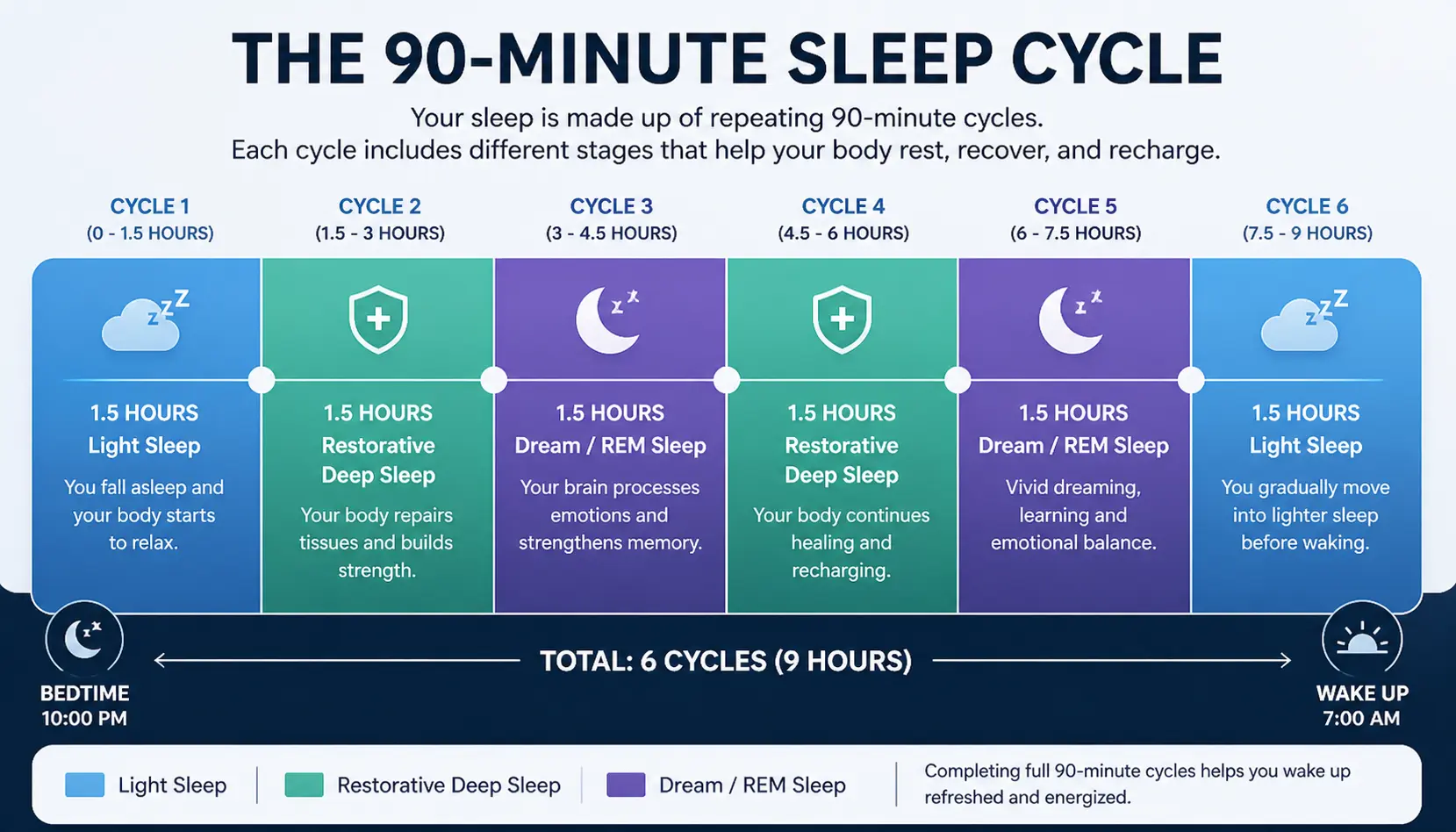
This sleep calculator works by counting backward in 90-minute sleep cycles. Each cycle includes light sleep, deep sleep, and REM sleep. Waking up at the end of a cycle helps you feel more refreshed instead of groggy. The calculator also adds about 15 minutes for falling asleep, making the recommended bedtimes more accurate.
A Personalized Sleep Calculator By Age
Sleep requirements fluctuate across biological life stages. Younger bodies require longer slow-wave deep sleep phases for growth hormone release, while older adults experience changes in circadian rhythm amplitude.
| Life Stage / Age Group | Recommended Sleep Duration | Target 90-Min Cycles | Target Sleep Latency Buffer |
|---|---|---|---|
| Children (6–12 Years) | 9 – 12 Hours | 6 – 7 Cycles | 15–20 Mins |
| Teens (14–17 Years) | 8 – 10 Hours | 5.5 – 6.5 Cycles | 20 Mins |
| Adults (18–64 Years) | 7 – 9 Hours | 5 – 6 Cycles | 15 Mins |
| Older Adults (65+ Years) | 7 – 8 Hours | 4.5 – 5.5 Cycles | 15–25 Mins |
Better Sleep Quality
Wake up at the end of a cycle, not in the middle.
Get More Energy
Align your sleep with your body’s natural rhythm.
Improve Mental Health
Better sleep supports recovery, mood, and focus
90-Minute Cycles
Sleep works in cycles — timing matters more than hours.
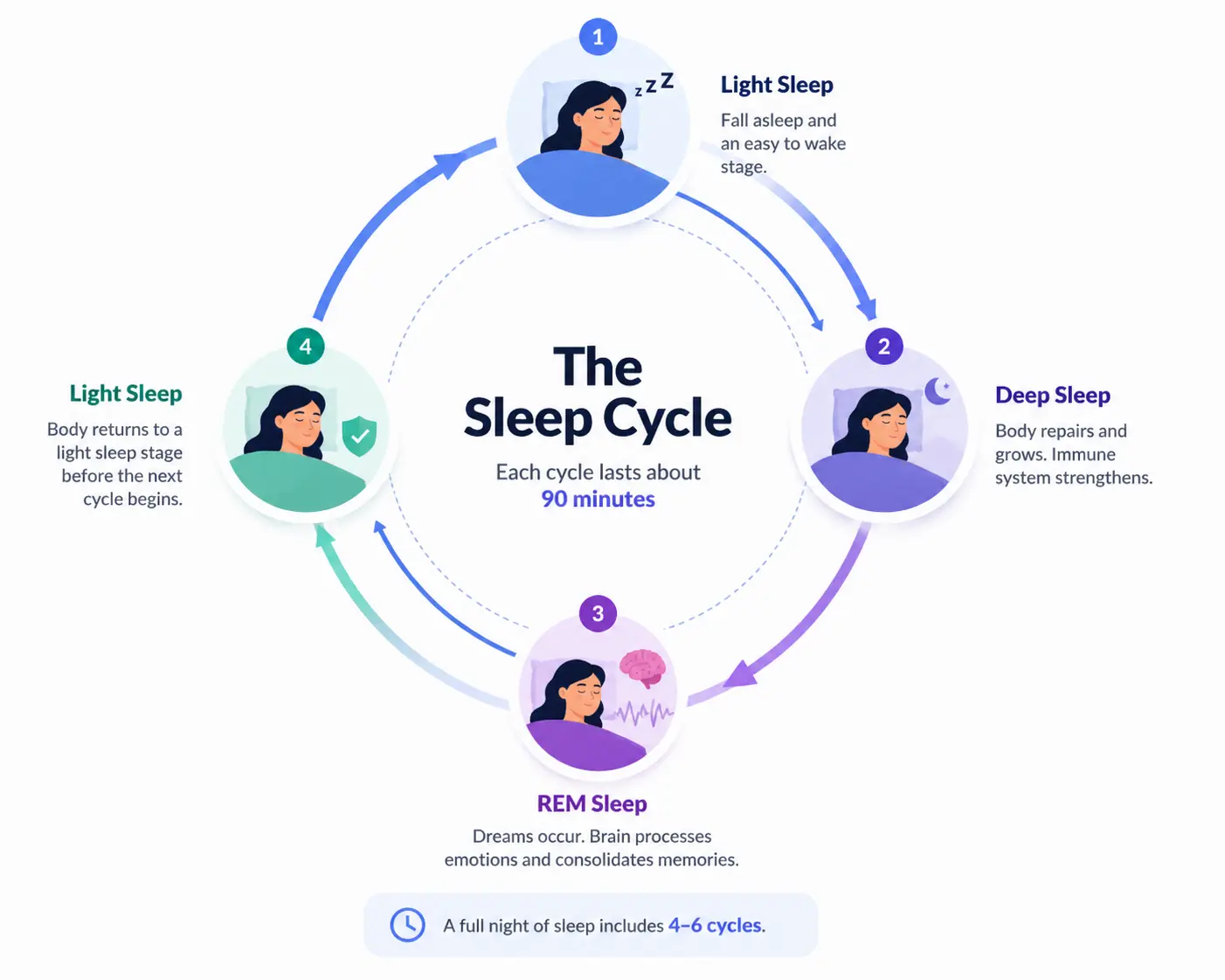
What Is a Sleep Cycle?
A sleep cycle is a series of stages your body goes through during rest, lasting about 90 minutes. Each cycle includes light sleep, deep sleep, and REM sleep. Completing full cycles helps you wake up feeling refreshed instead of tired. Understanding sleep cycles helps this sleep calculator determine the best time to sleep and wake up.
Frequently Asked Questions
1. What is a sleep cycle?
A sleep cycle is a repeating pattern of sleep stages that lasts about 90 minutes. It includes light sleep, deep sleep, and REM sleep. Completing full cycles helps you wake up feeling refreshed.
How long is one sleep cycle?
One sleep cycle typically lasts around 90 minutes. Most people go through 4 to 6 cycles per night depending on total sleep duration.
What Time Should I Wake Up?
The best time to wake up is at the end of a completed 90-minute sleep cycle rather than in the middle of deep sleep. For most adults, this means aiming for a wake-up time that allows for 5 to 6 full cycles (7.5 to 9 hours of sleep). Waking up mid-cycle can cause “sleep inertia,” leading to morning grogginess and reduced cognitive focus throughout the day.
To find your personalized time, you should:
Identify your bedtime: Use our Sleep Cycle Calculator to count forward in 90-minute increments.
Account for “Sleep Latency”: Add 15 minutes to your calculation to account for the time it takes to actually fall asleep.
Consult Age-Specific Needs: Since sleep architecture changes as we age, ensure your wake-up time aligns with your specific life stage—our tool adjusts these cycles automatically for teens, adults, and seniors.
For the most accurate results, enter your desired bedtime into the sleep estimator above to instantly see your optimal wake-up windows.
What is the best number of sleep cycles?
Most adults feel best after 4 to 6 sleep cycles (6 to 9 hours). The ideal number depends on your body, but completing full cycles is more important than total hours alone.
Why do I feel tired even after 8 hours of sleep?
You may be waking up in the middle of a sleep cycle. This disrupts your natural rhythm and can leave you feeling groggy even after enough total sleep. Use our Sleep Estimator to assess your sleep requirements.
Can I use this calculator for naps?
Yes, you can use shorter cycles for naps. A 90-minute nap completes one full cycle, while a 20–30 minute nap can boost alertness without deep sleep.
How does a sleep calculator work?
A sleep calculator works by using 90-minute sleep cycles to calculate ideal bedtimes or wake-up times. It ensures you wake up at the end of a cycle instead of the middle, helping you feel more refreshed.
what time should i go to bed
The best time to sleep depends on your wake-up schedule and sleep cycles. Using a bedtime calculator can help you find the ideal bedtime so you complete full 90-minute cycles.