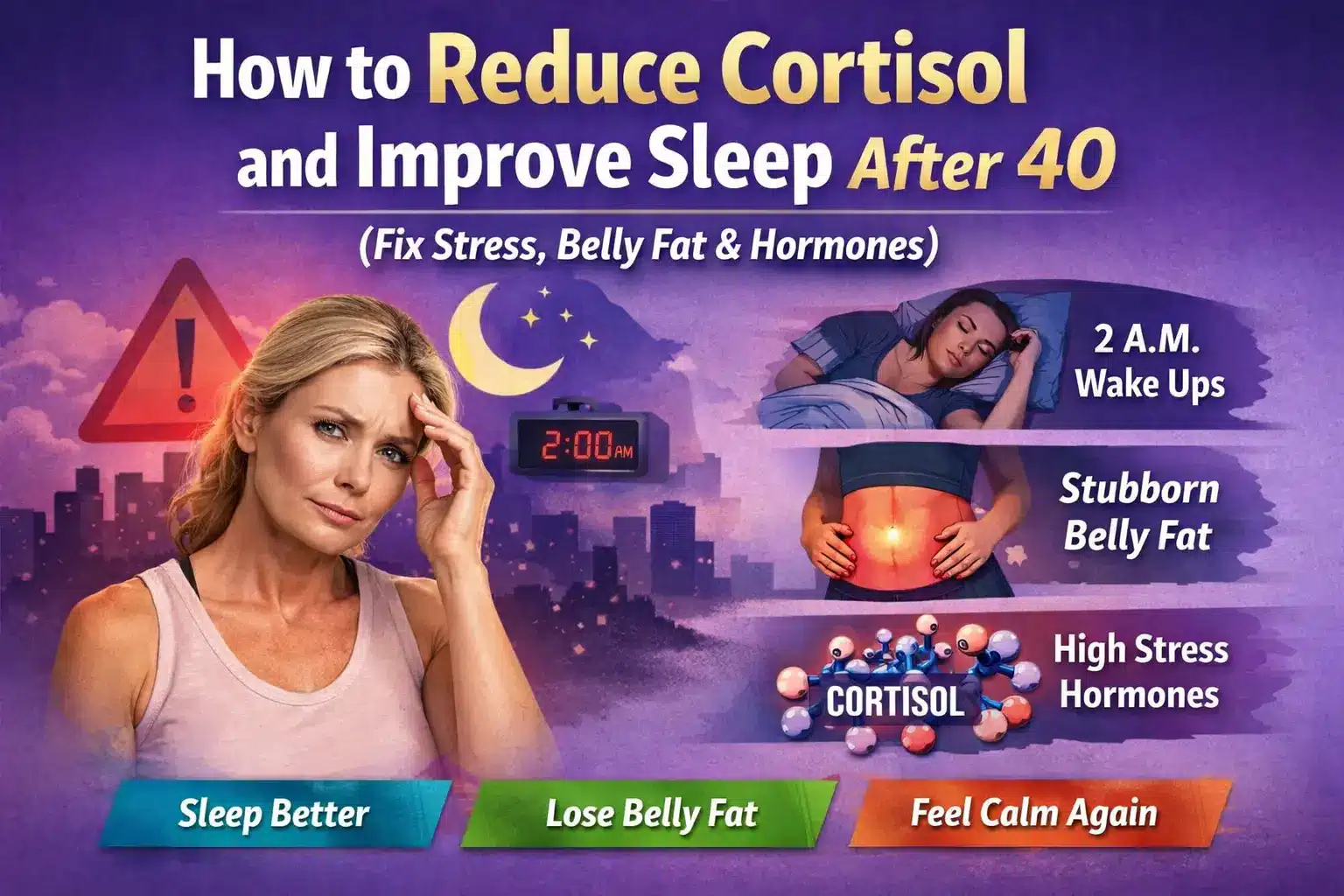


How to reduce cortisol after 40 becomes a real concern when your body starts feeling constantly “on” even when you’re exhausted.
If you’ve crossed 40 and suddenly feel like your body is no longer cooperating, you’re not alone.
You might recognize this frustrating pattern:
- You feel tired all day, but alert at night
- You wake up at the same time every night (often around 2 a.m.)
- Your mind keeps racing, even when your body wants to sleep
- Your belly fat increases, despite eating better and exercising
This is exactly why searches like “cortisol belly fat female,” “menopause insomnia solutions,” and “how to lower cortisol naturally” are rapidly growing.
Because what you’re experiencing isn’t just stress…
👉 It’s a deeper issue: cortisol dysregulation
Many women search for natural ways to reduce cortisol because improving sleep, managing stress, and restoring balance require more than just one solution.
The Hidden Pattern “Wired But Tired”
One of the most common phrases women use after 40 is:
👉 “I feel wired but tired.”
This is not just a feeling; it’s a physiological signal.
Your body is:
- Producing stress hormones (keeping you alert)
- While simultaneously being physically exhausted
👉 This creates a confusing state where:
- You can’t relax
- You can’t sleep properly
- You wake up feeling unrefreshed
Why This Pattern Gets Worse After 40
After 40, your body becomes more sensitive to:
- Hormonal fluctuations
- Blood sugar instability
- Sleep disruptions
Even small triggers like:
- Late meals
- Stressful thoughts
- Caffeine
👉 Can now create a bigger cortisol response than before
The 2 A.M. Wake-Up Signal (What It Really Means)
If you consistently wake up at night, especially around 2 a.m.
👉 That’s not random.
This is often linked to what many experience as:
👉 The “2 a.m. cortisol spike.”
At this time:
- Blood sugar may drop
- Your body releases cortisol to compensate
- You wake up suddenly, often alert
👉 And once you’re awake:
- Your mind starts racing
- Falling back asleep becomes difficult
Why This Leads to Belly Fat (Even If You’re Doing Everything Right)
This is where things become frustrating.
You may be:
- Eating healthy
- Exercising regularly
- Trying to lose weight
👉 But still noticing:
- Stubborn belly fat
- Slower progress
- Increased cravings
Because when cortisol stays elevated:
- Fat storage increases (especially abdominal)
- Muscle breakdown increases
- Metabolism becomes less efficient
The Shift You Need to Make
At this stage, the problem is not:
- Lack of discipline
- Poor diet
- Ineffective workouts
👉 The problem is your body being stuck in a stress-response mode
💡 A Smarter Approach (What Actually Works)
This is where most advice fails.
It focuses on:
“Relax more”
“Sleep earlier”
👉 Without addressing why your body can’t relax in the first place
In this guide, you’ll learn a different approach:
👉 A structured system to:
- Lower cortisol naturally
- Improve sleep quality
- Reduce stress-driven fat gain
We’ll break this down into a clear, actionable method:
👉 The Cortisol Reset System for Women Over 40
This will help you:
- Understand what’s happening in your body
- Fix sleep disruptions
- Reduce cortisol-driven weight gain
👉 Bottom line:
If cortisol is not managed, nothing else works effectively.
If it is…
👉 Your body starts responding again.
3 Quick Ways to Lower Cortisol Tonight
If you’re feeling wired but tired, you don’t need a complicated routine.
👉 Start with these simple, science-backed steps tonight:
1. Stop Caffeine After 2 PM
Caffeine stays in your system for hours.
Even if you don’t feel it:
- It can delay melatonin production
- Increase nighttime alertness
- Contribute to that “tired but unable to sleep” feeling
👉 Cutting caffeine early helps your body naturally prepare for sleep.
2. Eat a Protein-Rich, Balanced Dinner
Skipping meals or eating light dinners can trigger:
- Blood sugar drops at night
- Cortisol release to compensate
- Sudden wake-ups (often around 2 a.m.)
👉 A balanced dinner with:
- Protein
- Healthy fats
- Fiber
Helps stabilize your system overnight.
3. Avoid Screens at Least 60 Minutes Before Bed
Blue light exposure:
- Suppresses melatonin
- Keeps your brain alert
- Signals your body to stay awake
👉 Replace screen time with:
- Reading
- Light stretching
- Quiet relaxation
Why These Work (Quick Insight)
These steps target the root triggers of nighttime cortisol spikes:
- Caffeine → overstimulation
- Blood sugar → hormonal disruption
- Light exposure → circadian rhythm confusion
👉 When these are controlled:
- Your body relaxes faster
- Sleep becomes deeper
- Night wake-ups reduce
These are some of the most effective ways to lower cortisol levels naturally without overwhelming your routine.
The “Cortisol Switch”: Why Your Body Stores Fat Differently After 40 (And How to Flip It)
At some point after 40, many women notice a shift:
👉 The same habits no longer produce the same results.
- Workouts feel less effective
- Fat accumulates more easily (especially around the abdomen)
- Recovery becomes slower
This isn’t random.
👉 It’s what we can call the “cortisol switch”
Chronic stress and elevated cortisol levels have been shown to significantly impact metabolism and fat distribution, as highlighted in research by the National Center for Biotechnology Information.
What is the Cortisol–Belly Fat Connection?
Cortisol is a glucocorticoid hormone released by your body in response to stress.
When elevated for short periods, it’s helpful.
👉 But when cortisol stays chronically high:
- It signals your body to conserve energy
- It increases fat storage, especially in the abdominal area
- It affects how your body uses glucose and insulin
👉 In simple terms:
Your body shifts from “burning mode” to “storage mode.”
Chronic stress symptoms like mental fatigue, irritability, and difficulty relaxing at night are often linked to elevated cortisol levels over time.
Why Stress Leads to Belly Fat After 40
After 40, your hormonal environment changes:
- Estrogen levels fluctuate
- Insulin sensitivity can decline
- Stress response becomes more pronounced
👉 This combination makes your body:
- More reactive to stress
- More likely to store fat
- Less efficient at burning calories
👉 That’s why cortisol belly fat in females becomes more common—even without major lifestyle changes.
The “Wired But Tired” Cycle Explained
When cortisol remains elevated throughout the day:
- Your body stays in a constant alert state
- Relaxation becomes difficult
- Mental fatigue increases
👉 At night, instead of winding down:
- Your brain remains active
- Sleep becomes shallow or delayed
- You wake up feeling unrefreshed
This creates a loop:
👉 Stress → poor sleep → higher cortisol → more stress
The Dreaded 2 A.M. Cortisol Spike
One of the most frustrating symptoms is waking up in the middle of the night.
👉 Often around 2–3 a.m.
This happens because:
- Blood sugar drops during sleep
- Your body releases cortisol to stabilize it
- You wake up suddenly
👉 And once awake:
- Your thoughts become active
- Falling back asleep becomes difficult
Why This Matters More Than You Think
This isn’t just about sleep.
👉 It directly impacts:
Fat storage
Energy levels
Hormonal balance
Daily performance
👉 Over time, this leads to:
Increased abdominal fat
Reduced recovery
Persistent fatigue
Key Takeaway
The issue is not just stress.
👉 It’s how your body responds to stress after 40
The Cortisol Reset System for Women Over 40 (A Smarter Way to Recover, Sleep & Burn Fat)
Most advice tells you to “reduce stress.”
👉 But it doesn’t tell you how your body actually resets itself.
After 40, your system needs more than relaxation…
👉 It needs targeted regulation
The Cortisol Reset System
Instead of random tips, think of your body as a system with three core controls:
- Sleep Optimization (Recovery Engine)
- Stress Regulation (Hormonal Balance)
- Nervous System Reset (Deep Recovery Mode)
👉 When these three are aligned:
- Cortisol stabilizes
- Sleep improves
- Fat storage decreases
Pillar 1: Sleep Optimization (Your Recovery Engine)
Sleep is not just rest; it’s your body’s primary reset mechanism. Research published on the National Center for Biotechnology Information shows that disrupted sleep patterns can elevate cortisol levels and negatively affect hormonal balance.
What happens during quality sleep:
- Cortisol levels decrease naturally
- Growth and repair processes activate
- Hormonal balance improves
💡 What disrupts it after 40:
- Irregular sleep timing
- Late-night stimulation (screens, stress)
- Poor circadian rhythm alignment
👉 Optimizing sleep means:
- Consistent sleep schedule
- Creating a calm pre-sleep routine
- Supporting your body’s natural rhythm
Pillar 2: Stress Regulation (Hormonal Stability)
You cannot eliminate stress, but you can control how your body responds to it.
Chronic stress leads to:
- Persistent cortisol elevation
- Increased fat storage
- Reduced recovery capacity
Effective regulation includes:
- Managing daily stress triggers
- Supporting blood sugar balance
- Avoiding overstimulation (caffeine, overtraining)
👉 This keeps your system from staying in constant “alert mode”
Pillar 3: Nervous System Reset (Deep Recovery Mode)
This is the most overlooked piece.
Your nervous system has two modes:
- Fight or Flight (stress mode)
- Rest and Digest (recovery mode)
👉 After 40, many women remain stuck in:
Fight or Flight mode, even at rest
Why this matters:
- Cortisol stays elevated
- Sleep becomes lighter
- Recovery slows down
How to reset:
- Slow breathing techniques
- Light evening relaxation
- Reducing mental stimulation before sleep
👉 These signals tell your body:
“It’s safe to relax.”
Why This System Works
Most approaches treat symptoms.
👉 This system addresses the root cause
- Sleep → regulates hormones
- Stress → controls cortisol
- Nervous system → enables recovery
👉 Together, they create a complete reset loop
Key Takeaway
You don’t need more hacks.
👉 You need a structured system that your body can follow consistently
How to Reduce Cortisol Naturally After 40 (Step-by-Step Plan)
Now that you understand what’s happening in your body, the next step is simple:
👉 Apply targeted actions that bring cortisol back under control.
Fix Your Sleep Routine First (Foundation of Recovery)
Your body depends on a consistent rhythm.
Without it:
- Cortisol remains elevated
- Sleep becomes fragmented
- Recovery is incomplete
What to do:
- Sleep and wake at the same time daily. Use our easy Sleep Calculator to find your ideal bedtime based on 90-minute cycles, ensuring you wake up at the end of a cycle rather than in the middle of deep sleep.
- Keep your bedroom dark and cool
- Avoid screens at least 1 hour before bed
👉 This supports your natural sleep-wake cycle and helps lower nighttime cortisol.
Balance Blood Sugar to Prevent Night Wake-Ups
Unstable blood sugar is a hidden trigger of cortisol spikes.
What happens:
- Blood sugar drops during sleep
- Cortisol rises to compensate
- You wake up suddenly
What to do:
- Eat balanced meals (protein + fats + fiber)
- Avoid skipping dinner
- Limit refined sugars
👉 This is where nutrition becomes critical.
→ Follow the best diet for hormone balance after 40 to stabilize your system and reduce cortisol naturally.
Strength Training: But Avoid Overtraining
Daily exercise to lower cortisol is essential, but the type and intensity matter.
The mistake:
Too much high-intensity training (HIIT) can:
- Spike cortisol
- Increase fatigue
- Slow fat loss
What works better:
- Moderate strength training
- Controlled, consistent workouts
- Proper recovery between sessions
👉 → Follow a structured strength training plan for menopause weight gain to build muscle without increasing stress levels.
Reduce Stimulants (Especially Caffeine)
Caffeine can stay in your system longer than you think.
Overuse leads to:
- Increased cortisol
- Sleep disruption
- Nervous system overstimulation
What to do:
- Limit intake to morning hours
- Replace evening caffeine with calming drinks
Prioritize Daily Recovery (Not Just Sleep)
Recovery isn’t only about sleeping; it’s about how you decompress during the day.
Simple ways to support recovery:
- Take short breaks during work
- Spend time outdoors
- Engage in low-stimulation activities
👉 These small habits signal your body to shift out of stress mode
How These Steps Work Together
Each step targets a different trigger:
- Sleep → resets cortisol rhythm
- Blood sugar → prevents spikes
- Exercise → improves metabolism
- Recovery → calms the nervous system
👉 When combined:
Your body shifts from stress mode → recovery mode
Key Takeaway
You don’t need drastic changes.
👉 You need consistent, targeted actions
Best Foods and Supplements to Lower Cortisol Naturally
Once your habits are in place, the next layer is nutritional support. A nutrient-dense, anti-inflammatory diet that supports gut health plays a key role in regulating cortisol and improving stress resilience.
👉 Certain foods and supplements can directly influence:
- Stress response
- Hormonal balance
- Sleep quality
Best Foods to Lower Cortisol
Your diet plays a key role in how your body handles stress.
Magnesium-Rich Foods (Calming Effect)
- Spinach
- Almonds
- Pumpkin seeds
👉 Magnesium helps regulate the nervous system and supports relaxation.
Protein-Rich Foods (Stabilize Hormones)
- Eggs
- Chicken
- Greek yogurt
👉 Protein helps maintain stable blood sugar, reducing cortisol spikes.
Healthy Fats (Hormone Support)
- Avocado
- Olive oil
- Fatty fish
👉 These support hormone production and reduce inflammation.
👉 For a complete approach:
→ Follow the best diet for hormone balance after 40 to naturally support cortisol and metabolism.
Supplements That Help Reduce Cortisol
Supplements can support your body when diet alone isn’t enough.
Magnesium
- Supports relaxation
- Improves sleep quality
- Helps regulate cortisol
Ashwagandha
- Adaptogenic herb
- Helps the body manage stress
- May reduce cortisol levels over time
Omega-3 Fatty Acids
- Reduce inflammation
- Support brain and mood
- Improve stress resilience
Certain supplements to lower cortisol naturally, such as fish oil and adaptogenic herbs like ashwagandha, may help improve stress response over time.
👉 For a deeper breakdown:
→ Explore the top longevity supplements for women to support hormones, energy, and recovery.
Key Takeaway
Food and supplements don’t replace habits, but they enhance results.
When combined with:
👉 Sleep optimization
👉 Stress management
They create a stronger hormonal balance system
Common Mistakes That Keep Cortisol Levels High
Even with the right intentions, a few habits can silently keep your cortisol elevated.
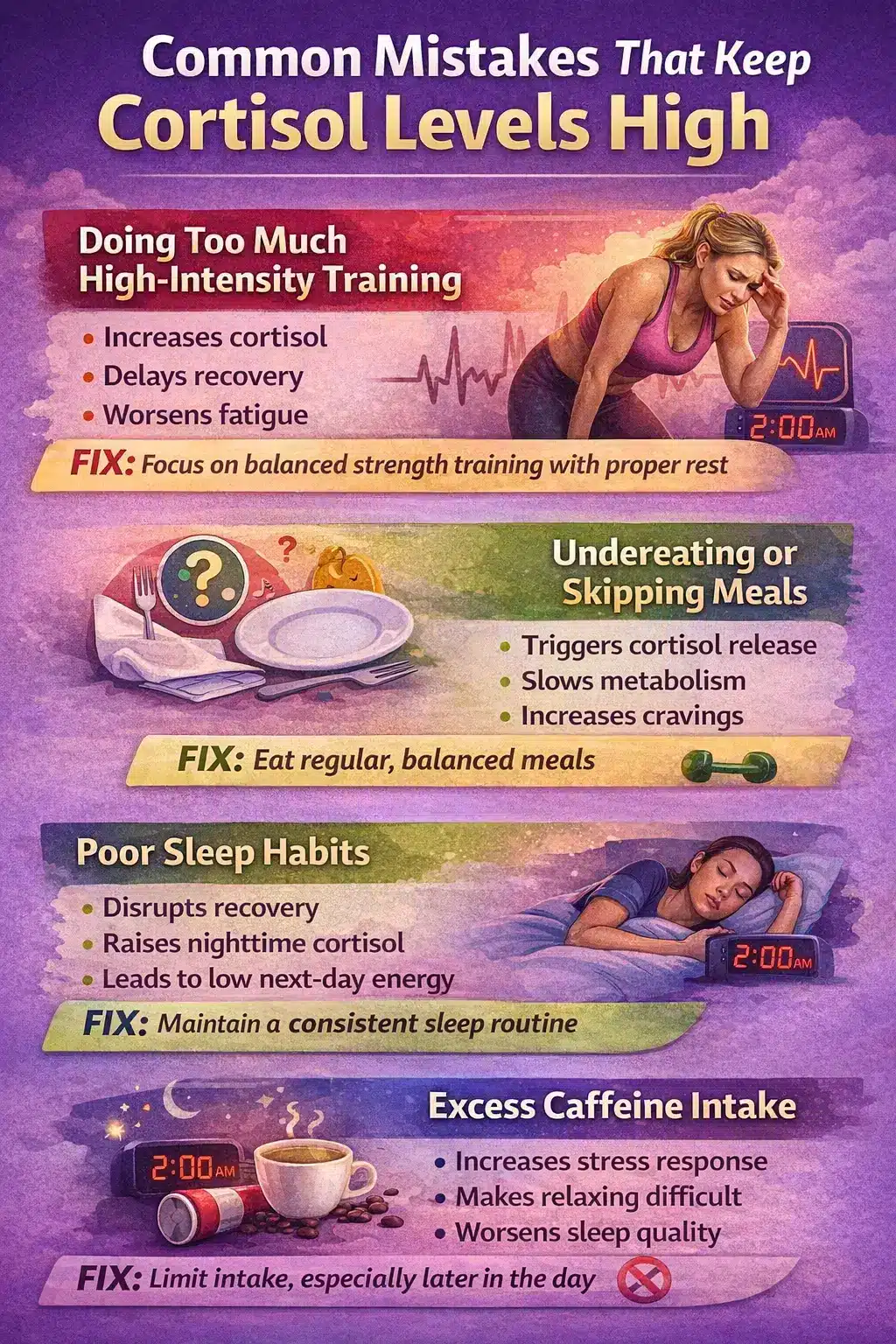
Doing Too Much High-Intensity Training
More exercise isn’t always better.
👉 Excessive HIIT can:
- Increase cortisol
- Delay recovery
- Worsen fatigue
Fix:
Focus on balanced strength training with proper rest. Low- to moderate-intensity exercise is one of the most effective ways to lower cortisol levels naturally without overstressing your body.
Undereating or Skipping Meals
Eating too little may seem helpful, but it stresses your body.
👉 This can:
- Trigger cortisol release
- Slow metabolism
- Increase cravings
Fix:
Eat regular, balanced meals.
Poor Sleep Habits
Inconsistent sleep timing and late-night stimulation disrupt recovery.
👉 This leads to:
- Higher nighttime cortisol
- Frequent wake-ups
- Low energy the next day
Fix:
Maintain a consistent sleep routine.
Excess Caffeine Intake
Too much caffeine keeps your body in a state of stimulation.
👉 Result:
- Increased stress response
- Difficulty relaxing
- Poor sleep quality
Fix:
Limit intake, especially later in the day.
Simple Lifestyle Habits That Lower Cortisol Naturally
Beyond diet and exercise, small daily habits can significantly reduce stress levels.
Effective habits include:
- Deep breathing exercises
- Mindfulness or meditation
- Spending time with supportive people
- Laughter and relaxation
👉 These habits help regulate the nervous system and are some of the most overlooked ways to lower cortisol naturally.
Frequently Asked Questions
How to reduce cortisol levels naturally after 40?
Focus on:
Improving sleep
Managing stress
Stabilizing blood sugar
Supporting recovery
Does cortisol cause belly fat in women?
Yes. Chronically high cortisol increases fat storage, especially around the abdomen.
Why do I wake up at 2 a.m. every night?
This is often linked to a cortisol spike triggered by a blood sugar imbalance or stress response
How can I improve my sleep after 40?
Follow a consistent sleep schedule
Reduce evening stimulation
Support hormone balance through diet and lifestyle
What are the best natural ways to reduce cortisol?
The most effective natural ways to reduce cortisol include improving sleep, managing stress, eating a balanced diet, and avoiding overstimulation.
Final Thoughts: Reset Your Body, Not Just Your Routine
A consistent lifestyle approach is the most sustainable way to lower cortisol levels naturally and improve long-term health. By now, it’s clear:
👉 The issue is not just stress or sleep.
It’s how your body is responding to both.
The smarter approach:
- Regulate cortisol
- Support sleep quality
- Improve recovery
- Align your lifestyle with your biology
👉 This is how you:
- Reduce belly fat
- Improve energy
- Restore balance after 40
👉 Want a complete system to transform your results?
- Follow the best diet for hormone balance after 40
- Combine it with a structured strength training plan for menopause weight gain
- Support your body with the right longevity supplements for women
👉 And for the full roadmap:
→ Explore the complete menopause weight gain solutions guide
This article is for informational and educational purposes only and should not be considered medical advice. Please review our Medical Disclaimer before making health-related decisions.