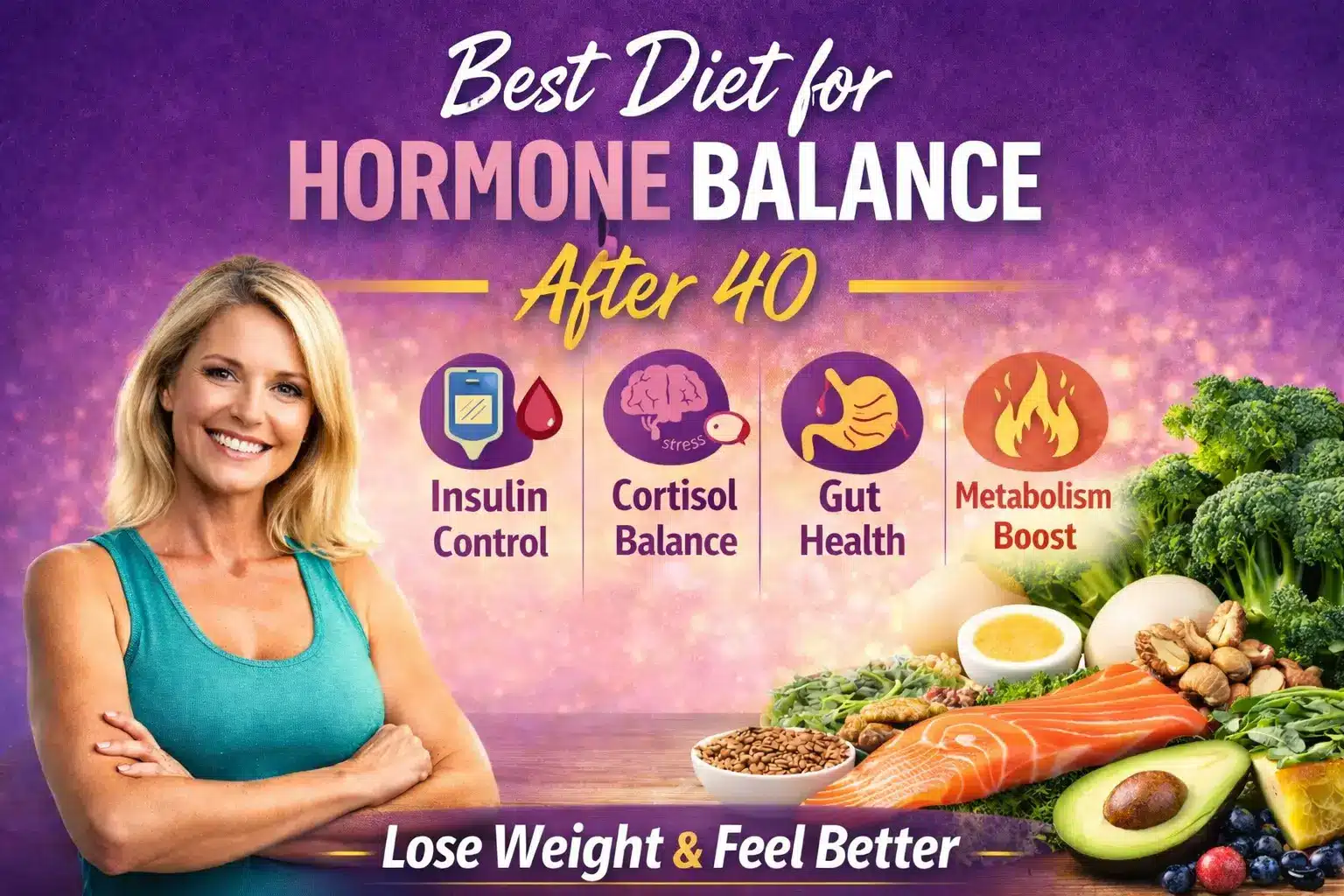


Best diet for hormone balance after 40 is not about eating less; it’s about eating in a way that supports your hormones, metabolism, and fat loss.
In fact, you may recognize this frustrating pattern:
- You eat less, but your weight doesn’t drop
- You avoid carbs, but your energy crashes
- Your menopause belly fat keeps increasing, despite your efforts
This is exactly why searches like “hormone balance diet for women over 40,” “what to eat during menopause,” and “best diet for menopause weight loss” are growing rapidly.
Because the truth is:
👉 After 40, your body stops responding to food the way it used to
The Real Problem: Your Diet Isn’t Matching Your Hormones
Most diet advice still follows the same outdated rule:
👉 Eat less, move more
But this approach ignores what’s actually happening inside your body.
After 40, especially during perimenopause and menopause, your metabolism becomes hormone-driven—not calorie-driven.
Why Traditional Dieting Stops Working After 40
You might have tried:
- Low-calorie diets
- Low-carb plans
- Skipping meals
And initially, they may even work.
But over time, they often lead to:
- Slower metabolism
- Increased cravings
- Fat gain (especially around the abdomen)
👉 This is why many women experience weight gain after 40 female despite eating less.
The Hormone–Food Connection Most Diets Ignore
Your body is regulated by key hormones that directly influence:
- Fat storage
- Hunger signals
- Energy levels
- Metabolism
The most important ones after 40 are:
- Insulin → controls blood sugar and fat storage
- Cortisol → stress hormone linked to belly fat
- Estrogen → affects fat distribution and metabolism
👉 When these hormones are out of balance, your body becomes:
More efficient at storing fat—and less efficient at burning it
Why “Eating Less” Can Make Things Worse
This is where things become counterintuitive.
When you drastically reduce calories:
- Your metabolism slows down
- Your body conserves energy
- Hormonal imbalance worsens
👉 This creates a cycle where:
The less you eat, the harder it becomes to lose weight.
The Shift You Need to Make
At this stage, dieting is no longer about restriction.
👉 It’s about hormonal alignment
Because the goal is not just to eat less…
👉 It’s to eat in a way that:
- Stabilizes blood sugar
- Supports hormone production
- Reduces fat storage
💡 A Smarter Approach
This is where most diet plans fall short—they focus on calories, not biology.
In this guide, you’ll learn a different approach:
👉 A hormone-focused diet system that works with your body after 40.
Instead of random food lists, we’ll break it down into a simple, structured method:
- What to eat
- What to avoid
- How to balance hormones naturally
- How to reduce menopause belly fat through diet
👉 Bottom line:
If your diet doesn’t support your hormones, it will work against you.
If it does, fat loss becomes significantly easier and sustainable.
The 4 Hormone Pillars Diet Framework (A Smarter Way to Eat After 40)
Most diet plans fail after 40 because they treat food as calories.
👉 But your body treats food as signals for hormones.
That’s why instead of asking:
“How many calories should I eat?”
👉 You should ask:
“How does this food affect my hormones?”
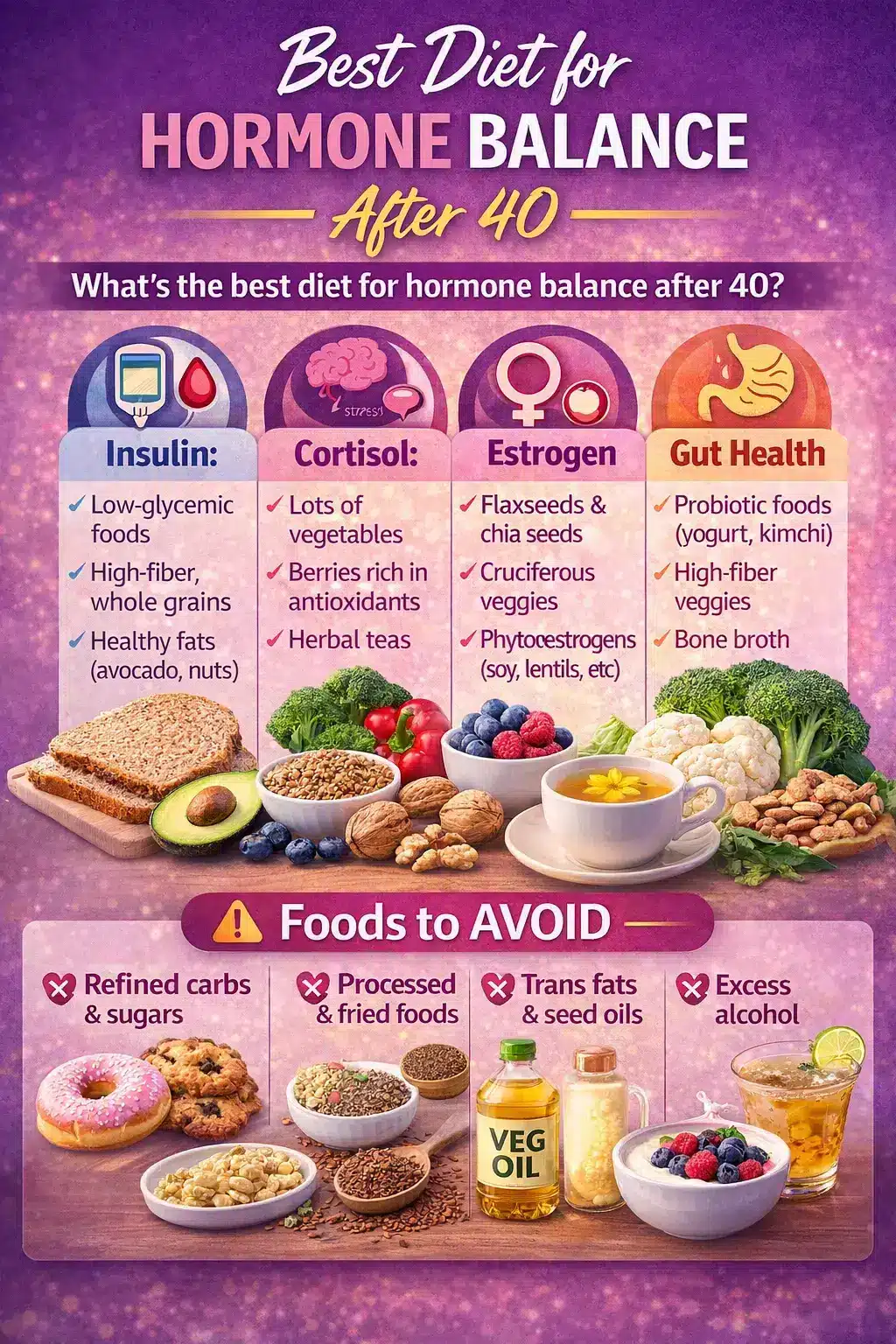
The 4 Hormone Pillars
To make this simple, everything you eat should support one (or more) of these:
- Blood Sugar Balance (Insulin Control)
- Stress Regulation (Cortisol Control)
- Estrogen Support (Hormonal Stability)
- Gut Health (Hormone Regulation Hub)
👉 When these are aligned:
- Fat storage decreases
- Energy improves
- Metabolism becomes more efficient
Pillar 1 — Blood Sugar Balance (The Foundation of Fat Loss)
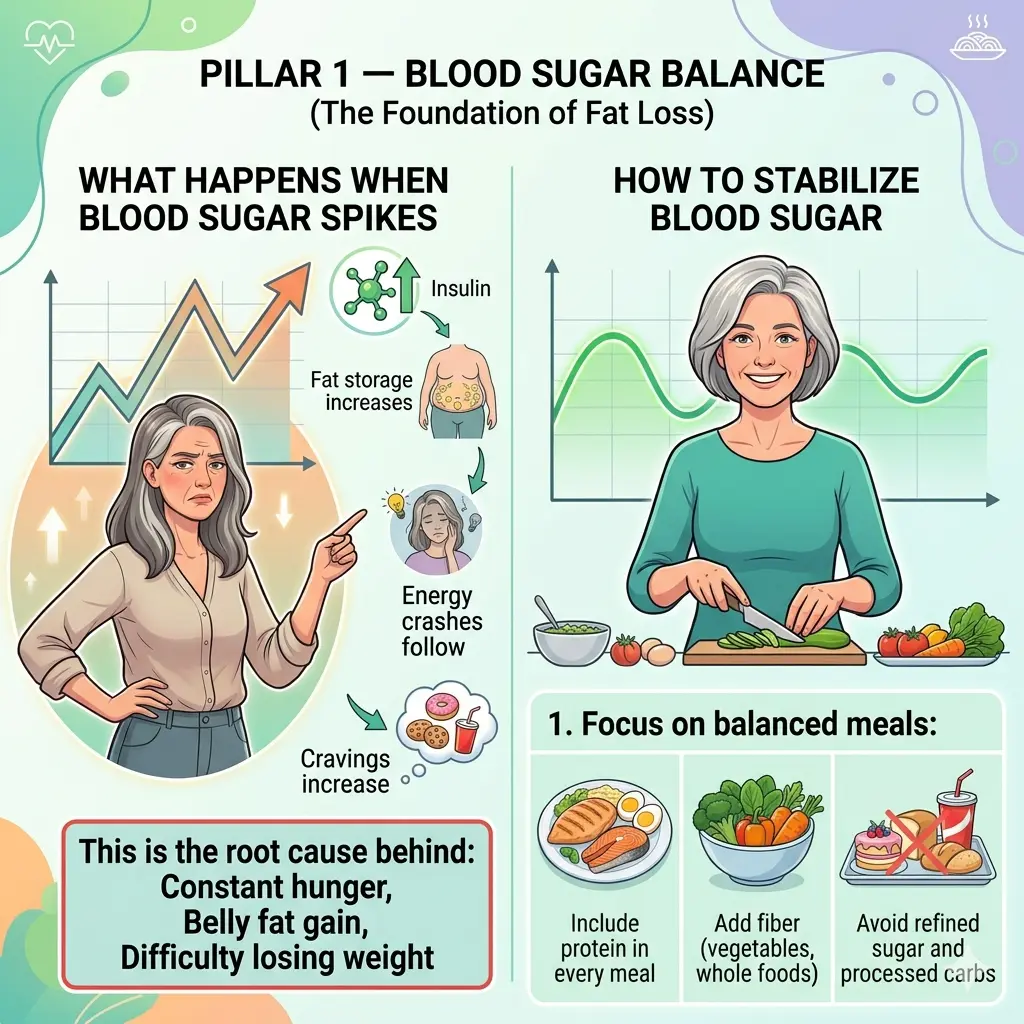
If there’s one factor that drives menopause weight gain, it’s unstable blood sugar.
After 40, your body becomes more sensitive to insulin spikes.
What happens when blood sugar spikes:
- Insulin rises
- Fat storage increases
- Energy crashes follow
- Cravings increase
👉 This is the root cause behind:
- Constant hunger
- Belly fat gain
- Difficulty losing weight
How to stabilize blood sugar:
Focus on balanced meals:
- Include protein in every meal
- Add fiber (vegetables, whole foods)
- Avoid refined sugar and processed carbs
💡 Practical example:
Instead of:
Toast + tea
Choose:
Eggs + vegetables + healthy fat
👉 This keeps insulin stable and supports a fat loss menopause strategy
Pillar 2 — Cortisol Control (The Belly Fat Hormone)
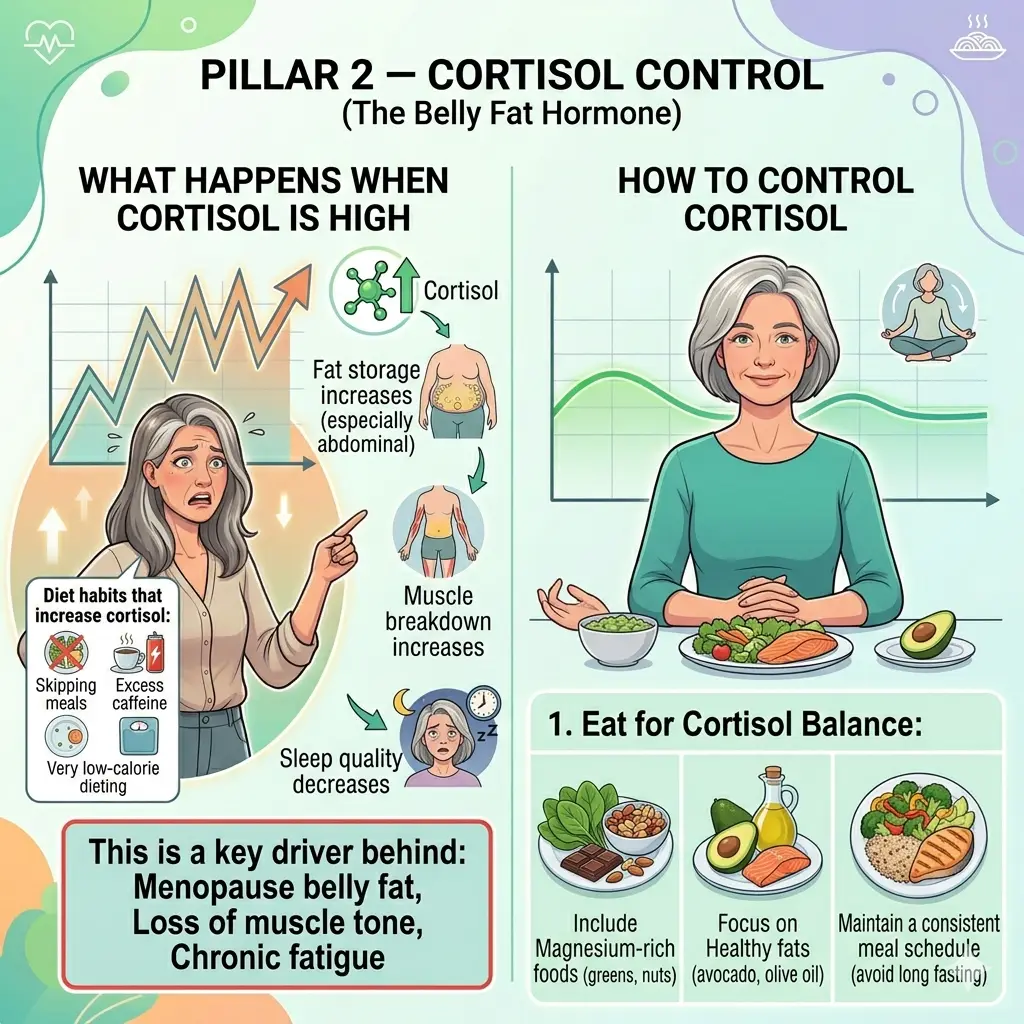
Cortisol is your stress hormone, and one of the biggest drivers of menopause belly fat.
When cortisol is high:
- Fat storage increases (especially abdominal)
- Muscle breakdown increases
- Sleep quality decreases
Diet habits that increase cortisol:
- Skipping meals
- Excess caffeine
- Very low-calorie dieting
Foods that help regulate cortisol
- Magnesium-rich foods (leafy greens, nuts)
- Healthy fats (avocado, olive oil)
- Balanced meals (avoid long fasting initially)
👉 Stabilizing cortisol is critical for any hormone balance diet for women over 40
Pillar 3 — Estrogen Support (The Core Female Hormone)
Estrogen plays a central role in:
- Fat distribution
- Metabolism
- Energy levels
After 40, estrogen declines—and this directly contributes to weight gain.
Low estrogen is linked to:
- Increased belly fat
- Reduced metabolic rate
- Mood and energy changes
Foods that support estrogen balance:
- Flaxseeds
- Soy (natural sources like tofu, edamame)
- Cruciferous vegetables (broccoli, cauliflower)
👉 These foods contain compounds that help regulate estrogen naturally.
Pillar 4 — Gut Health (The Hidden Hormone Regulator)
This is the most underrated pillar. Emerging research highlights the strong connection between gut health and hormone regulation. A review in the National Center for Biotechnology Information explains that the gut microbiome plays a key role in estrogen metabolism, meaning poor gut health can contribute to hormonal imbalance and increased fat storage.
Your gut plays a major role in:
- Hormone metabolism
- Inflammation control
- Nutrient absorption
Poor gut health leads to:
- Hormonal imbalance
- Increased fat storage
- Digestive issues
Foods that improve gut health:
- Fiber-rich foods (vegetables, whole grains)
- Fermented foods (yogurt, kefir)
- Prebiotics (onions, garlic)
👉 A healthy gut supports overall hormone balance after 40
How to Use This Framework Daily
Instead of following strict diets, ask:
👉 “Does this meal support my hormones?”
A balanced plate should include:
- Protein
- Fiber
- Healthy fats
👉 When your meals follow this pattern:
- Blood sugar stays stable
- Hormones stay balanced
- Fat loss becomes easier
Key Takeaway
You don’t need a complicated diet.
👉 You need a structured way of eating that supports your hormones
Because after 40:
Hormones drive fat loss—not just calories
Best Foods for Hormone Balance After 40 (What to Eat Daily)
Now that you understand the 4 Hormone Pillars, the next step is simple:
👉 Choose foods that support these systems consistently
This isn’t about restriction—it’s about strategic nutrition.
Protein-Rich Foods (Your Metabolism Anchor)
If there’s one nutrient that becomes non-negotiable after 40, it’s protein. Research shows that higher protein intake plays a critical role in maintaining muscle mass and metabolic rate as women age. According to a study published by the National Center for Biotechnology Information, increased dietary protein helps preserve lean body mass and supports fat loss, which is particularly important for women over 40 experiencing metabolic slowdown.
Why protein matters:
- Preserves muscle mass (prevents metabolism slowdown)
- Reduces cravings
- Stabilizes blood sugar
👉 This is why a high protein diet for women over 40 is strongly recommended.
Best protein sources:
- Eggs
- Chicken and fish
- Greek yogurt
- Lentils and beans
💡 Practical tip:
👉 Aim to include protein in every meal, not just dinner.
Healthy Fats (Essential for Hormone Production)
Hormones are made from fats—cutting them too low can worsen the imbalance.
Benefits of healthy fats:
- Support estrogen production
- Reduce inflammation
- Improve brain and metabolic health
Best sources:
- Avocado
- Olive oil
- Nuts and seeds
- Fatty fish (omega-3)
👉 These are essential in any hormone balance diet for women over 40
Fiber-Rich Foods (For Gut & Hormone Regulation)
Fiber plays a dual role:
- Supports gut health
- Helps regulate hormones
Why fiber matters:
- Improves digestion
- Helps remove excess estrogen
- Supports stable blood sugar
Best sources:
- Vegetables (broccoli, spinach)
- Fruits (berries, apples)
- Whole grains
👉 Fiber is key in an anti-inflammatory diet for the menopause approach
Phytoestrogen Foods (Natural Hormone Support)
These foods contain plant compounds that mimic estrogen in a mild, supportive way.
Benefits:
- Help balance declining estrogen levels
- Support metabolic stability
- May reduce menopause symptoms
Best sources:
- Flaxseeds
- Soy products (tofu, edamame)
- Legumes
👉 These are often included in a menopause diet plan for weight loss
Anti-Inflammatory Foods (Reduce Hormonal Stress)
Chronic inflammation worsens hormonal imbalance and fat storage.
Benefits:
- Improve metabolic function
- Support fat loss
- Enhance recovery
Best sources:
- Berries
- Leafy greens
- Turmeric and spices
👉 These support both gut health and hormone balance
How to Build a Hormone-Friendly Plate
Instead of tracking calories, use this simple structure:
👉 Every meal should include:
- Protein (anchor)
- Fiber (vegetables)
- Healthy fats (hormone support)
Example meal:
- Grilled chicken
- Mixed vegetables
- Olive oil or avocado
👉 This aligns with:
- Blood sugar control
- Hormone balance
- Fat loss support
Key Takeaway
You don’t need a complicated meal plan.
👉 You need consistent, hormone-supportive food choices.
Because:
The right foods don’t just feed you—they regulate your body
Foods to Avoid for Hormone Balance After 40 (What’s Sabotaging Your Progress)
Even if you’re eating healthy most of the time, a few specific foods can disrupt your hormones and slow fat loss—especially after 40.
👉 This is why many women feel like:
- “I’m eating clean, but still gaining weight”
- “My belly fat won’t go away”
Because certain foods directly impact:
- Blood sugar
- Cortisol levels
- Inflammation
Refined Sugar (The #1 Hormone Disruptor)
Sugar is one of the biggest contributors to menopause weight gain.
What happens when you consume sugar:
- Blood sugar spikes rapidly
- Insulin increases
- Fat storage is triggered
Common sources:
- Sugary drinks
- Packaged snacks
- Desserts
👉 Frequent sugar intake leads to:
- Cravings
- Energy crashes
- Increased belly fat
Processed Foods (Hidden Hormone Stressors)
Highly processed foods often contain:
- Unhealthy fats
- Additives
- Low nutrient value
Why they’re harmful:
- Increase inflammation
- Disrupt gut health
- Affect hormone regulation
👉 These directly oppose a hormone balance diet for women over 40
Excess Alcohol (Silent Metabolism Disruptor)
Alcohol can interfere with:
- Hormone production
- Liver function (important for hormone detox)
- Sleep quality
Impact:
- Slows fat metabolism
- Increases fat storage
- Disrupts recovery
👉 Even moderate intake can slow progress in a menopause diet plan
Excess Caffeine (Cortisol Trigger)
While small amounts are fine, too much caffeine can elevate cortisol.
Effects of high caffeine intake:
- Increased stress response
- Sleep disruption
- Hormonal imbalance
👉 This is especially important if you’re already experiencing:
- Fatigue
- Poor sleep
- Stress
The Real Issue: It’s Not Just What You Eat-It’s What You Eat Frequently
You don’t need to eliminate everything.
👉 The key is:
- Reducing frequency
- Making better swaps
💡 Smart replacements:
- Sugary snacks → Nuts or fruit
- Processed foods → Whole meals
- Excess coffee → Herbal tea (occasionally)
Key Takeaway
After 40, small dietary habits have a bigger impact.
Removing just a few disruptive foods can:
👉 Improve hormone balance
👉 Reduce belly fat
👉 Increase energy levels
Sample 1-Day Hormone Balance Meal Plan (Simple & Practical)
If you’ve been wondering what to eat during menopause to lose weight, the key is not complexity—it’s balance.
👉 This sample plan follows the 4 Hormone Pillars:
- Blood sugar control
- Cortisol balance
- Estrogen support
- Gut health
1-Day Hormone-Friendly Meal Plan
| Meal | What to Eat | Why It Works |
|---|---|---|
| Breakfast | Eggs + sautéed vegetables + avocado | Protein + fats stabilize blood sugar |
| Lunch | Grilled chicken or lentils + mixed greens + olive oil | Supports metabolism + hormone balance |
| Snack | Greek yogurt or handful of nuts | Prevents energy crash + cravings |
| Dinner | Salmon or beans + steamed vegetables | Omega-3 + fiber support hormones |
How to Customize This Plan
You don’t need to follow this exactly.
👉 Instead, follow the pattern:
- Include protein in every meal
- Add fiber-rich vegetables
- Include healthy fats daily
💡 Example swaps:
- Eggs → Greek yogurt
- Chicken → Lentils
- Salmon → Tofu
Why This Works
This approach helps:
- Stabilize blood sugar
- Reduce cravings
- Support metabolism
👉 Which is exactly what a hormone balance diet for women over 40 should do.
You don’t need a strict diet plan.
👉 You need a repeatable structure you can follow daily
Common Diet Mistakes Women Make After 40 (And How to Fix Them)
Even with the right foods, a few small mistakes can slow progress.
👉 These are the most common reasons a menopause diet plan doesn’t work.
Eating Too Little (Slowing Your Metabolism)
Many women reduce calories too much.
👉 This leads to:
- Slower metabolism
- Increased fat storage
- Low energy
Fix:
Eat balanced meals with enough protein and healthy fats.
Not Getting Enough Protein
Low protein intake is one of the biggest issues after 40.
👉 Without enough protein:
- Muscle loss increases
- Fat loss becomes harder
- Cravings rise
Fix:
Include protein in every meal.
Skipping Meals (Triggering Cortisol)
Skipping meals may seem helpful—but often backfires.
👉 It can:
- Increase cortisol
- Cause energy crashes
- Lead to overeating later
Fix:
Eat regular, balanced meals.
Over-Restricting Carbs
Cutting carbs too aggressively can:
- Reduce energy
- Impact hormone balance
- Increase stress on the body
Fix:
Choose smart carbs (whole grains, fruits, vegetables).
👉 It’s not just what you eat—it’s how you eat. Small adjustments can lead to major improvements.
Frequently Asked Questions
What is the best diet for menopause weight loss?
The best diet focuses on protein, healthy fats, and fiber to support hormone balance and metabolism.
Can diet balance hormones naturally after 40?
Yes. A proper hormone balance diet for women over 40 can improve insulin, cortisol, and estrogen balance over time.
What foods reduce menopause belly fat?
Foods that stabilize blood sugar—like protein, fiber, and healthy fats—help reduce fat storage, especially around the abdomen.
How much protein do women over 40 need?
Most women benefit from including protein in every meal to support muscle and metabolism.
Final Thoughts: The Diet That Actually Works After 40
By now, the pattern is clear:
👉 Dieting after 40 is not about eating less.
It’s about eating smarter for your hormones.
The new approach:
- Balance blood sugar
- Support hormones
- Eat consistently
- Focus on nutrient-dense foods
👉 This is how you:
- Reduce menopause belly fat
- Improve energy
- Support long-term weight loss
👉 Want faster results?
Combine this diet with a proven workout strategy:
→ Follow the complete strength training plan for menopause weight gain
👉 And for the full system:
→ Explore the complete menopause weight gain solutions guide for women over 40