

Fermented foods are foods that have been transformed through a natural process called fermentation, in which beneficial microorganisms, such as bacteria or yeast, break down sugars and starches in the food. This process changes the food’s flavor, texture, and nutritional profile.
In simple terms, fermentation is a way of letting good microbes do the work of preserving food and enhancing it naturally.
Common examples of fermented foods include yogurt, kefir, sauerkraut, kimchi, miso, tempeh, and kombucha. These foods have been part of traditional diets around the world for thousands of years, long before refrigeration existed.
One of the key reasons fermented foods are gaining attention today is their connection to gut health. During fermentation, foods may develop live cultures and beneficial compounds that interact with the digestive system when consumed as part of a balanced diet.
It’s important to note that not all fermented foods are the same. Some contain live and active cultures, while others may be fermented during production but later pasteurized, which removes live microbes. This distinction becomes important when choosing fermented foods for gut health, which we’ll cover later in this guide.
Fermented Foods Mean
Fermented foods are foods made using controlled microbial activity, where natural bacteria or yeast convert sugars into acids or other compounds, creating unique flavors and supporting food preservation.
This natural process is what gives fermented foods their characteristic tangy, sour, or slightly fizzy taste, and why they differ from fresh or processed foods.
Why This Definition Matters
Understanding what fermented foods are helps clear up common confusion between:
- Fermented foods
- Pickled foods
- Probiotic supplements
While these terms are often used interchangeably online, they are not the same. Knowing the difference helps you make better choices when shopping, cooking, or adding fermented foods to your daily routine.
How Fermentation Works
Fermentation may sound technical, but the basic idea is surprisingly simple. It’s a natural process in which microorganisms break down components of food in a controlled environment, altering how the food tastes, smells, and behaves in the body.
Unlike cooking or freezing, fermentation relies on living microbes doing the work over time.
What Happens During Fermentation?
During fermentation, naturally occurring bacteria or yeast feed on sugars and starches present in food. As they consume these sugars, they produce substances such as:
- Organic acids (like lactic acid)
- Gases (which can create bubbles or fizz)
- Small amounts of alcohol (in some fermented drinks)
These by-products are what give fermented foods their distinctive tangy, sour, or complex flavors. They also help preserve food by creating an environment where harmful microbes struggle to survive.
This is why fermented foods were traditionally used as a way to extend shelf life long before modern refrigeration.
Lacto-Fermentation vs Yeast Fermentation
Not all fermentation works the same way. The two most common types you’ll encounter with fermented foods are:
Lacto-fermentation
This process involves beneficial bacteria, often lactic acid bacteria, that convert sugars into lactic acid. Lacto-fermentation is responsible for foods like:
- Sauerkraut
- Kimchi
- Yogurt
- Kefir
The lactic acid created during this process helps preserve food and contributes to its sour taste.
Yeast fermentation
Yeast fermentation occurs when yeast breaks down sugars and produces carbon dioxide and alcohol. This process is commonly seen in:
- Sourdough bread
- Kombucha
- Traditional fermented beverages
In many foods, both bacteria and yeast may be involved, creating layered flavors and textures.
Wild Fermentation vs Starter Cultures
Another important distinction in fermentation is how the microbes are introduced.
Wild fermentation
This relies on naturally occurring microbes found on raw ingredients and in the environment. Foods like traditional sauerkraut are often made this way, using only vegetables, salt, and time.
Starter cultures
Starter cultures are specific strains of bacteria or yeast added intentionally to begin fermentation. Yogurt and kefir are common examples where controlled cultures help ensure consistent results.
Both methods can produce fermented foods, but they differ in predictability, flavor, and microbial variety.
Why Fermentation Changes Food So Much
Fermentation doesn’t just preserve food—it transforms it. The process can:
- Change texture (crunchy to tender)
- Enhance flavor complexity
- Reduce bitterness in some foods
- Make foods easier to digest for some people
This transformation is one reason fermented foods have remained part of traditional diets across cultures and generations.
Fermented vs Pickled vs Probiotic Foods
One of the biggest sources of confusion around gut health foods is the difference between fermented foods, pickled foods, and probiotic products. These terms are often used interchangeably online, but they are not the same.
Understanding the difference helps you choose products that actually match your health goals.
Fermented Foods vs Pickled Foods
Although fermented foods and pickled foods may look similar, they are made using different processes.
Fermented foods
Fermented foods are made using natural bacteria or yeast that convert sugars into acids over time. This process happens in a salt brine and relies on living microorganisms.
Pickled foods
Pickled foods are preserved using vinegar or acidic solutions, not fermentation. Vinegar provides acidity instantly, without the involvement of live microbes.
Examples include:
- Vinegar-based pickles
- Pickled onions
- Pickled cucumbers made quickly with vinegar
Important distinction:
Not all pickles are fermented. Only pickles made through natural fermentation (in salt and water) are considered fermented foods.
This difference matters because vinegar-pickled foods usually do not contain live cultures, while fermented foods may.
Are All Fermented Foods Probiotic?
This is one of the most common questions people ask, and the answer is no.
For a fermented food to be considered probiotic, it must:
- Contain live microorganisms at the time of consumption
- Deliver those microbes in sufficient amounts
Some fermented foods meet this criterion, while others do not.
For example:
- Refrigerated yogurt or kefir often contains live cultures
- Shelf-stable or pasteurized fermented foods may not
Processing methods like heating or pasteurization can destroy live bacteria, even if the food was fermented during production.
Fermented Foods vs Probiotic Supplements
Another common comparison is fermented foods versus probiotic supplements.
Fermented foods
- Whole foods
- Contain a mix of microbes and fermentation by-products
- Provide flavor, nutrients, and cultural variety
Probiotic supplements
- Contain specific bacterial strains
- Delivered in capsules or powders
- Designed for targeted use
Fermented foods are generally viewed as a food-first approach, while supplements are often used for specific needs. Many people include fermented foods in their diet without using probiotic supplements at all.
Quick Comparison Table
| Category | Fermented Foods | Pickled Foods | Probiotic Supplements |
|---|---|---|---|
| Made with live microbes | Often | No | Yes |
| Uses fermentation | Yes | No | No |
| Whole food | Yes | Yes | No |
| May support gut health | Yes | Limited | Depends on strain |
Why This Difference Matters
Knowing these distinctions helps you:
- Avoid misleading labels
- Choose fermented foods with live cultures
- Understand what you’re actually consuming
This clarity is especially important as fermented foods become more popular and more products enter the market with health-focused claims.
Why Fermented Foods Are Good for Gut Health
Fermented foods are often associated with gut health because of how they interact with the gut microbiome, the diverse community of microorganisms living in the digestive tract. While fermented foods are not a cure or treatment for any condition, research suggests they can play a supportive role in maintaining digestive balance when eaten as part of a varied diet.
Supporting Gut Microbiome Diversity
One of the main reasons fermented foods are linked to gut health is their potential to increase microbial diversity. A more diverse gut microbiome is generally associated with better digestive resilience and overall wellness.
Some fermented foods may introduce live microorganisms, while others provide compounds created during fermentation that interact with existing gut bacteria. Both can contribute to a healthier gut environment over time.
Rather than focusing on a single “superfood,” experts often recommend variety—rotating different fermented foods instead of relying on just one.
Digestion and Nutrient Absorption
Fermentation partially breaks down food components before you even eat them. This process can:
- Reduce certain hard-to-digest compounds
- Make nutrients more accessible
- Improve the digestibility of some foods
For example, fermentation may help break down lactose in fermented milk products or reduce compounds in grains and legumes that some people find difficult to digest.
This “pre-digestion” is one reason fermented foods have traditionally been valued in many cultures.
Beyond Probiotics: What Are Postbiotics?
Even when fermented foods don’t contain live cultures at the time of consumption, they may still offer benefits through postbiotics.
Postbiotics are beneficial compounds produced during fermentation, such as:
- Organic acids
- Peptides
- Enzymes
These compounds can interact with the gut lining and existing microbes, helping explain why some fermented foods remain valuable even after processing.
This is an important distinction because it shows that fermented foods are more than just probiotic delivery systems.
Gut Health Is More Than One Food
While fermented foods can support gut health, they work best when combined with:
- Fiber-rich whole foods
- Adequate hydration
- Regular movement
- Consistent eating patterns
Fermented foods should be viewed as one piece of a larger gut-friendly lifestyle, not a standalone solution.
A Balanced Perspective
Not everyone experiences the same response to fermented foods. Some people notice digestive comfort, while others may need to start slowly or choose specific types.
Listening to your body, starting with small portions, and focusing on overall diet quality are key to getting the most from fermented foods.
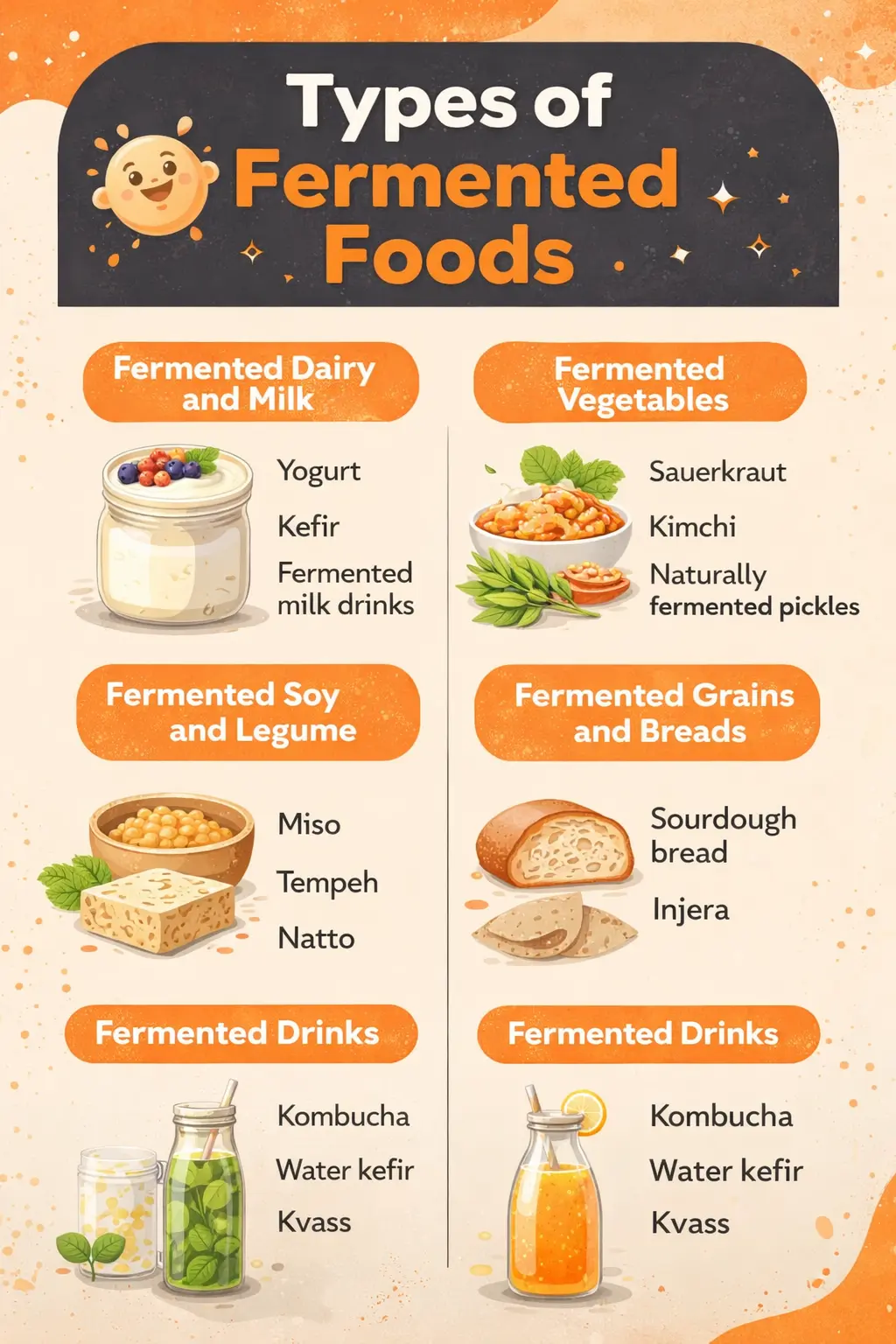
Types of Fermented Foods
Fermented foods come in many forms, depending on the ingredients used and the fermentation process involved. Grouping them by category makes it easier to understand what’s available and how different fermented foods fit into everyday meals.
This section also helps readers compare options, which aligns well with current search intent.
Fermented Dairy and Milk Products
Fermented dairy foods are among the most widely consumed fermented foods worldwide. They are made by fermenting milk with specific bacteria or cultures, which can change both texture and taste.
Common examples include:
- Yogurt – Often contains live and active cultures, depending on processing
- Kefir – A fermented milk drink with a thinner consistency than yogurt
- Fermented milk drinks – Traditional variations found in different cultures
Fermented dairy products are frequently chosen for their creamy texture and mild flavor, making them approachable for beginners.
Fermented Vegetables
Fermented vegetables are made through lacto-fermentation, where naturally occurring bacteria convert sugars into lactic acid using salt and water.
Popular fermented vegetables include:
- Sauerkraut – Fermented cabbage
- Kimchi – Spiced fermented vegetables, commonly napa cabbage or radish
- Naturally fermented pickles – Cucumbers fermented in brine, not vinegar
These foods are often crunchy, tangy, and rich in flavor, and they appear frequently in traditional cuisines around the world.
Fermented Soy and Legume Foods
Fermented soy and legume foods are staples in many Asian diets and are valued for both flavor and protein content.
Examples include:
- Miso – A fermented soybean paste used in soups and sauces
- Tempeh – A firm, fermented soybean product often used as a plant-based protein
- Natto – Fermented soybeans with a strong aroma and sticky texture
These foods demonstrate how fermentation can transform legumes into versatile and culturally significant ingredients.
Fermented Grains and Breads
Grain fermentation has been practiced for centuries and is still common today.
Well-known examples include:
- Sourdough bread – Made using wild yeast and bacteria instead of commercial yeast
- Injera – A fermented flatbread traditionally made from teff
Fermenting grains can alter flavor, texture, and digestibility, which is why fermented breads remain popular across cultures.
Fermented Drinks
Fermented beverages are created when yeast or bacteria ferment sugars in liquids, often resulting in mild carbonation or tanginess.
Common fermented drinks include:
- Kombucha – Fermented tea
- Water kefir – A dairy-free fermented drink
- Kvass – A traditional fermented beverage made from bread or grains
These drinks are often chosen by people looking for alternatives to sugary beverages.
How to Choose the Right Fermented Foods (Beginner Buying Guide)
With so many fermented foods available today, choosing the right one can feel overwhelming. The key is knowing what to look for on labels and understanding how products are processed.
Look for “Live and Active Cultures”
If you’re buying fermented foods for gut health, check the label for phrases like “live cultures” or “active cultures.” This indicates the product may still contain beneficial microorganisms at the time of consumption.
Keep in mind that not all fermented foods contain live microbes—some are fermented during production but later processed in ways that remove them.
Refrigerated vs Shelf-Stable Fermented Foods
In general, refrigerated fermented foods are more likely to contain live cultures than shelf-stable products. Items stored at room temperature are often pasteurized for safety and longer shelf life.
This doesn’t make shelf-stable fermented foods “bad,” but it does change what you’re getting from them.
Homemade vs Store-Bought
Homemade fermented foods offer more control over ingredients, while store-bought options provide convenience. Both can fit into a balanced diet—it often comes down to personal preference and lifestyle.
Are Fermented Foods Safe for Everyone?
Fermented foods are generally considered safe for most people when eaten in moderation as part of a balanced diet. However, individual responses can vary, especially for those who are new to fermented foods or have sensitive digestion.
Start Slowly and Listen to Your Body
If you’re new to fermented foods, it’s best to start with small portions rather than adding multiple fermented foods at once. Some people may experience temporary bloating or digestive discomfort as their body adjusts.
Starting slowly allows your digestive system time to adapt and helps you identify which foods work best for you.
Sensitivities and Individual Differences
Certain individuals may need to be more cautious with fermented foods, including those who:
- Are sensitive to high-histamine foods
- Have digestive sensitivities
- Prefer milder flavors and textures
Choosing gentler options, such as yogurt or fermented milk, may be more comfortable for beginners.
Basic Food Safety Considerations
Fermentation naturally creates an acidic environment that helps prevent harmful bacteria from growing. However, proper storage and handling still matter, especially for homemade fermented foods.
Refrigeration, clean utensils, and following basic preparation guidelines help maintain food quality and safety.
A Balanced Perspective
Fermented foods are not essential for everyone, and they are not meant to replace other healthy eating habits. They work best when included thoughtfully and in amounts that feel comfortable for you.
How to Eat Fermented Foods Every Day (Practical Tips)
Adding fermented foods to your daily routine doesn’t require a major diet change. Small, consistent additions are often more sustainable and enjoyable than large portions.
Simple Ways to Include Fermented Foods
- Breakfast: Add yogurt or kefir to smoothies, oatmeal, or fruit bowls
- Lunch: Use sauerkraut or kimchi as a topping for salads, wraps, or grain bowls
- Dinner: Incorporate miso into soups or use tempeh as a plant-based protein
- Snacks: Enjoy small servings of fermented vegetables or a glass of kombucha
These small additions allow fermented foods to fit naturally into existing meals.
Pair With Whole Foods
Fermented foods work best alongside:
- Fiber-rich vegetables
- Whole grains
- Adequate protein
This combination supports overall dietary balance and makes fermented foods easier to tolerate for many people.
Keep It Enjoyable
Taste matters. Choosing fermented foods you actually enjoy increases the likelihood that you’ll keep eating them long-term. There’s no single “best” fermented food—only what fits your preferences and lifestyle.
Final Thought
Fermented foods don’t need to be complicated. When eaten mindfully and consistently, they can become a simple, flavorful addition to everyday meals.
Final Disclaimer
This content is for educational purposes only and does not provide medical advice. Individual responses to foods vary. For personalized guidance, consult a qualified healthcare professional.
Fermented Foods FAQs
Are all fermented foods probiotic?
No. Only fermented foods that contain live microorganisms at the time of consumption are considered probiotic. Some fermented foods are pasteurized or processed, which removes live cultures.
How often should I eat fermented foods?
Many people include fermented foods a few times per week or daily in small amounts. Consistency matters more than large portions.
Can fermented foods cause bloating?
Some people may experience temporary bloating or digestive discomfort when first adding fermented foods. Starting with small servings can help reduce this.
Are fermented foods safe to eat every day?
For most people, fermented foods are safe to eat regularly as part of a varied diet. Individual tolerance differs, so it’s best to listen to your body.
Is yogurt better than kefir?
Both yogurt and kefir are fermented dairy products, but they differ in texture and microbial variety. The better option depends on personal preference and tolerance.
Do fermented foods help with weight loss?
Fermented foods are not weight-loss foods, but they may support digestion and appetite awareness as part of an overall healthy eating pattern.
Are fermented foods safe for children?
Many fermented foods, such as yogurt, are commonly consumed by children. Portion size and food type should be appropriate for age and preference.
Can I eat fermented foods if I don’t like sour foods?
Yes. Some fermented foods, like yogurt or mild fermented milk products, have a less sour taste and are easier for beginners.