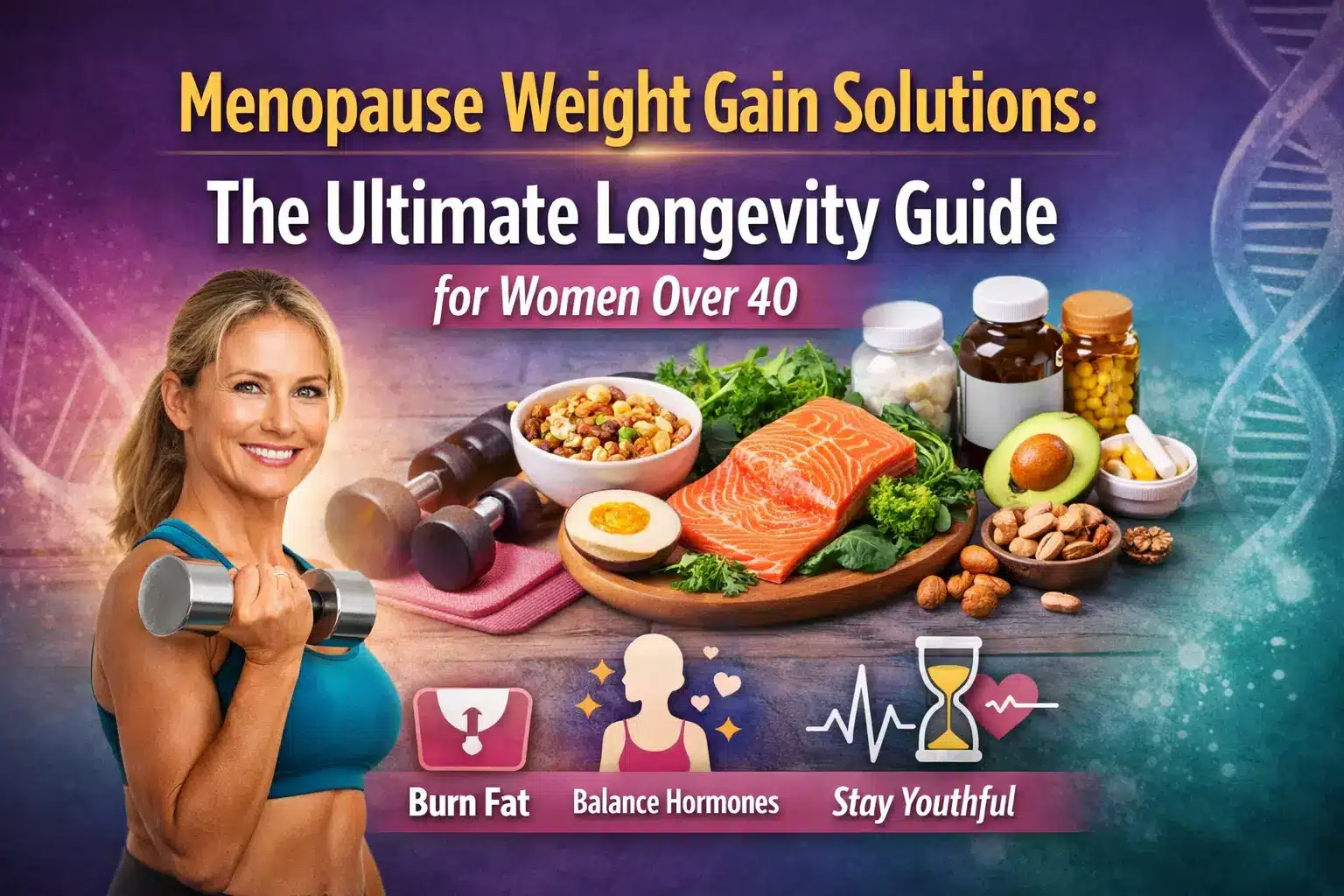


For many women, turning 40 doesn’t just mark a number; it signals a biological shift that directly impacts metabolism, hormones, and long-term health. This is why “longevity for women over 40” has become one of the fastest-growing health trends globally.
Unlike men, women experience a sharp hormonal transition during perimenopause and menopause, typically starting between the ages of 40 and 45. Estrogen, the hormone that supports everything from fat distribution to bone density, begins to decline. As a result, the body begins to change in ways that feel sudden and often frustrating.
This is where most health advice fails.
Traditional fitness and diet plans are built around younger metabolisms or male physiology, which is why many women are in search of the following queries:
- “Why am I gaining weight after 40?”
- “How to balance hormones naturally.”
- “Best diet for menopause belly fat”
👉 These are not random questions; rather, they reflect a system-wide change in how the body functions.
The Shift from Lifespan to Healthspan
Modern research is no longer just focused on living longer, but on living better for longer, a concept known as healthspan.
- Women today spend nearly 30–40% of their lives in post-menopause
- Risk of conditions like osteoporosis, metabolic slowdown, and cardiovascular issues increases after 40
- Muscle mass declines by 3–8% per decade after 30, accelerating after menopause
👉 This means:
You’re not just trying to “stay fit”, you’re trying to protect your body from accelerated aging
The Real Problem: Hormonal Imbalance After 40
Most symptoms women experience are not isolated issues; they stem from hormonal imbalance, particularly:
- Declining estrogen
- Reduced progesterone
- Increased cortisol (stress hormone)
- Insulin resistance
This leads to common problems like:
- Stubborn belly fat
- Low energy levels
- Poor sleep quality
- Mood swings and anxiety
- Loss of muscle tone
👉 That’s why questions like:
- “Hormone balance after 40”
- “Menopause weight gain solutions”
- “How to boost metabolism after 40 for females.”
are rapidly increasing.
Why Your Old Routine Stops Working
If you’ve noticed that:
- Eating less isn’t helping
- Cardio isn’t burning fat like before
- Weight gain feels easier than weight loss
You’re not imagining it.
After 40:
- Your metabolism slows down
- Your body stores fat differently (especially around the abdomen)
- Muscle loss reduces calorie-burning capacity
The result: The same habits that worked in your 20s and 30s stop delivering results
There’s a growing awareness of what experts call the “gender health gap”, where women’s long-term health needs were historically under-researched.
What This Guide Will Help You Do
Instead of quick fixes or restrictive plans, this guide focuses on science-backed, sustainable strategies to help you:
- Lose menopause weight naturally
- Restore hormone balance
- Build strength and protect muscle
- Improve energy, sleep, and mood
- Slow down visible and internal aging
👉 Bottom line:
Longevity for women over 40 isn’t about doing more; it’s about doing what actually works for your changing body.
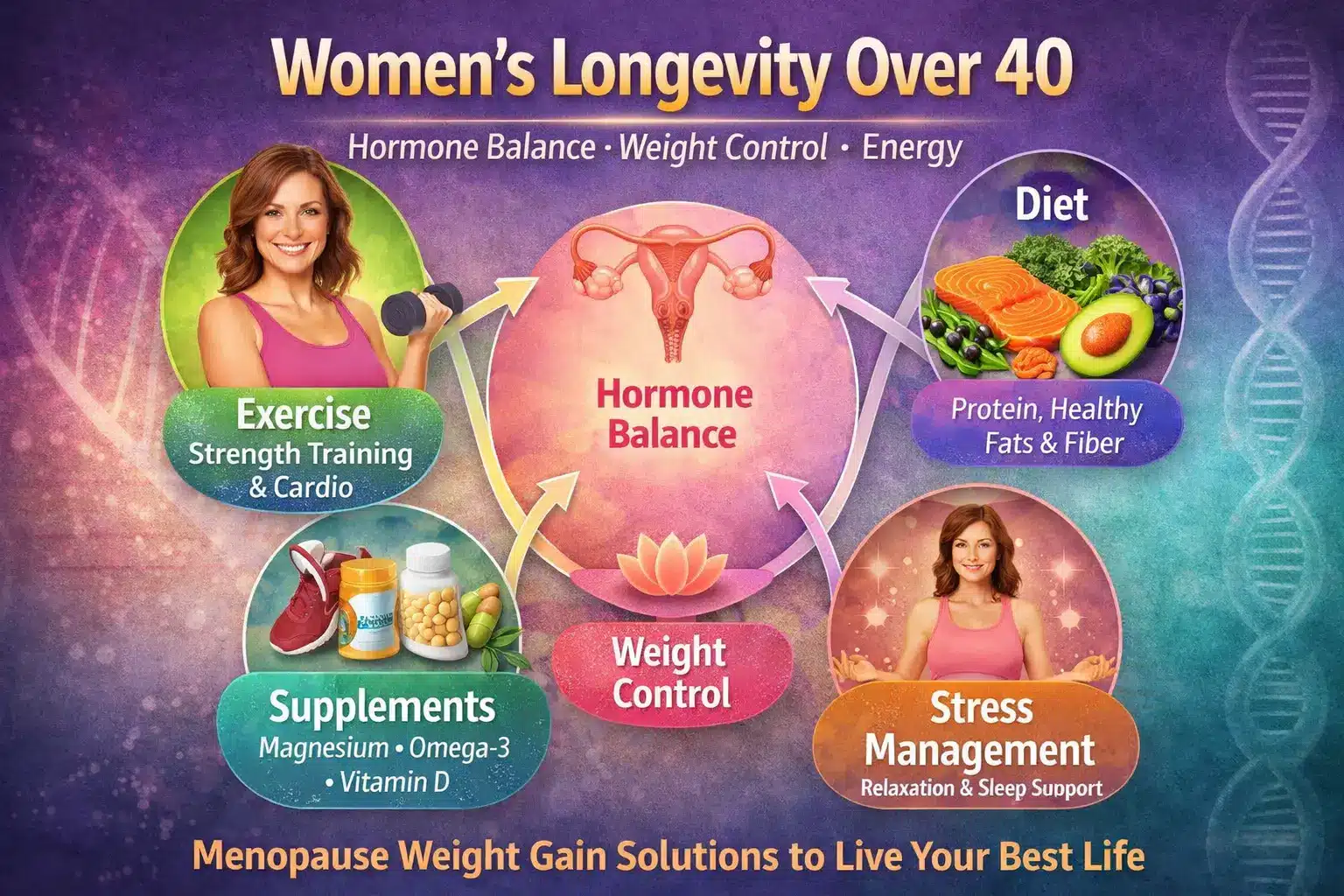
7 Signs Your Body is Aging Faster After 40
Many women don’t realize that the early signs of aging after 40 aren’t just “normal aging”; they’re often signals of deeper issues, such as hormonal imbalances, muscle loss, and a metabolic slowdown.
That’s exactly why search trends around:
- “Signs of hormonal imbalance in women”
- “Why am I always tired after 40”
- “menopause symptoms early”
have surged in recent years.
👉 The key difference:
If you catch these signs early, you can reverse or slow them significantly.
Stubborn Belly Fat That Won’t Go Away
Even with dieting or cardio, fat around the abdomen becomes harder to lose.
Why it happens:
- Declining estrogen shifts fat storage to the belly
- Increased insulin resistance makes fat loss harder
👉 This is why “menopause belly fat” is one of the most studied problems globally.
Constant Fatigue
Feeling tired despite getting enough sleep is a major red flag.
Root causes:
- Hormonal imbalance (estrogen + progesterone decline)
- Poor sleep quality linked to cortisol spikes
- Nutrient deficiencies (common after 40)
Loss of Muscle Tone & Strength
You may notice:
- Arms and legs feel weaker
- Body looks “softer” despite no weight gain
What’s happening:
- Muscle mass naturally declines with age
- Lower estrogen reduces muscle repair capacity
👉 This directly slows metabolism, making weight gain easier.
Brain Fog & Reduced Focus
Forgetting things, struggling to concentrate, or feeling mentally slow?
Why it happens:
- Estrogen plays a key role in brain function
- Blood sugar fluctuations affect cognitive clarity
👉 This is a major but under-discussed symptom of perimenopause.
Poor Sleep & Night Waking
Sleep disruptions become common after 40, even in women who previously slept well.
Causes include:
- Hormonal fluctuations
- Increased stress hormones (cortisol)
- Night sweats (early menopause sign)
👉 And poor sleep further worsens:
- Weight gain
- Cravings
- Fatigue
Mood Swings, Anxiety, or Irritability
Emotional changes are often dismissed, but they’re biological.
What’s behind it:
- Declining progesterone (calming hormone)
- Estrogen fluctuations affecting serotonin
Slower Metabolism & Easy Weight Gain
You may feel like:
- You’re eating the same but gaining weight
- Losing weight takes much longer than before
Reality:
- Metabolic rate declines with age
- Muscle loss reduces calorie burn
- Hormones affect fat storage efficiency
👉 This is the foundation of the entire “weight gain after 40” problem.
What Most Women Get Wrong
These symptoms are often treated separately:
- Fatigue → caffeine
- Weight gain → dieting
- Mood swings → ignored
But they all connect to one root issue: hormonal and metabolic changes
The Real Solution Opportunity
Here’s the good news:
👉 These signs are not permanent
👉 They are signals, not outcomes
With the right approach, you can:
- Restore energy levels
- Rebuild muscle
- Improve sleep
- Reverse metabolic slowdown
The REAL Reason Behind Menopause Weight Gain
If there’s one problem that dominates for women over 40, it’s this:
👉 “Why am I gaining weight even though I’m eating the same?”
This isn’t just perception, it’s a biological reality.
questions like:
- “menopause weight gain causes.”
- “Why women gain weight after 40.”
- “How to lose menopause belly fat.”
have exploded because traditional advice simply doesn’t work anymore.
The Core Issue: Hormones Change How Your Body Stores Fat
The biggest driver behind menopause weight gain is declining estrogen levels.
Before menopause:
- Estrogen helps regulate fat distribution
- Supports insulin sensitivity
- Maintains metabolic flexibility
After estrogen declines:
- Fat shifts toward the abdomen (belly fat)
- The body becomes more insulin-resistant
- Fat storage increases, even without overeating
👉 This is why many women suddenly notice:
Weight gain around the midsection, even if their habits haven’t changed
Problem #1: Your Metabolism Slows Down
Metabolism doesn’t just “slightly decrease”, it undergoes a compounded slowdown due to:
- Muscle loss (sarcopenia)
- Hormonal decline
- Reduced daily movement
Research shows that muscle mass decreases steadily with age, and since muscle is metabolically active tissue, losing it means:
👉 You burn fewer calories, even at rest
Problem #2: Muscle Loss is the Hidden Driver of Weight Gain
This is the most overlooked factor.
After 40:
- Women can lose 3–8% muscle mass per decade
- This accelerates during menopause
What this means practically:
- Your body burns fewer calories daily
- Fat accumulation becomes easier
- Body composition worsens (more fat, less muscle)
👉 So even if the scale doesn’t change much, your body looks and feels different
Problem #3: Increased Insulin Resistance
Hormonal changes also affect how your body processes carbohydrates.
- Cells become less responsive to insulin
- Blood sugar spikes more easily
- Excess glucose is stored as fat
👉 This explains why:
- Sugar cravings increase
- Energy crashes happen
- Belly fat becomes stubborn
Problem #4: Stress & Cortisol Are Working Against You
Women over 40 often experience:
- Increased life stress
- Poor sleep
- Hormonal instability
This leads to elevated cortisol (stress hormone)
And cortisol:
- Promotes fat storage (especially belly fat)
- Increases cravings for high-calorie foods
- Disrupts sleep → worsening weight gain cycle
👉 It becomes a self-reinforcing loop
Why Traditional Weight Loss Methods Fail After 40
This is where most frustration comes from.
Eating less (extreme dieting)
- Slows metabolism further
- Increases muscle loss
- Leads to rebound weight gain
Excessive cardio
- Burns calories short-term
- Does NOT rebuild muscle
- Can increase cortisol levels
👉 Result: More effort, fewer results
The Real Truth (What Actually Needs to Change)
Menopause weight gain is NOT just about calories.
It’s about:
- Hormones
- Muscle mass
- Metabolic efficiency
👉 Which means the solution must focus on:
- Preserving and building muscle
- Improving insulin sensitivity
- Reducing stress impact
💡 Key Takeaway
If you’re struggling with weight gain after 40:
👉 It’s not because you lack discipline
👉 It’s because your body is operating under a different biological system
And once you understand that, everything changes.
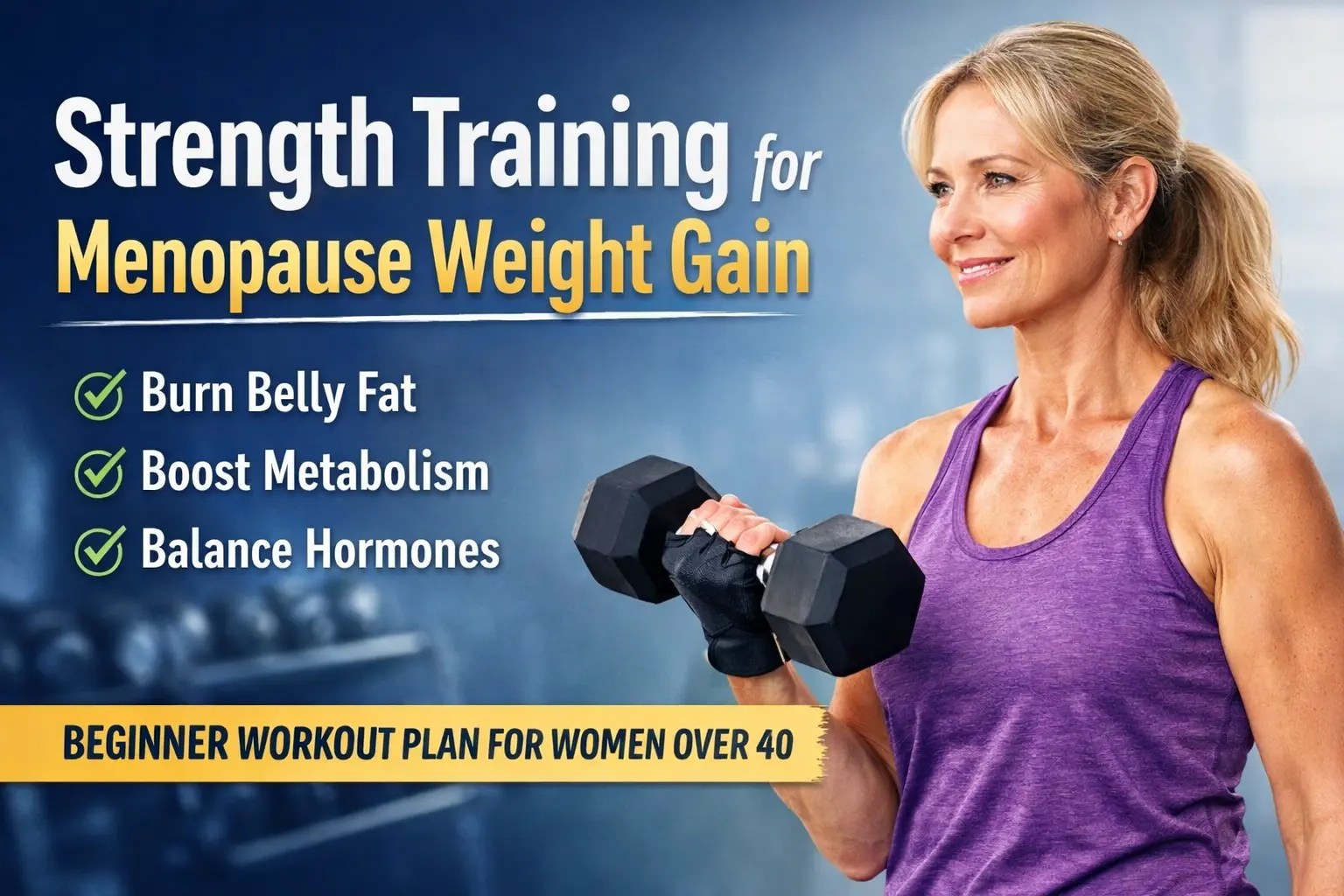
#1 Solution: Strength Training for Menopause Weight Gain (The Metabolism Reset You Need)
If there’s one strategy consistently backed by research, it is strength training. This is the most effective way to reverse menopause weight gain. Not cardio. Not extreme dieting. Not quick fixes.
Why Strength Training Works (When Everything Else Fails)
After 40, your body’s biggest problem is not fat gain, but it’s muscle loss, and strength training directly targets this.
Here’s what happens when you start lifting weights:
- Builds lean muscle mass → increases metabolism
- Improves insulin sensitivity → reduces fat storage
- Enhances hormone balance → supports fat loss
- Increases resting calorie burn → even when you’re not exercising
👉 In simple terms: More muscle = faster metabolism = easier fat loss
The Cardio Myth (Why It Stops Working After 40)
Many women rely on:
- Walking
- Jogging
- Long cardio sessions
While these are good for general health, they don’t solve the root issue.
Cardio alone:
- Burns calories temporarily
- Does NOT prevent muscle loss
- Can increase cortisol if overdone
👉 That’s why: You can be doing “more exercise” but still gaining weight
What Makes Strength Training Different
Strength training doesn’t just burn calories — it changes your body composition.
Instead of just losing weight, you:
- Lose fat
- Build muscle
- Tighten and tone your body
👉 This is why many women notice:
- Smaller waist
- Firmer arms and legs
- Better posture and strength
—even without major scale changes.
How Often Should Women Over 40 Do Strength Training?
For optimal results:
👉 2–4 sessions per week is enough
You don’t need daily workouts.
A simple beginner structure:
- Day 1: Full body
- Day 3: Lower body
- Day 5: Upper body
Each session:
- 30–45 minutes
- Focus on compound movements
Best Strength Exercises for Menopause Weight Gain
Focus on movements that engage multiple muscle groups:
Lower Body (Fat-burning powerhouse)
- Squats
- Lunges
- Deadlifts
Upper Body
- Push-ups
- Rows
- Shoulder presses
Core (for belly fat support)
- Planks
- Leg raises
- Dead bugs
👉 These exercises help rebuild muscle and target the metabolism slowdown directly
Bonus Benefit: Strength Training Improves Hormones
This is where it becomes even more powerful.
Strength training helps:
- Reduce insulin resistance
- Improve estrogen balance
- Lower cortisol levels
- Boost growth hormone (anti-aging effect)
👉 Which means: You’re not just losing weight, you’re slowing down the aging process
Common Mistakes to Avoid
To get results, avoid these:
Lifting too light:
- You need progressive resistance to build muscle
Inconsistency
- Results come from regular training
Fear of “bulking.”
- Women don’t bulk easily due to lower testosterone levels
👉 Instead: You’ll become leaner, stronger, and more toned
Realistic Results You Can Expect
Within 4–8 weeks of consistent training:
- Improved energy levels
- Better muscle tone
- Reduced belly fat appearance
- Stronger body and posture
Long-term:
👉 Faster metabolism + easier weight management
One of the most effective strategies is strength training, learn exactly how to implement it in our detailed guide on strength training for menopause weight gain.
💡Key Takeaway
If you do only ONE thing after 40, make it this:
Start strength training
Because it directly solves:
👉Muscle loss
👉 Slow metabolism
👉 Hormonal imbalance
The Best Diet for Hormone Balance After 40
If exercise is the engine, diet is the fuel.
And after 40, your body becomes far more sensitive to what you eat, when you eat, and how your body processes it.
👉 The truth is simple: You don’t need to eat less — you need to eat smarter
Why Diet Matters More After 40
Hormonal changes affect how your body responds to food:
- Estrogen decline → increases fat storage
- Insulin sensitivity decreases → more fat gain from carbs
- Muscle loss → lower calorie burn
👉 This means: the same diet that worked in your 20s may now lead to weight gain and fatigue
Problem #1: Blood Sugar Spikes Are Causing Fat Gain
Many women unknowingly follow diets that spike blood sugar:
- Refined carbs (white bread, sugary snacks)
- Frequent snacking
- Low protein intake
This leads to:
- Energy crashes
- Increased cravings
- Fat storage (especially belly fat)
👉 That’s why controlling blood sugar is the foundation of hormone balance
Solution #1: Prioritize Protein in Every Meal
Protein becomes essential after 40.
Why protein works:
- Preserves muscle mass
- Keeps you full longer
- Stabilizes blood sugar
- Supports metabolism
👉 Aim for:
20–30g protein per meal
Best sources:
- Eggs
- Chicken / fish
- Greek yogurt
- Lentils and beans
Solution #2: Add Healthy Fats (Hormone Builders)
Hormones are made from fats — cutting them too low can worsen imbalance.
Include:
- Omega-3 fats (fish, flaxseeds, walnuts)
- Avocados
- Olive oil
Benefits:
- Reduces inflammation
- Supports hormone production
- Improves brain function
Solution #3: Focus on Fiber for Gut & Hormone Health
Fiber plays a key role in removing excess hormones from the body.
Benefits:
- Improves digestion
- Helps regulate estrogen levels
- Supports weight loss
Best sources:
- Vegetables (broccoli, spinach)
- Fruits (berries, apples)
- Whole grains
Solution #4: Manage Meal Timing (Underrated Strategy)
Eating patterns matter just as much as food quality.
Effective approach:
- Avoid constant snacking
- Allow 3–4 hours between meals
- Consider light intermittent fasting (if suitable)
👉 This helps:
- Improve insulin sensitivity
- Promote fat burning
- Stabilize energy levels
Foods to Limit After 40
To balance hormones and reduce weight gain, limit:
Refined sugar
- Causes insulin spikes and fat storage
Processed foods
- High in unhealthy fats and additives
Excess alcohol
- Disrupts hormone balance and sleep
👉 You don’t need to eliminate — just reduce consistently
Sample Balanced Plate
Use this structure for every meal:
- 40% vegetables
- 30% protein
- 20% healthy fats
- 10% smart carbs
👉 This naturally supports:
- Hormone balance
- Weight control
- Energy stability
Realistic Results You Can Expect
Within a few weeks of eating this way:
- Reduced cravings
- Stable energy levels
- Better digestion
- Gradual fat loss
Long-term:
👉 Improved hormone balance + sustainable weight management
💡Key Takeaway
After 40, dieting is not about restriction.
It’s about:
👉 Stabilizing blood sugar
👉 Supporting hormones
👉 Preserving muscle
Top Longevity Supplements for Women After 40
Even with the best diet and exercise routine, your body after 40 may need additional nutritional support.
That’s why searches like:
- “longevity supplements for women”
- “best supplements for menopause fatigue”
- “anti-aging supplements female”
continue to grow rapidly.
👉 But here’s the problem:
The supplement market is flooded with overhyped, low-quality products
So instead of guessing, let’s focus on what actually works based on research and real outcomes.
Why Supplements Become Important After 40
As you age, your body experiences:
- Reduced nutrient absorption
- Increased oxidative stress (cell aging)
- Hormonal fluctuations affecting energy and metabolism
👉 This creates gaps that food alone may not fully cover
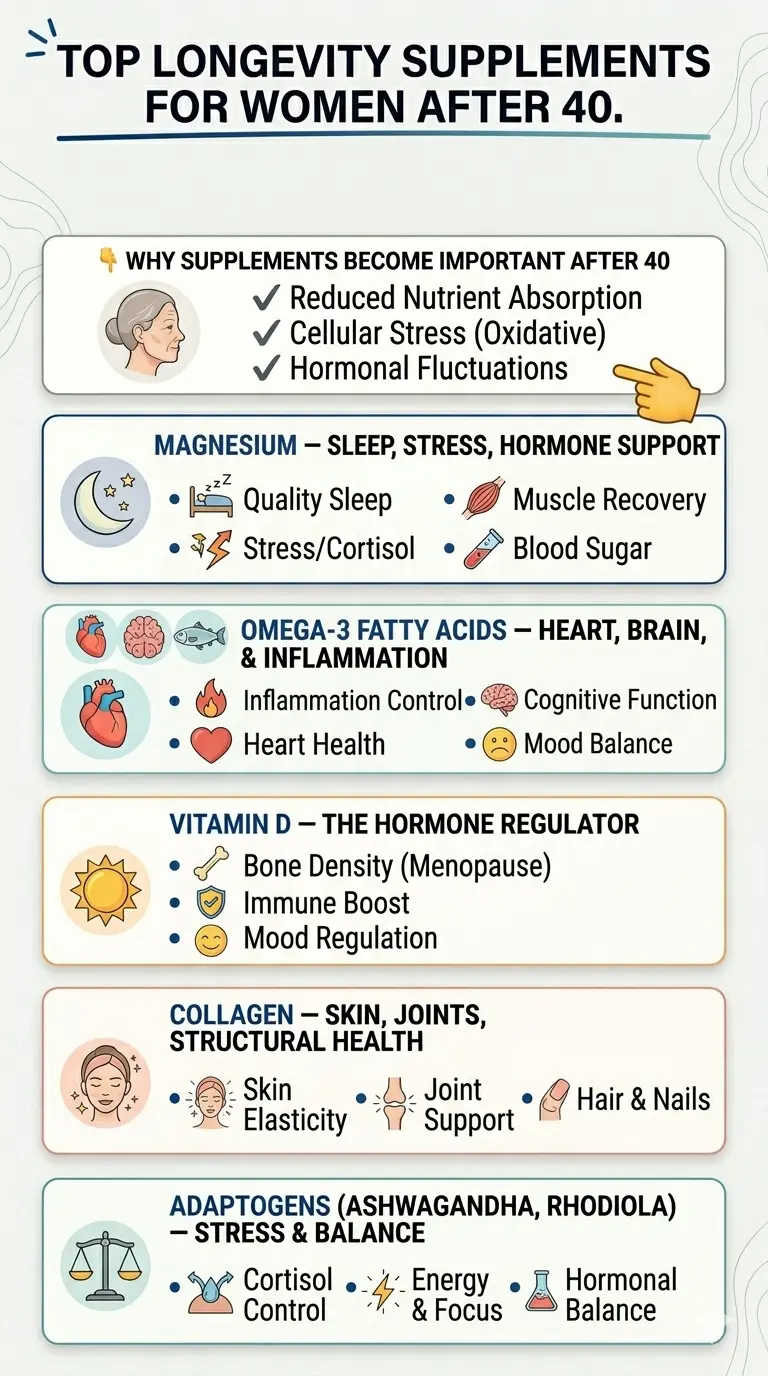
Magnesium — For Sleep, Stress & Hormone Support
Magnesium is one of the most commonly deficient nutrients in women.
Benefits:
- Improves sleep quality
- Reduces stress and cortisol
- Supports muscle recovery
- Helps regulate blood sugar
👉 Especially helpful for:
- Night waking
- Anxiety
- Muscle cramps
Omega-3 Fatty Acids — For Heart, Brain & Inflammation
Omega-3s are essential fats that support multiple longevity pathways.
Benefits:
- Reduces inflammation (linked to aging)
- Supports heart health
- Improves brain function
- May help with mood balance
👉 Important for women experiencing:
- Brain fog
- Joint pain
- Mood swings
Vitamin D — The Hormone Regulator
Vitamin D functions more like a hormone than a vitamin.
Benefits:
- Supports bone density (critical after menopause)
- Boosts immune function
- Helps regulate mood
👉 Deficiency is extremely common, especially in women over 40
Collagen — For Skin, Joints & Structural Health
Collagen production declines significantly with age.
Benefits:
- Improves skin elasticity
- Supports joint health
- Strengthens hair and nails
👉 This is one of the most searched anti-aging supplements for women
Adaptogens (Ashwagandha, Rhodiola) — For Stress & Balance
Adaptogens help the body adapt to stress — a major factor in aging.
Benefits:
- Reduces cortisol levels
- Improves energy and focus
- Supports hormonal balance
👉 Particularly useful for:
- Chronic stress
- Fatigue
- Burnout
Common Supplement Mistakes to Avoid
Taking too many supplements at once
- Focus on quality over quantity
Ignoring dosage and consistency
- Results come from regular use
Expecting instant results
- Supplements support — they don’t replace lifestyle changes
How to Choose the Right Supplements
Keep it simple:
👉 Start with:
- Magnesium
- Omega-3
- Vitamin D
Then add others based on your needs.
👉 Always look for:
- Third-party tested products
- Clean ingredient labels
- Trusted brands
💡Key Takeaway
Supplements are not a shortcut — they’re a support system.
When combined with:
👉 Strength training
👉 Proper nutrition
👉 They can significantly improve:
👉 Energy
👉 Recovery
👉 Overall longevity
How to Improve Ovarian Health After 40
Ovarian health is often misunderstood after 40.
Many women assume it’s no longer relevant—but question like:
- “how to improve ovarian health after 40”
- “egg quality improvement naturally”
- “hormone support for women over 40”
suggest otherwise.
👉 The reality:
Even as fertility declines, your ovaries still play a critical role in hormonal balance and overall health
Why Ovarian Health Still Matters After 40
Your ovaries are not just about reproduction—they are key hormone regulators.
They influence:
- Estrogen production
- Progesterone levels
- Overall hormonal stability
👉 Supporting ovarian function can help:
- Reduce menopause symptoms
- Improve energy and mood
- Support metabolic health
What Changes After 40 (The Real Picture)
With age:
- Egg quantity declines naturally
- Hormonal fluctuations increase
- Ovarian function becomes less consistent
👉 This is a natural process—not something to “reverse,” but something to support wisely
Solution #1: Increase Antioxidant Intake
Oxidative stress is one of the main contributors to cellular aging, including ovarian cells.
Key nutrients:
- Vitamin C
- Vitamin E
- Coenzyme Q10 (CoQ10)
Benefits:
- Supports cellular health
- May help improve egg quality
- Reduces internal inflammation
👉 Foods to include:
- Berries
- Nuts and seeds
- Leafy greens
Solution #2: Reduce Chronic Stress (Critical for Hormones)
Chronic stress directly impacts ovarian hormone production.
High cortisol levels:
- Disrupt estrogen balance
- Affect ovulation patterns
- Worsen fatigue and mood
Practical steps:
- Daily walking
- Deep breathing
- Quality sleep routines
👉 Even small changes can significantly improve hormonal stability
Solution #3: Support Hormones Through Nutrition
Your diet plays a key role in ovarian support.
Focus on:
- Healthy fats (for hormone production)
- Protein (for tissue repair)
- Fiber (for hormone regulation)
👉 This aligns directly with the hormone-balancing diet discussed earlier
What Not to Chase
Avoid unrealistic expectations like:
- “Reversing ovarian aging completely”
- Quick-fix supplements promising fertility restoration
👉 Instead, focus on:
Supporting function, not chasing reversal
💡Key Takeaway
After 40, ovarian health is not about fertility alone.
It’s about:
👉 Hormonal balance
👉 Energy
👉 Long-term wellness
The Perfect Weekly Routine for Longevity
Weekly Longevity Plan
| Day | Activity | Focus | Why It Matters |
|---|---|---|---|
| Monday | Strength Training (Full Body) | Muscle building | Boosts metabolism + fat loss |
| Tuesday | Walking + Light Stretching | Recovery | Reduces stress hormones (cortisol) |
| Wednesday | Strength Training (Lower Body) | Fat burn | Targets large muscles for higher calorie burn |
| Thursday | Yoga / Mobility | Hormone balance | Improves flexibility + reduces stress |
| Friday | Strength Training (Upper Body + Core) | Strength + tone | Supports posture + muscle retention |
| Saturday | Low-Intensity Cardio | Heart health | Enhances fat utilization |
| Sunday | Rest + Recovery | Reset | Prevents burnout + supports longevity |
If you’re unsure where to start, our beginner-friendly strength training workout plan for women over 40 breaks it down step by step.
Daily Nutrition Framework
| Habit | What to Do | Benefit |
|---|---|---|
| Protein intake | Include protein in every meal | Preserves muscle + controls hunger |
| Vegetables | Eat in at least 2 meals | Supports hormone detox |
| Healthy fats | Add daily (olive oil, nuts) | Builds hormones |
| Sugar control | Limit processed sugar | Prevents fat storage |
Research shows that exercise and nutrition work together, which is why following the best diet for hormone balance after 40 is essential alongside strength training.
Sleep & Recovery Guide
| Factor | Recommendation | Impact |
|---|---|---|
| Sleep duration | 7–8 hours | Supports fat loss + hormones |
| Sleep timing | Consistent schedule | Improves recovery |
| Night routine | Reduce screens before bed | Enhances sleep quality |
Stress Management Routine
| Habit | Duration | Benefit |
|---|---|---|
| Walking | 10–15 min daily | Lowers cortisol |
| Deep breathing | 5–10 min | Improves relaxation |
| Screen control | Limit at night | Supports hormone balance |
Common Mistakes Women Make After 40
Even with the right information, many women unknowingly follow habits that slow metabolism, worsen hormonal imbalance, and make weight loss harder.
That’s why searches like:
- “why can’t I lose weight after 40”
- “menopause weight loss mistakes”
- “healthy habits for women over 40”
continue to trend.
👉 The difference between progress and frustration often comes down to avoiding these key mistakes
The Most Common Mistakes
| Mistake | What Happens | Better Approach |
|---|---|---|
| Doing too much cardio | Muscle loss + slower metabolism | Add strength training 2–4x/week |
| Eating too little | Hormone disruption + fat storage | Eat balanced, nutrient-dense meals |
| Skipping protein | Muscle loss + increased cravings | Include protein in every meal |
| Ignoring strength training | Faster aging + weight gain | Prioritize resistance training |
| Poor sleep habits | Increased cortisol + fat gain | Aim for 7–8 hours quality sleep |
| Chronic stress | Hormonal imbalance | Add daily stress-reducing habits |
| Expecting quick results | Inconsistency + frustration | Focus on long-term consistency |
Why These Mistakes Matter More After 40
After 40, your body becomes less forgiving.
👉 Small mistakes can lead to:
- Faster fat gain
- Slower recovery
- Increased hormonal imbalance
This is why strategies that worked earlier in life may now backfire.
The Shift You Need to Make
Instead of:
- Eating less
- Exercising more
- Chasing quick results
👉 Focus on:
- Building muscle
- Supporting hormones
- Creating sustainable habits
Your Longevity Blueprint
Now let’s simplify everything into a clear, actionable system you can start immediately.
1. Train Smart
- Strength train 2–4 times per week
- Focus on progressive overload
2. Eat to Support Hormones
- Protein in every meal
- Healthy fats daily
- Reduce sugar and processed foods
3. Prioritize Recovery
- Sleep 7–8 hours
- Manage stress daily
4. Use Supplements Wisely
- Start with essentials (Magnesium, Omega-3, Vitamin D)
- Stay consistent
5. Stay Consistent (The Real Secret)
- Small daily habits > extreme short-term efforts
Implementing these seven solutions is the first step toward reclaiming your energy. If you’re looking for a structured plan to accelerate your results, browse our digital wellness store for deeper dives into hormone health and fitness.”
Frequently Asked Questions
How can I lose menopause belly fat fast?
Focus on strength training, a high-protein diet, and blood sugar control. Quick fixes don’t work long-term.
What is the best exercise for women over 40?
Strength training combined with light cardio is the most effective for fat loss and hormone balance.
Can you balance hormones naturally after 40?
Yes — through proper nutrition, exercise, stress management, and sleep, many hormonal symptoms can improve significantly.
Which supplements are best for anti-aging in women?
Magnesium, Omega-3, Vitamin D, and collagen are among the most effective for supporting longevity and overall health.
This article is for informational and educational purposes only and should not be considered medical advice. Please review our Medical Disclaimer before making health-related decisions.