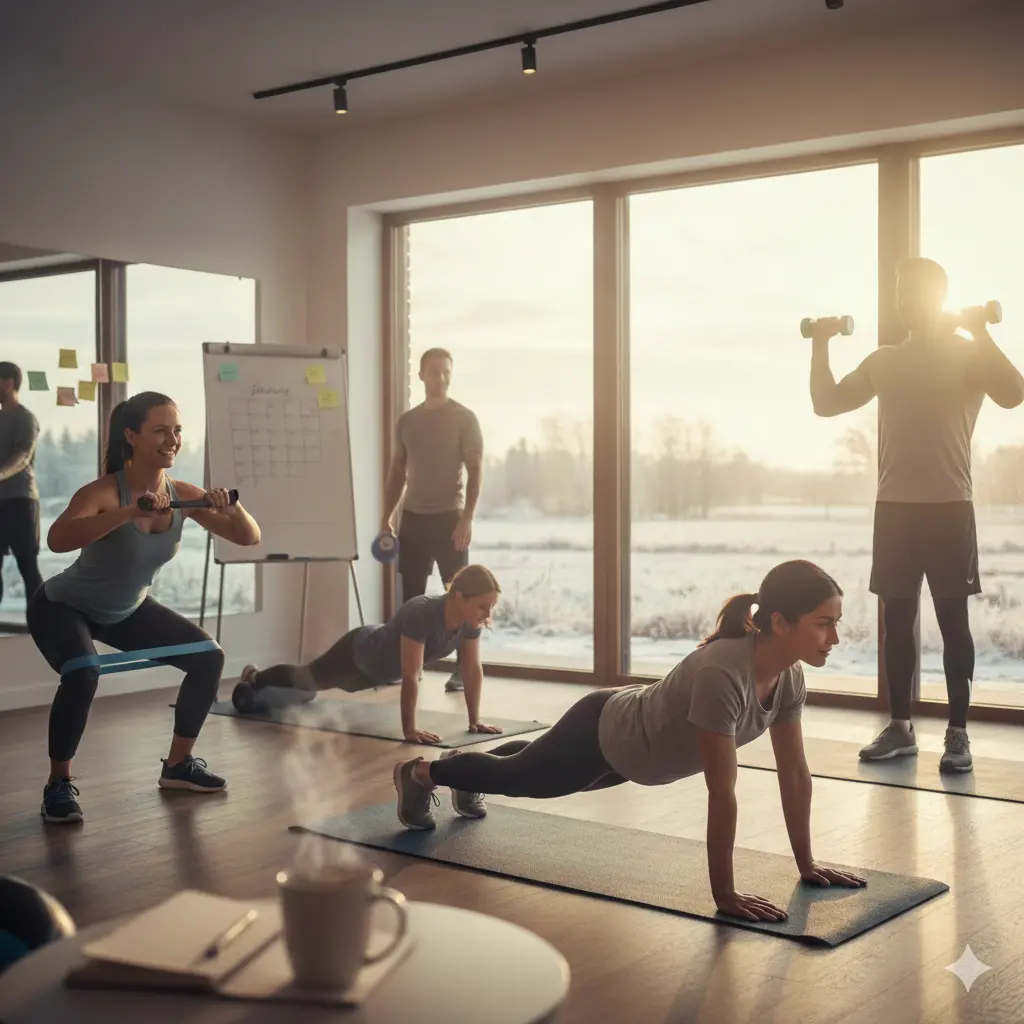


Every January, millions of people set ambitious fitness goals, and by February, most of those plans are abandoned. If you’ve ever promised yourself “This year will be different” only to lose momentum a few weeks later, you’re not alone. Research shows that 92% of New Year’s fitness resolutions fail, not because people are lazy or unmotivated, but because the goals they set are unrealistic, unclear, and unsustainable.
The truth is simple: It’s not the goal that fails — it’s the method.
Real progress comes from setting realistic fitness goals for the new year that fit your lifestyle, current abilities, and long-term vision. And this year, instead of chasing perfection, we’re focusing on something far more powerful.
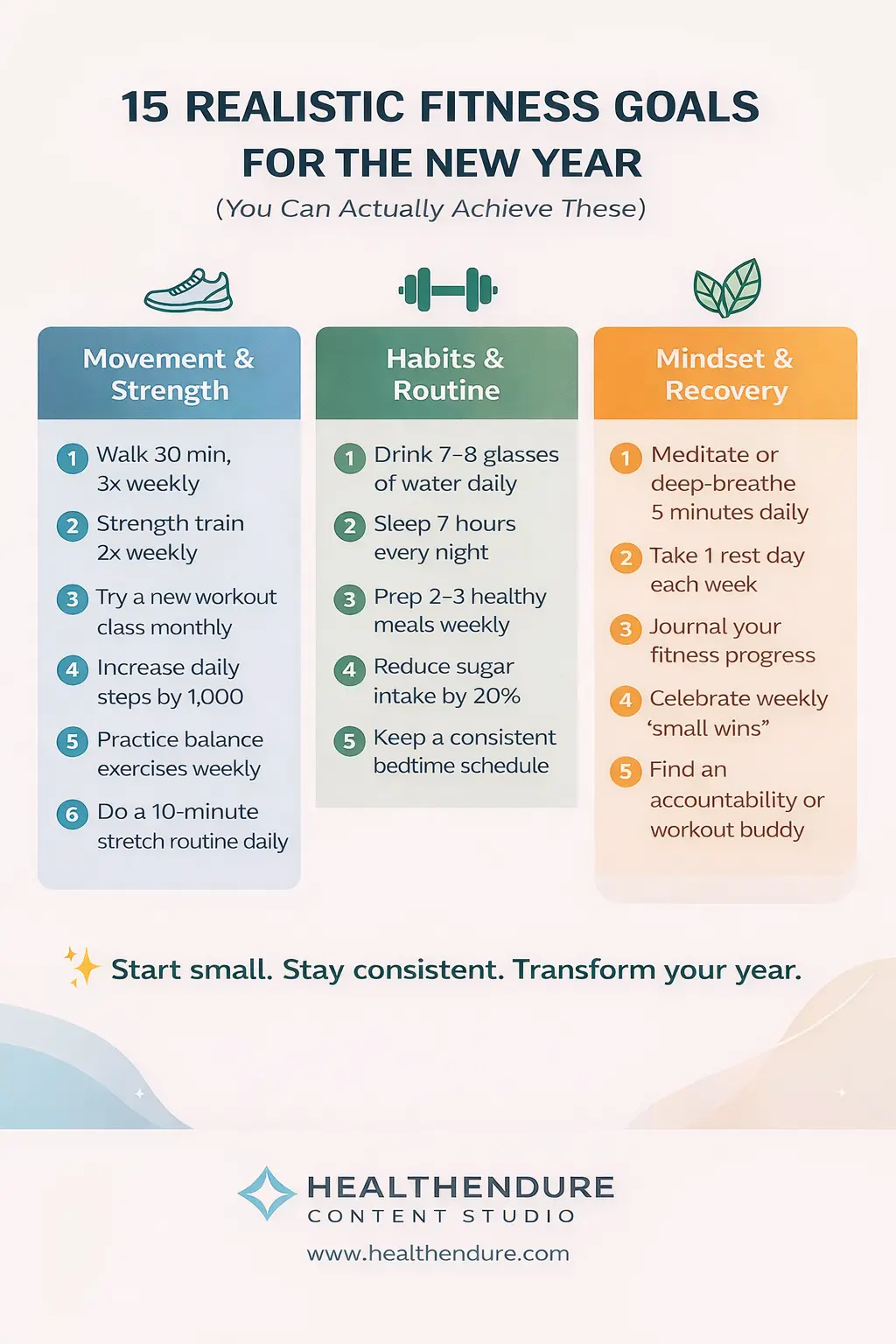
In this guide, you’ll explore 15 SMART, realistic fitness goals for the New Year, along with habit strategies, micro-workouts for busy people, and a 5-minute goal-setting checklist to help you finally stick to your fitness resolutions.
Why 92% of New Year’s Fitness Goals Fail
Most people don’t fail because they’re not committed. They fail because traditional resolutions are:
- Too vague: “Get fit,” “lose weight,” “work out more”, your brain can’t act on instructions that lack detail.
- Too big, too soon: Trying to change lifestyle overnight.
- Not measurable: If you can’t track progress, you can’t feel progress, and motivation fades fast.
- Dependent on outcomes, not actions: People focus on the number on the scale rather than the daily habits that actually create results.
- Not personalized: A goal that doesn’t fit your schedule, stress level, or fitness level is doomed from the start.
The solution? A proven framework that makes fitness goals attainable, sustainable, and motivating: the SMART method.
The SMART Fitness Framework
Before we get into the 15 realistic fitness goals, we need a structure. SMART goals are:
- Specific — clear and well-defined
- Measurable — you can track progress
- Attainable — matches your current lifestyle
- Relevant — connects to your real needs
- Time-bound — has a deadline to keep you focused
Using SMART goals transforms vague intentions into actionable plans, which increases success dramatically — especially for those who struggle with consistency.
Throughout this article, every fitness goal will follow this SMART structure so you can easily understand what to do, how to do it, and how to measure it.
15 SMART Fitness Goals for the New Year: From Vague Dream to Action Plan
Below are 15 realistic fitness goals for the New Year, each shown as:
- The Vague Goal (what most people do)
- The SMART Goal (clear, realistic, and doable)
Let’s begin.
Goal 1 — Strength & Muscle
Vague Goal: “I want to get stronger.”
SMART Goal: Perform 3 sets of 10 unassisted push-ups by March 31st.
Why This Works:
Push-ups are a universal strength marker that improve the chest, shoulders, core, and triceps. Setting a rep-based goal gives you measurable progress, which boosts motivation. This aligns perfectly with realistic fitness goals that match your current ability.
Goal 2 — Endurance & Cardio
Vague Goal: “I’ll run more this year.”
SMART Goal: Complete a continuous 30-minute light jog by February 28th.
Why This Works:
A 30-minute jog is achievable for beginners and provides a cardio foundation without overwhelming intensity. It aligns with achievable fitness goals that improve heart health and stamina over time.
Goal 3 — Body Composition (Weight Loss)
Vague Goal: “I need to lose weight.”
SMART Goal: Lose 1% of body fat per month for the first quarter by eating 20% more vegetables and walking 7,000 steps daily.
Why This Works:
Focusing on body fat percentage, not weight, is more accurate and healthier. Adding vegetables + steps = sustainable, simple, and scientifically backed for fat loss.
Goal 4 — Flexibility & Mobility
Vague Goal: “I want to be more flexible.”
SMART Goal: Perform a 10-minute stretching or yoga routine 4× per week for two months.
Why This Works:
Flexibility goals succeed when they are short and frequent. Ten minutes is low-friction, and 4× weekly builds measurable mobility improvements.
Goal 5 — Habit & Consistency
Vague Goal: “I just need to be consistent.”
SMART Goal: Exercise 3 times per week for 8 consecutive weeks, logging each session in a fitness journal or app.
Why This Works:
Consistency is the real driver of transformation.
Fitness journaling increases adherence by 40% (behavioral psychology), and 8 weeks is long enough to build a lasting habit.
Goal 6 — Functional Fitness (For Everyday Life)
Vague Goal: “I just want to improve my day-to-day strength.”
SMART Goal: Hold a 60-second plank every day for two weeks to improve core stability for daily activities like lifting, standing, and carrying.
Why This Works:
Functional fitness goals focus on movements you use in real life, not just gym performance.
A daily plank strengthens the core — the foundation of almost every movement, making this an attainable fitness resolution for beginners and busy people.
Goal 7 — Improve Your Sleep for Better Recovery
Vague Goal: “I need to sleep better this year.”
SMART Goal: Establish a sleep schedule: in bed by 11 PM for 30 nights, with screens off 60 minutes before bedtime.
Why This Works:
Sleep is directly connected to fat loss, muscle repair, and workout performance. If your sleep improves, your fitness improves even without increasing workout time.
Goal 8 — Step Count & Daily Movement Goals
Vague Goal: “I’ll walk more.”
SMART Goal: Hit 7,500–8,500 steps per day for 30 consecutive days using a phone or smartwatch tracker.
Why This Works:
This is one of the most achievable fitness goals for beginners. Steps improve metabolism and cardiovascular health, and are easier to stick to than formal workouts. It’s an ideal goal for people who want low-impact New Year fitness targets.
Goal 9 — Build Lower Body Strength (Beginner-Friendly Squat Goal)
Vague Goal: “I want stronger legs.”
SMART Goal: Perform 25 bodyweight squats with perfect form by March 15th.
Why This Works:
Squats are a core movement for functional fitness, posture, and injury prevention. Setting a realistic squat target gives beginners confidence without requiring gym access.
Goal 10 — Improve Upper Body Strength (Pull-Up Progress)
Vague Goal: “I’ll try to do a pull-up this year.”
SMART Goal: Complete 1 full pull-up by April 30th using weekly assisted pull-up progressions.
Why This Works:
A pull-up is a powerful milestone for upper-body strength. Breaking the process into assisted pull-ups, eccentric lowering, and lat-strength drills makes it realistic and rewarding. People searching for “realistic New Year fitness goals” often include strength targets like pull-ups and push-ups.
Goal 11 — Build a Sustainable Workout Habit (The Action-Tracking Goal)
Vague Goal: “I’ll stay consistent this year.”
SMART Goal: Complete 20 total workouts by March 1st, tracking each session in a habit app or notebook.
Why This Works:
Instead of saying “I’ll work out regularly,” you set a fixed action quota. Twenty workouts in eight weeks is realistic—even for beginners or busy professionals. This is one of the strongest “realistic fitness goals for the New Year” because it reframes success as showing up, not perfection.
Goal 12 — Prioritize Recovery & Mobility (The Longevity Goal)
Vague Goal: “I’ll stretch more.”
SMART Goal: Do a 5-minute mobility routine every morning for 30 days, focusing on hips, spine, and shoulders.
Why This Works:
Micro-mobility sessions improve:
- posture
- joint health
- pain reduction
- workout performance
Goal 13 — Hydration & Nutrition Basics (The Foundation Goal)
Vague Goal: “I’ll eat healthier this year.”
SMART Goal: Drink 6–8 glasses of water daily and add one nutrient-dense food (fruit/vegetables) to at least one meal for 30 days.
Why This Works:
Nutrition goals fail when they are extreme.
This goal is:
- simple
- measurable
- highly achievable
- proven to improve digestion, energy, and weight management
This supports sustainable fitness habits because you’re not eliminating foods, you’re adding beneficial ones.
Goal 14 — Mental Health & Stress Reduction (The Mind-Body Goal)
Vague Goal: “I want to reduce stress.”
SMART Goal: Do a 5-minute mindfulness or breathing routine 5 days a week for six weeks.
Why This Works:
Stress sabotages fitness progress by:
- Increasing cravings
- Reducing sleep quality
- lowering workout motivation
- raising cortisol
Goal 15 — Create a Realistic Weekly Routine (The Lifestyle Integration Goal)
Vague Goal: “I’ll find time to work out.”
SMART Goal: Plan your weekly routine every Sunday: choose 3 workout days, 1 mobility day, and 1 micro-workout day for the next 7 days.
Why This Works:
The number one reason people quit is friction — the feeling of “I don’t know what to do today.” This goal addresses that with pre-planning, which behavioral science has proven increases adherence.
The 3 Pillars of Sustainable Fitness Habits
Most people don’t fail because their goals are wrong, but they fail because their systems don’t support their goals.
If you want to break the cycle of starting strong and giving up by February, you need habits that are:
- Simple
- Repeatable
- Emotionally sustainable
- Easy to resume after setbacks
These three pillars turn your realistic fitness goals into lifelong habits, not short bursts of motivation.
Pillar 1: Stop Tracking Outcomes-Start Tracking Actions
This is one of the biggest mindset shifts you can make.
Outcome tracking:
- Lose 10 lbs
- Look toned
- Fit into smaller clothes
Outcomes are slow. They change gradually. They depend on multiple factors (sleep, stress, hormones, consistency).
When the outcome doesn’t move quickly, people feel discouraged.
Action tracking:
- Number of workouts completed per week
- Number of steps counted
- Number of mobility sessions
- Days you drank enough water
- Meals with added vegetables
- Minutes spent in micro-workouts
Actions build identity. Identity creates motivation. Motivation supports consistency. This psychological model is backed by behavioral science studies showing that people who track actions, not results, are more likely to stick with fitness for 6+ months. This is the core mindset behind sustainable fitness habits.
Pillar 2: The 10-Minute Rule (The Anti-Procrastination Hack)
The 10-minute rule is simple and massively effective:
If you don’t feel like working out, commit to just 10 minutes. That’s it.
Why it works:
- It removes internal resistance
- It reduces “all-or-nothing” thinking
- It activates the motivation loop
- 90% of the time, once you start, you continue
Your brain only resists starting, not the actual workout. Once you break the inertia, momentum builds naturally. This micro-commitment is perfect for:
- beginners
- busy people
- anyone rebuilding consistency
- those who fear failing again
Pillar 3: Audit Your Friction Points (And Fix Them)
Friction is the hidden enemy of consistency. Friction = anything that makes it slightly harder to follow your fitness routine.
Common friction points:
You don’t know what workout to do
You don’t know when you’ll work out
You don’t prepare your clothes or gear
You get bored easily
You rely on motivation instead of structure
You aim too big and burn out
Now the solution:
Identify → Reduce → Replace
Example Friction: “I don’t have time.”
Fix: Use micro-workouts (see Section 4).
Example Friction: “I don’t know what to do today.”
Fix: Create a weekly plan every Sunday (Goal #15).
Example Friction: “I lose motivation.”
Fix: Track actions, not outcomes (Pillar 1).
Example Friction: “I get bored.”
Fix: Use workout rotations:
- 1 strength day
- 1 cardio day
- 1 mobility day
Understanding friction empowers you to build realistic, sustainable habits that survive stress, holidays, travel, and low-energy days.
Micro-Workouts: How to Get Fit in Less Than 5 Minutes
If the biggest reason you abandon your fitness goals is a lack of time, you are not alone. Modern schedules are packed with work deadlines, school runs, meetings, family duties — and suddenly 45-minute workouts feel impossible.
But here’s the GOOD news:
You don’t need long workouts to get fit. You need consistent movement. That’s exactly where micro-workouts (also called exercise snacks) come in. Micro-workouts are short bursts of exercise — 30 seconds to 5 minutes — spaced throughout your day. They eliminate the biggest friction point: finding time.
Micro-workouts have three major science-backed benefits:
They boost metabolism
Frequent small bursts of activity raise calorie burn throughout the day.
They improve strength and mobility
Even 2–3 minutes of movement helps maintain muscle activation, posture, and joint health.
They increase consistency
Micro-sessions are almost impossible to “skip,” making them one of the most sustainable fitness habits you can build.
Below are realistic micro-workouts you can do anywhere — at home, at work, or during your daily routine.
| Micro-Workout Example | Target Area | Time-Slot Opportunity | Why It Works |
|---|---|---|---|
| The Coffee Break Plank | Core / Abdominals | While your coffee brews, microwave runs, or during a short break | Planks activate deep core muscles that improve posture and reduce lower back pain. Users often share how 30–60 sec planks throughout the day helped them build surprising strength. |
| Chair Squat–Dip Combo | Legs / Glutes / Triceps | During a boring Zoom meeting (camera off) or while on a phone call | Squats + dips improve functional fitness, movements you use in real life, like standing, lifting, and pushing. Great for beginners. |
| Stair Sprints (Tabata Style) | Cardio / Endurance | Right after lunch to fight the afternoon slump | Short bursts of high-intensity movement are incredibly effective for cardiovascular fitness. Research shows intensity beats duration for metabolic health. |
| Wall Push-Ups | Chest / Shoulders | Anytime you pass a wall or during a quick break | A beginner-friendly version of push-ups, perfect for anyone building realistic upper-body strength goals. |
| Calf Raises While Brushing Teeth | Lower Legs / Balance | Morning or nighttime routine | Anchoring fitness habits to existing routines increases adherence, a proven behavioral strategy called “habit stacking.” |
| 5-Minute Mobility Flow | Hips / Spine / Shoulders | Before showering or before bed | A short routine improves flexibility, reduces stiffness, and supports long-term joint health, ideal for people with sedentary jobs. |
Pro Tip — The “Exercise Snack” Calendar System
If you REALLY want micro-workouts to stick, use this simple scheduling trick:
📱 Set three daily reminders:
- 10:30 AM
- 1:30 PM
- 4:00 PM
Each reminder = one micro-workout snack.
You can rotate them like this:
- Monday: Plank → Squats → Mobility
- Wednesday: Push-ups → Stair Sprint → Mobility
- Friday: Core → Legs → Stretch
This removes decision fatigue and builds a predictable rhythm, exactly what you need to turn fitness resolutions into lifelong habits.
Bonus: micro-workouts improve mood and productivity, making them perfect for busy professionals and students.
Conclusion: Take the First Step (Your 5-Minute Goal-Setting Checklist)
Setting realistic fitness goals for the New Year isn’t about perfection, intensity, or overnight transformation; it’s about choosing clear, achievable habits that build consistency over time.
Whether you’re aiming to get stronger, lose weight, improve mobility, or become more active, the goals you choose today can shape your entire year.
And the best part?
You don’t need a complicated gym plan or hours of free time. You only need clarity, direction, and small, steady steps.
Use this quick 5-minute checklist to set your fitness goals for the year:
Your 5-Minute Goal-Setting Checklist
1. Pick ONE goal to start with
Choose from the 15 SMART goals above — or create your own using the same framework. (Example: “Exercise 3 times a week for 8 weeks.”)
2. Turn it into a SMART goal
Make it Specific, Measurable, Achievable, Relevant, and Time-bound. (Example: “Complete 20 workouts by March 1st.”)
3. Schedule your workouts
Open your calendar and add at least 3 workout days for the next week. Pre-planning removes friction and boosts consistency.
4. Add micro-workouts
Choose one mini workout to insert into your day:
- morning plank
- mid-day squats
- evening mobility
These “exercise snacks” turn busy people into consistent movers.
5. Track actions — not outcomes
Use a simple habit tracker, journal, or notes app to check off:
- workouts completed
- steps taken
- mobility sessions
- hydration
- sleep schedule
Success lives in daily actions, not the scale.
You’re now equipped with a full blueprint for building realistic, sustainable fitness goals that won’t collapse by February.
👉 Comment your #1 SMART fitness goal for this year.
Sharing it increases accountability and makes you far more likely to achieve it.
FAQs
1. What are realistic fitness goals for beginners?
Realistic goals are small, achievable actions you can maintain consistently.
Examples include:
exercising 3 days a week
hitting 7,500 steps daily
doing a 10-minute mobility routine
completing 20 workouts in 8 weeks
These provide structure without
2. How do I set SMART fitness goals for the New Year?
Use this structure:
Specific: Choose one clear goal
Measurable: Add numbers or time
Achievable: Start small
Relevant: Align with your real needs
Time-Bound: Add a deadline
Example: “Hold a 60-second plank by February 15th.”
3. How can I stay consistent with my fitness goals?
Follow these proven strategies:
track actions, not weight
Use the 10-minute rule
Schedule workouts every Sunday
remove friction (prepare clothes, plan routines)
Use micro-workouts on busy days
4. Can I get fit without going to the gym?
Absolutely.
Bodyweight training, walking, micro-workouts, mobility routines, and home-based exercises can help you build strength, lose fat, and increase energy.
The key is consistency — not location.