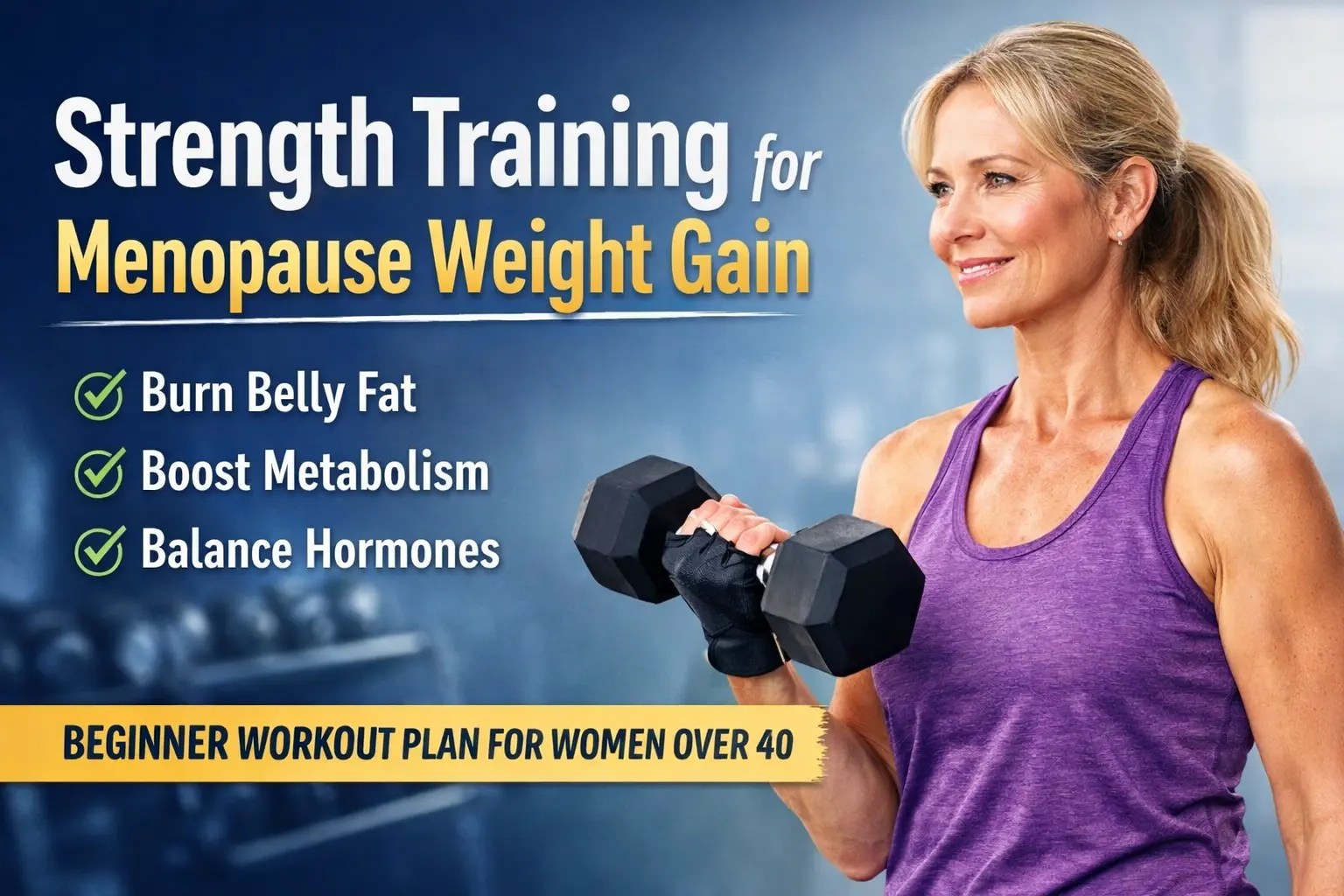


Strength training for menopause weight gain is the most effective way to rebuild metabolism, reduce belly fat, and restore hormonal balance after 40. If you’ve crossed 40 and feel like your body is no longer responding the way it used to, you’re not imagining it.
In fact, you might recognize this exact pattern:
- You eat the same, but the scale keeps climbing
- You exercise more, but your results are getting worse
- Your menopause belly fat increases, no matter how consistent you are
This is exactly why searches like “weight gain after 40 female,” “how to lose menopause weight,” and “best exercise for menopause weight gain” have surged in recent years.
Because something is changing, and it’s not just your routine.
The Real Problem: Your Body Has Shifted After 40
Here’s the truth most fitness advice ignores:
After 40, especially during perimenopause and menopause, your body is no longer operating under the same biological rules.
This isn’t about discipline.
It’s about physiology.
Hormonal Changes Are Rewiring Fat Storage
As estrogen levels decline, your body begins to store fat differently.
Research shows that lower estrogen levels are associated with:
- Increased abdominal fat storage
- Reduced fat oxidation (fat-burning efficiency)
- Greater resistance to traditional weight loss methods
👉 This is why menopause belly fat feels more stubborn; it’s hormonally driven, not just calorie-related.
Muscle Loss is Slowing Your Metabolism (Silently)
One of the most overlooked factors in menopause weight gain is sarcopenia, age-related muscle loss.
After 40:
- Muscle mass declines steadily
- Resting metabolic rate decreases
- Your body burns fewer calories even at rest
👉 This explains why many women experience weight gain after 40 despite no major lifestyle changes.
Cortisol is Amplifying Belly Fat Storage
Chronic stress, poor sleep, and hormonal fluctuations increase cortisol levels.
Elevated cortisol has been shown to:
- Promote visceral fat accumulation
- Increase cravings for high-calorie foods
- Impair recovery and muscle repair
👉 This creates a state where your body is more likely to store fat than burn it
Why Traditional Exercise Stops Working After 40
For years, the dominant advice has been:
👉 Eat less, move more
So naturally, many women respond by:
- Increasing cardio sessions
- Walking longer distances
- Cutting calories further
But this approach doesn’t address the real issue.
Why Cardio Alone Doesn’t Solve Menopause Weight Gain
From a metabolic perspective, cardio:
- Burns calories temporarily
- Does not prevent muscle loss
- Has a limited long-term impact on metabolism
👉 This is why relying only on menopause weight gain exercise like cardio often leads to frustration.
Why Heavy Cardio Might Be Stalling Your Progress (The Cortisol Connection)
Excessive cardio can increase cortisol levels, especially when combined with calorie restriction.
Higher cortisol:
- Encourages fat storage (particularly belly fat)
- Slows recovery
- Disrupts hormonal balance
👉 This explains why many women feel stuck despite “doing more.”
The Missing Piece — You’re Solving the Wrong Problem
The real issue isn’t just weight gain.
It’s:
- Loss of lean muscle
- Hormonal imbalance
- Reduced metabolic efficiency
Until these are addressed, fat loss becomes increasingly difficult.
The Shift That Changes Everything
Modern research increasingly supports one key strategy:
👉 Strength training for menopause weight gain
This isn’t just another workout method; it’s a metabolic reset tool.
Why Strength Training Works When Cardio Fails
Strength training directly targets the root causes by:
- Rebuilding lost muscle mass
- Increasing resting metabolic rate
- Improving insulin sensitivity
- Supporting hormone regulation
👉 In simple terms:
It shifts your body from fat-storing mode to fat-burning mode
What You’ll Learn in This Guide
In this guide, you’ll discover:
- The best strength training exercises for menopause belly fat
- A simple, beginner-friendly workout plan for women over 40
- How to train safely without risking injury
- Common mistakes that slow progress
👉 Bottom line:
If you rely only on cardio, you’re working against your biology.
If you start strength training, you begin working with it.
For a complete breakdown of the root causes and solutions, explore our full guide on menopause weight gain solutions for women over 40.
Why Strength Training is the Best Exercise for Menopause Weight Gain
If you’ve been searching for the best exercise for menopause belly fat, you’ve likely seen endless advice like walking, jogging, HIIT, and yoga.
But here’s what most of that advice misses:
👉 After 40, fat loss is no longer just about burning calories.
It’s about rebuilding your metabolism.
And this is exactly where strength training for menopause weight gain stands apart.
The Link Between Muscle Loss and Weight Gain After 40
One of the most important (and overlooked) biological shifts is muscle decline.
By the time you reach your 40s:
- You may have already lost a significant percentage of lean muscle
- This loss accelerates during perimenopause
- Muscle becomes harder to maintain without targeted training
From a metabolic perspective, this matters because:
👉 Muscle is your body’s primary calorie-burning engine
The less muscle you have:
- The fewer calories you burn at rest
- The easier it becomes to gain fat
- The harder it becomes to lose it
This is why many women experience weight gain after 40 female even when their diet hasn’t changed.
How Strength Training Boosts Metabolism After 40
Unlike cardio, strength training doesn’t just burn calories during exercise—it changes how your body functions afterward.
Here’s what happens physiologically:
- Muscle fibers are stimulated and repaired
- Your body requires more energy to recover
- Resting metabolic rate increases over time
👉 This process leads to what’s often called a metabolic upgrade
Additionally, strength training improves:
- Insulin sensitivity (reducing fat storage)
- Glucose utilization (better energy use)
- Mitochondrial efficiency (cellular energy production)
From a research standpoint, this is why resistance training for women over 40 is consistently recommended for long-term fat loss.
Why Heavy Cardio Might Be Stalling Your Progress (The Cortisol Connection)
This is one of the most misunderstood pieces of the puzzle.
Many women increase cardio when they notice weight gain.
But physiologically, excessive cardio can create a stress response.
What happens when cardio is overdone:
- Cortisol levels rise
- Recovery becomes impaired
- Muscle breakdown increases
And elevated cortisol is strongly linked to:
- Increased abdominal fat
- Cravings for sugar and high-calorie foods
- Poor sleep quality
👉 This creates a cycle where your body is under stress and prioritizing fat storage over fat burning
This is why relying solely on menopause weight gain exercise like cardio often leads to plateaus.
Strength Training vs Cardio — The Key Difference
Instead of thinking in terms of “which burns more calories,” it’s more accurate to ask:
👉 Which changes your body long-term?
Cardio:
- Burns calories during activity
- Minimal impact on muscle preservation
- Limited long-term metabolic effect
Strength Training:
- Builds and preserves lean muscle
- Increases resting calorie burn
- Improves the hormonal environment
👉 In practical terms:
Cardio helps you burn calories.
Strength training helps you burn fat—even when you’re not exercising.
The Afterburn Effect (Why Strength Training Works Longer)
One of the biggest advantages of strength training is something called:
👉 EPOC (Excess Post-Exercise Oxygen Consumption)
This means your body continues to burn calories after your workout ends.
Why this matters:
- Your metabolism stays elevated for hours
- Fat oxidation continues post-exercise
- Energy expenditure increases without extra effort
For women experiencing menopause weight gain, this is a major advantage.
Because instead of relying on longer workouts, your body becomes more efficient throughout the day
Hormonal Benefits of Strength Training
Strength training also plays a key role in regulating hormones that influence weight and energy.
It helps:
- Improve insulin sensitivity → less fat storage
- Reduce cortisol levels over time → better fat regulation
- Support growth hormone production → anti-aging benefits
👉 This is why strength training is often considered a hormone-supportive exercise strategy
The Real Takeaway
If your current routine is focused only on burning calories, you’re missing the bigger picture.
After 40, your body needs:
👉 Muscle stimulation
👉 Metabolic support
👉 Hormonal balance
And strength training delivers all three.
Best Strength Training Exercises for Menopause Weight Gain
If you’re wondering which movements actually help reduce menopause belly fat, the answer isn’t random workouts or endless variety.
👉 It’s strategic, compound strength training
These exercises work because they:
- Engage multiple muscle groups
- Burn more calories per session
- Stimulate muscle growth (key for metabolism)
This is exactly why they’re considered the best exercise for menopause weight gain.
Focus on Time-Efficient Compound Movements
One of the biggest concerns for women over 40 is time.
Between work, family, and daily responsibilities, long workouts aren’t realistic.
👉 That’s where compound movements come in.
These are exercises that train multiple muscles at once, giving you:
- Faster results
- Higher calorie burn
- Better strength gains
Why they matter:
- Improve overall body composition
- Support fat loss and muscle retention
- Maximize results in shorter sessions
👉 For workouts for women over 40, weight loss, and efficiency are everything.
Lower Body Exercises (Your Fat-Burning Foundation)
Your lower body contains the largest muscle groups, making it critical for fat loss.
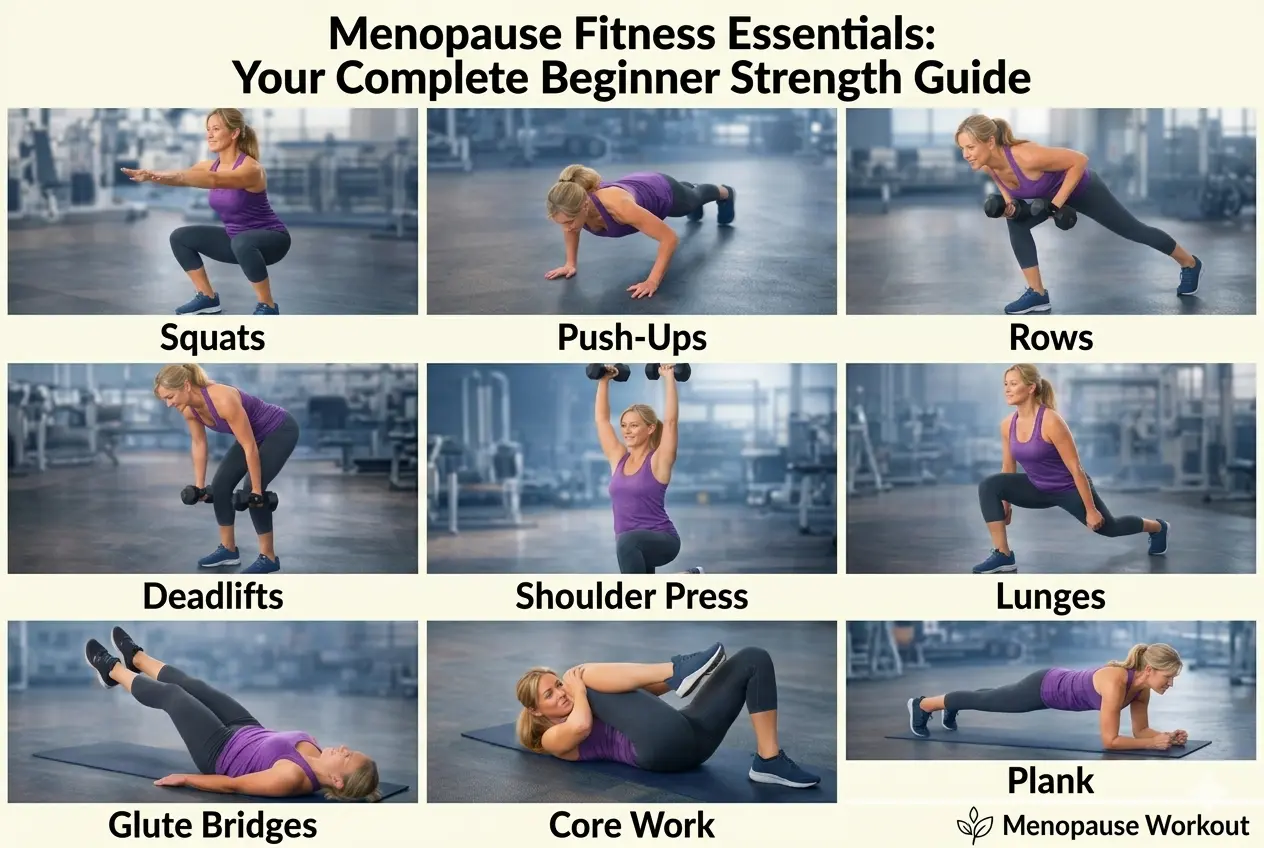
Squats
One of the most effective full-body exercises.
Benefits:
- Targets glutes, thighs, and core
- Boosts metabolism significantly
- Improves functional strength
👉 Squats are essential for strength training for menopause weight gain
Lunges
Lunges are great for balance, coordination, and muscle activation.
Benefits:
- Strengthens legs and glutes
- Improves stability
- Enhances calorie burn
👉 Also joint-friendly when done correctly.
Deadlifts
Deadlifts are highly effective for the posterior chain (back, glutes, hamstrings).
Benefits:
- Builds total-body strength
- Improves posture
- Engages core deeply
👉 One of the best exercises for long-term fat loss in menopause strategy
Upper Body Exercises
Many women skip upper-body training, but this is a mistake.
Upper body muscles contribute significantly to:
- Overall metabolism
- Strength and posture
- Daily functionality
Push-Ups
A powerful bodyweight exercise.
Benefits:
- Strengthens chest, shoulders, arms
- Engages core
- Improves endurance
👉 Can be modified (wall or knee push-ups) for beginners.
Dumbbell Rows
Essential for back strength and posture.
Benefits:
- Strengthens upper back
- Improves posture (important after 40)
- Reduces risk of injury
Shoulder Press
Targets the shoulders and upper arms.
Benefits:
- Builds upper body strength
- Improves stability
- Enhances overall muscle tone
Core Exercises (For Stability & Belly Fat Support)
Let’s clarify something important:
👉 You can’t “spot reduce” belly fat
But you can:
- Strengthen core muscles
- Improve posture
- Support overall fat loss
Planks
Simple but extremely effective.
Benefits:
- Strengthens the entire core
- Improves stability
- Supports spine health
Leg Raises
Targets the lower abdominal muscles.
Benefits:
- Builds core strength
- Improves control and balance
How to Structure These Exercises for Best Results
Knowing exercises isn’t enough—you need structure.
Basic Workout Format
👉 A simple, effective session:
- 5–6 exercises per workout
- 2–3 sets per exercise
- 8–12 repetitions
Full Body vs Split Training
Full Body (Best for Beginners):
- Train all major muscle groups in one session
- 2–3 times per week
Split Routine (Intermediate):
- Lower body + upper body on separate days
- 3–4 sessions per week
How to Progress Safely
Progression is key to results.
👉 Gradually:
- Increase weights
- Improve form
- Add repetitions
Avoid:
- Jumping to heavy weights too quickly
- Ignoring proper technique
Key Takeaway
The goal is not to do more exercises. The goal is to do the right exercises consistently
Because:
👉 Metabolism drives fat loss
👉 Muscle drives metabolism
Beginner Strength Training Plan for Women Over 40 (Simple & Effective)
If you’ve been searching for a beginner workout plan for menopause weight gain, the biggest challenge is usually not motivation—it’s confusion.
👉 What exercises? How many days? How intense?
The goal here is simple:
Give you a clear, sustainable plan that works with your body—not against it
Weekly Strength Training Plan (Beginner-Friendly)
Here’s a simple structure designed for maximum results with minimum overwhelm:
| Day | Workout Focus | Exercises |
|---|---|---|
| Monday | Full Body | Squats, Push-ups, Rows, Planks |
| Wednesday | Lower Body | Lunges, Deadlifts, Glute Bridges |
| Friday | Upper Body + Core | Shoulder Press, Rows, Core Work |
| Other Days | Active Recovery | Walking, stretching, light activity |
👉 Why this works:
- Allows recovery between sessions
- Supports hormone balance
- Prevents burnout and injury
This structure is ideal for strength training for women over 40 at home or in the gym
How Many Sets and Reps Should You Do?
One of the most common questions is:
👉 “Am I doing enough—or too much?”
Start with:
- 2–3 sets per exercise
- 8–12 repetitions per set
Why this range works:
- Supports muscle growth (key for metabolism)
- Avoids excessive strain
- Ideal for beginners
👉 This is the most effective range for resistance training for women over 40
How to Progress Without Injury
Progression is where real results happen—but it must be controlled.
Focus on:
- Improving form first
- Gradually increasing weight
- Adding reps slowly
Avoid:
- Jumping to heavy weights too quickly
- Training with poor technique
- Ignoring recovery
👉 Consistency beats intensity every time.
Joint-Friendly Modifications for Beginners
One of the biggest concerns for women over 40 is joint pain or injury.
And rightly so, because hormonal changes can affect:
- Joint stability
- Collagen levels
- Recovery speed
Smart modifications:
- Start with bodyweight exercises
- Use light dumbbells or resistance bands
- Reduce range of motion if needed
- Focus on slow, controlled movements
Example adjustments:
- Squats → Partial squats or chair squats
- Push-ups → Wall or incline push-ups
- Lunges → Static lunges (less strain on knees)
👉 These adjustments make strength training:
- Safer
- More sustainable
- More effective long-term
How Long Should Each Workout Be?
You don’t need long sessions.
👉 30–45 minutes is enough
Ideal structure:
- 5–10 min warm-up
- 20–30 min strength training
- 5 min cool-down
👉 This makes it realistic for busy schedules and supports workouts for women over 40, weight loss
Signs Your Plan is Working
Instead of focusing only on the scale, look for:
Early signs (2–4 weeks):
- Increased energy
- Better sleep
- Improved strength
Mid-term (4–8 weeks):
- Reduced fat (especially around the belly)
- Improved muscle tone
- Better posture
Long-term:
👉 Sustainable fat loss + improved metabolism
Key Takeaway
You don’t need a complicated plan. You need a repeatable system you can stick to
Because:
👉 Consistency builds muscle
👉 Muscle improves metabolism
👉 Metabolism supports fat loss
Home vs Gym — Where Should You Do Strength Training After 40?
One of the most common questions women ask is:
👉 “Do I need a gym to lose menopause weight?”
The short answer:
👉 No. But the best option depends on your goal, comfort, and consistency.
Strength Training at Home (Best for Beginners & Consistency)
For many women starting, home workouts feel more accessible and less intimidating.
And that’s important—because consistency matters more than location.
Benefits of training at home:
- No travel time
- More privacy and comfort
- Flexible schedule
- Lower cost
👉 This makes it ideal for those looking for strength training for women over 40 at home
What you need to get started:
You don’t need a full gym setup.
Start with:
- Bodyweight exercises
- A pair of light dumbbells
- Resistance bands
👉 That’s enough to begin a complete beginner workout plan for menopause
Limitations of home workouts:
- Limited resistance (progression can slow)
- Fewer equipment options
- Harder to track progress objectively
👉 Best for:
- Beginners
- Busy schedules
- Building initial consistency
Gym Training (Best for Faster Results & Progression)
If your goal is to accelerate fat loss and muscle gain, the gym offers clear advantages.
Benefits of gym training:
- Access to heavier weights
- More exercise variety
- Easier progressive overload
- Structured environment
👉 This is why many advanced programs for resistance training women over 40 recommend gym-based workouts.
Common concerns (and reality):
“I feel intimidated.”
👉 Completely normal—but most gyms are more welcoming than expected
“I don’t know how to use machines.”
👉 Start simple: dumbbells + basic movements are enough
👉 Best for:
- Faster body transformation
- Long-term progression
- Structured training
Which Option is Better for Menopause Weight Gain?
Instead of asking which is better, ask:
👉 Which one will you stick to consistently?
Because:
- A perfect gym plan done occasionally
- A simple home routine done consistently
💡 Practical recommendation:
Start with:
👉 Home workouts (to build habit + confidence)
Then progress to:
👉 Gym training (for better results over time)
Hybrid Approach (The Most Effective Strategy)
Many women find the best results with a mix:
- 2–3 days home workouts
- Occasional gym sessions (optional)
👉 This balances:
- Convenience
- Progression
- Sustainability
You don’t need the “perfect environment” to start.
👉 You need:
- A simple plan
- Consistency
- Gradual progression
Because in the long run:
Where you train matters less than how consistently you train
This workout plan is just one part of a bigger system—see how it fits into a comprehensive approach to menopause weight gain solutions.
Common Mistakes to Avoid in Strength Training After 40
Even with the right plan, a few small mistakes can completely stall your progress.
These are not obvious—but they’re exactly why many women feel that strength training isn’t working.
Doing Too Much Cardio Alongside Strength Training
It’s tempting to combine:
- Long walks
- Extra cardio sessions
- Strength workouts
But this often backfires.
👉 Excess cardio:
- Increases cortisol
- Slows recovery
- Interferes with muscle growth
Fix:
Prioritize strength training. Use cardio as support not the main strategy.
Lifting Too Light (No Real Stimulus)
Many women stick to very light weights out of fear.
But here’s the reality:
👉 Without enough resistance, your muscles won’t adapt.
Fix:
- Choose weights that feel challenging by the last reps
- Focus on progressive overload
Skipping Recovery (Underrated Mistake)
Muscle isn’t built during workouts—it’s built during recovery.
Without proper recovery:
- Progress slows
- Fatigue increases
- Hormonal balance worsens
Fix:
- Take rest days seriously
- Prioritize sleep (7–8 hours)
Inconsistency (The Biggest Progress Killer)
This is the most common issue.
👉 Starting strong → stopping → restarting
This disrupts:
- Muscle building
- Metabolism
- Habit formation
Fix:
- Keep workouts simple
- Stick to 2–3 days/week consistently
Key Takeaway
Hormonal changes during menopause can often lead to a loss of skin elasticity, making textural issues more noticeable. While building muscle is the priority, many women find that combining targeted resistance moves with specific strategies for reducing cellulite on arms helps restore a firmer, smoother appearance as they manage their weight
Strength Training + Diet — The Missing Link for Fat Loss
Even the best workout plan won’t work without proper nutrition.
Because after 40:
👉 Your body needs support to build muscle and burn fat
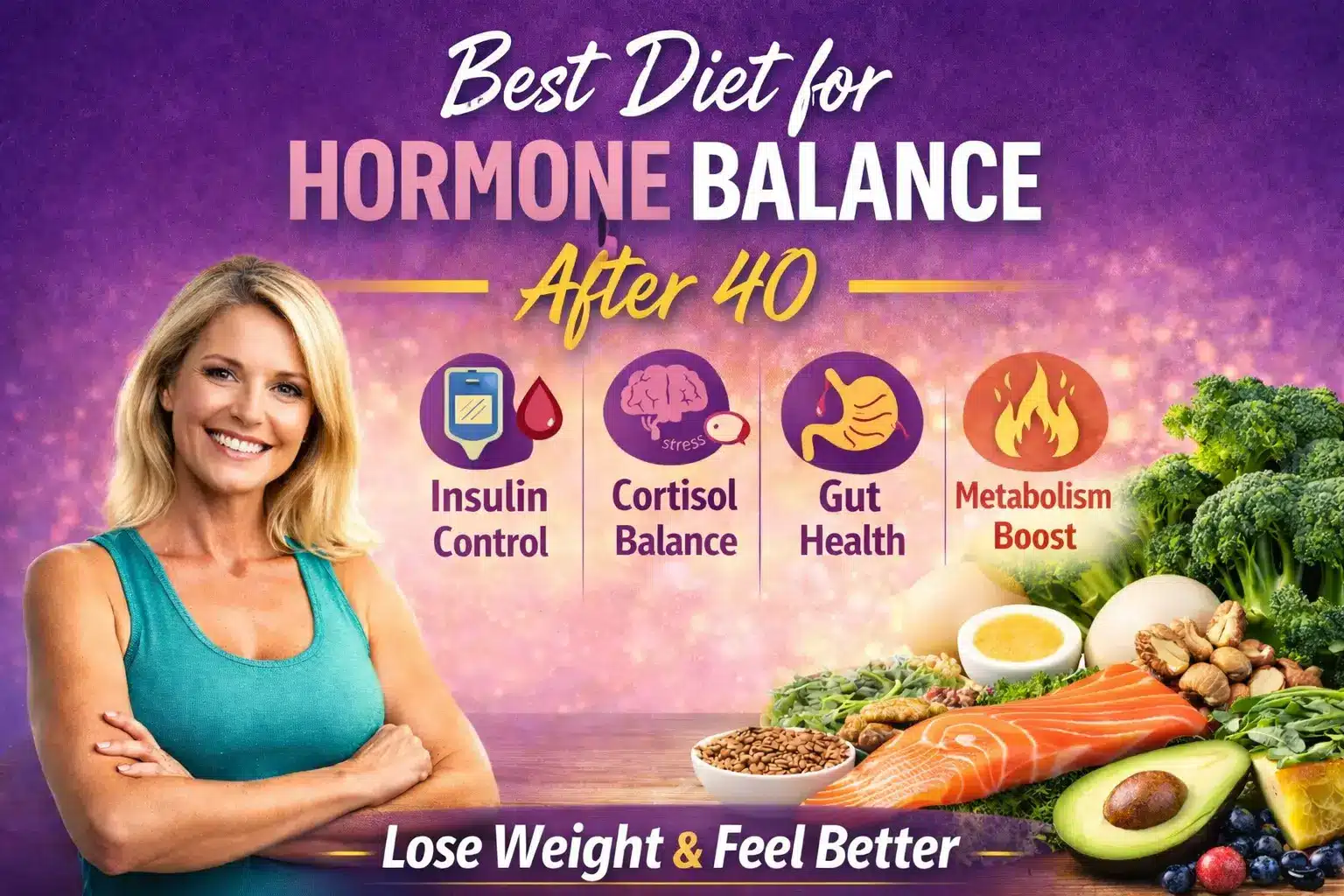
To maximize results, combine this structured strength training plan for menopause weight gain with hormone balance diet to boost metabolism and accelerate fat loss.
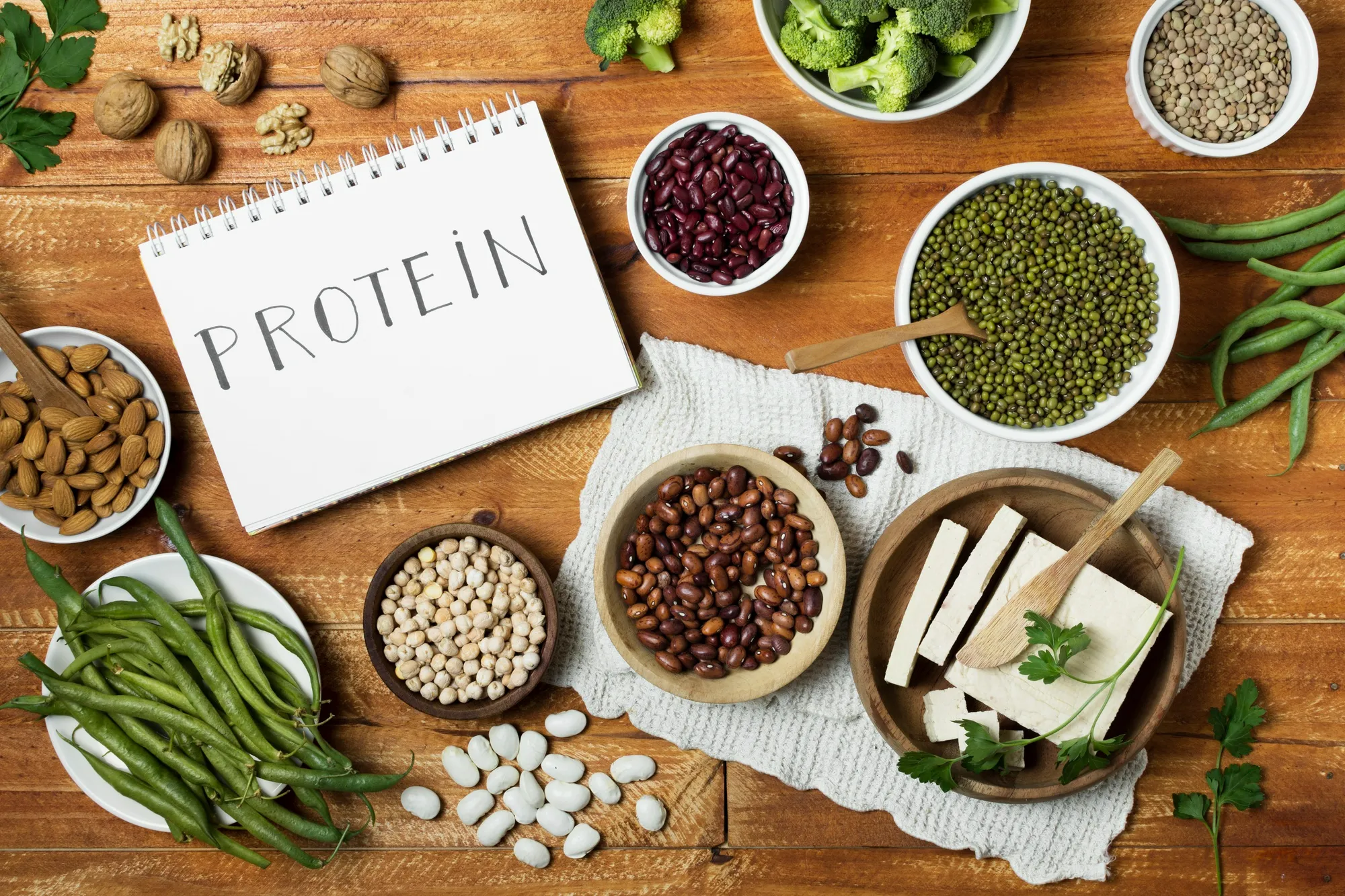
Why Muscle Needs Protein to Burn Fat
Muscle repair requires protein.
Without enough protein:
- Muscle growth slows
- Metabolism stays low
- Fat loss becomes harder
👉 This is why protein intake becomes critical after 40
Simple guideline:
- Include protein in every meal
- Focus on whole sources (eggs, chicken, legumes, yogurt)
Strength Training + Diet = Real Results
When combined:
- Strength training → builds muscle
- Proper diet → fuels recovery
👉 Together they:
- Improve metabolism
- Reduce fat (especially belly fat)
- Support long-term weight management
Strength training works best when supported by proper nutrition, learn what to eat in our guide on the best diet for hormone balance after 40.
Frequently Asked Questions
Does strength training reduce menopause belly fat?
Yes. Strength training helps reduce menopause belly fat by increasing muscle mass and improving metabolism.
Unlike cardio, it also improves insulin sensitivity and hormonal balance, which are key drivers of abdominal fat storage after 40.
👉 Over time, this leads to more effective and sustainable fat loss.
How often should women over 40 do strength training?
For most women, 2–4 sessions per week is ideal.
This allows:
Enough stimulus for muscle growth
Proper recovery (critical after 40)
👉 Consistency matters more than frequency.
Should I do cardio before or after strength training for menopause weight loss?
👉 After strength training (or on separate days).
Doing cardio first can:
Reduce strength performance
Increase fatigue
Limit muscle-building benefits
👉 Prioritize strength training, then add light cardio if needed.
Can beginners start strength training at home?
Bodyweight exercises
Resistance bands
Light dumbbells
👉 A simple home routine is enough to begin strength training for menopause weight gain
How long does it take to see results from strength training after 40?
Most women notice:
2–4 weeks: improved energy and strength
4–8 weeks: visible fat loss and muscle tone
8+ weeks: significant body composition changes
👉 Results depend on consistency, nutrition
Is strength training safe for women over 40 with joint pain?
Start with:
Low-impact movements
Controlled form
Gradual progression
👉 Strength training can actually improve joint stability and reduce pain over time.
Final Thoughts — The Strategy That Actually Works After 40
By now, the pattern should be clear:
👉 What worked before 40 no longer works the same way.
But that doesn’t mean results are out of reach.
The new formula is simple:
- Strength training → rebuilds metabolism
- Smart nutrition → supports muscle
- Consistency → drives results
👉 This is how you:
- Reduce menopause belly fat
- Improve strength and energy
- Regain control over your body