

As winter approaches and temperatures drop, many people find it harder to stay active. Outdoor workouts become uncomfortable, the daylight becomes shorter, and staying warm often feels more appealing than staying fit. But this seasonal shift doesn’t mean you must compromise your health or fitness goals. With the right winter home workouts, you can maintain strength, flexibility, and energy levels all from the comfort of your home, without stepping into a gym.
Indoor fitness is more than just a convenience. It plays a significant role in keeping your immunity strong, improving your mood, and preventing the sluggishness that often comes during cold months. In this guide, you’ll find a complete no-gym winter workout plan, expert-approved winter exercise tips, and practical routines designed for all fitness levels to help you stay fit indoors no matter how cold it gets outside.
Why Winter Home Workouts Should Be a Priority
Cold Weather Reduces Physical Activity
Research consistently shows that physical activity declines sharply during winter months. Some studies note up to a 20–30% drop in daily movement levels, primarily due to colder temperatures, increased indoor time, and reduced motivation.
This makes indoor winter workouts essential for staying consistent.
Indoor Workouts Strengthen Immunity and Improve Mood
Exercise enhances immune function by increasing the circulation of white blood cells and boosting natural killer cell activity crucial during flu season. Winter is also known for mood dips due to low sunlight exposure, but exercise releases serotonin and endorphins that help counter seasonal fatigue.
You Don’t Need a Gym Or Equipment
A major advantage of winter home workouts is their accessibility. You don’t need fancy machines or large spaces. With simple bodyweight exercises for winter, you can stay strong, maintain endurance, and keep your metabolism active indoors.
Warm-Up Routine: Preparing Your Body for Indoor Exercise
Why Warm-Ups Matter More in Winter
Muscles become stiffer in cold weather, increasing the risk of strains or injuries. A proper warm-up raises your heart rate, increases body temperature, and prepares your joints for movement.
5-Minute Dynamic Warm-Up
Do each movement for 30–40 seconds:
- Arm circles (forward and backward)
- Marching in place
- Leg swings
- Torso rotations
- Light jogging or side steps
This prepares your body for any winter home workout plan and reduces the risk of injury.
What to Avoid in Cold-Weather Warm-Ups
Avoid long static stretching before your workout. Save deeper holds for your cooldown.
Full No-Gym Winter Workout Plan (Beginner to Intermediate)
You can do this no-gym winter workout plan in a small room, your living room, or even beside your bed. It covers strength, cardio, flexibility, and core conditioning.
1. Full-Body Strength Circuit
Strength training builds muscle, improves metabolism, and enhances overall fitness, especially when cold weather slows daily movement.
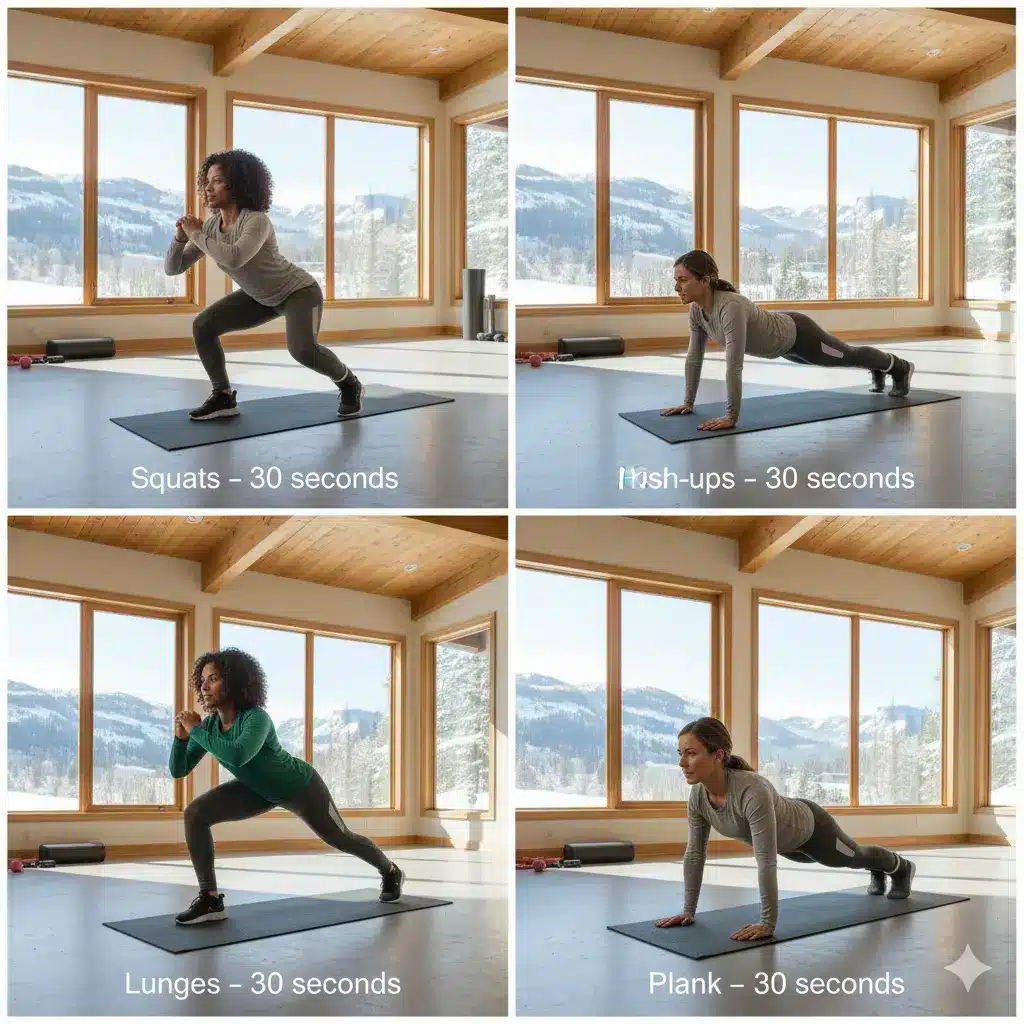
Strength Circuit (3 Rounds)
- Squats – 30 seconds
- Push-ups (regular or wall push-ups) – 30 seconds
- Lunges – 30 seconds
- Plank – 30 seconds
- Rest – 30 seconds
Repeat 3 times.
Why This Helps You Stay Fit Indoors
These bodyweight exercises for winter target every major muscle group, helping to maintain strong joints and posture.
Modifications
- Use a chair for assisted squats
- Do knee push-ups
- Reduce the plank to 20 seconds if needed
2. Indoor Cardio Routine (Equipment-Free)
Cardio boosts heart health and body warmth while burning calories. It’s one of the best ways to combat winter sluggishness.
10-Minute Indoor Cardio Workout
Do each for 45 seconds, rest 15 seconds:
- High knees
- Marching in place
- Butt kicks
- Side steps with arm swings
- Fast feet
- Step-ups (if you have stairs)
This counts as effective indoor cardio workouts without needing a treadmill or cycle.
Why Indoor Cardio Works in Winter
Cardio increases core temperature, improves circulation, and helps fight winter fatigue.
3. Core-Focused Routine
Your core stabilizes your entire body important in winter when you might be sitting more frequently.
5–7 Minute Core Routine
- Bicycle crunches – 30 seconds
- Glute bridges – 30 seconds
- Heel taps – 30 seconds
- Reverse crunch – 30 seconds
- Plank shoulder taps – 30 seconds
Benefits of a Strong Core in Winter
Core training improves balance, mobility, and back health, helping you avoid stiffness caused by sitting or staying indoors too long.
Low-Impact Indoor Exercises for Beginners
Low-impact workouts are gentle on the joints and suitable for all fitness levels, especially during cold temperatures.
1. Winter Yoga Flow
Yoga warms up your body, stretches tight muscles, and improves flexibility.
Suggested Winter Flow
- Cat-cow
- Downward dog
- Low lunge
- Seated fold
- Gentle twists
This supports your entire home workout plan for winter.
Moreover, if you want to strengthen your core while staying indoors during colder months, adding a few stability-ball movements can make home workouts more engaging and effective.
2. Pilates for Strength and Mobility
Pilates movements strengthen the core, hips, and lower back while improving posture.
Beginner Pilates Routine
- Leg lifts
- Pelvic curl
- Toe taps
- Side-lying leg raises
These moves pair perfectly with winter home workouts to enhance stability.
3. Indoor Walking Workouts
Walking indoors is one of the easiest ways to stay fit indoors without equipment.
Indoor Walking Plan
- Brisk walk inside your room (5 minutes)
- Side steps (1 minute)
- Backward walk (1 minute)
- Fast march (1 minute)
- Repeat 2 rounds
Indoor walking can burn calories and improve heart function even in small spaces.
Winter Exercise Tips to Stay Consistent
Staying consistent with winter home workouts can be challenging, especially when motivation dips during colder months. But with the right strategies, you can turn indoor fitness into an enjoyable routine that lasts all winter.
Create a Cozy Workout Corner
Designing a small, dedicated workout space can dramatically improve focus.
Use:
- A warm light
- A yoga mat
- A pair of light dumbbells (optional)
- Music or a workout playlist
A welcoming space encourages you to stay fit indoors even on the coldest days.
Follow a Simple Schedule
Plan your workouts at the same time each day to build habit consistency.
Morning routines help energize the day, while evening workouts can reduce stress.
Use Mini Workouts Throughout the Day
If long workouts feel overwhelming, break them into:
- 5-minute strength sessions
- 3-minute stretching breaks
- 10-minute walk-around-the-house sessions
These “movement snacks” help maintain daily activity levels and strengthen your no-gym winter workout plan.
Healthy Indoor Habits to Support Your Winter Fitness
Exercise alone isn’t enough. Pairing your winter home workouts with healthy habits ensures better results and improved immunity.
Hydration Still Matters in Winter
People tend to drink up to 20% less water during winter because they feel less thirsty, but hydration affects every aspect of performance:
- Joint lubrication
- Muscle recovery
- Energy levels
- Immunity
Sip warm water or herbal teas throughout the day to stay hydrated.
Hydration isn’t just about what you drink; it’s about how your body retains that moisture during the colder months. Alongside these indoor exercises, ensure you have a solid winter skin care routine. This will protect your skin’s barrier from the dehydrating effects of winter air.
Eat Immunity-Boosting Foods
Indoor workouts pair well with nutrient-rich foods like:
- Citrus fruits
- Spinach
- Yogurt
- Ginger
- Garlic
- Honey
- Moringa
These foods strengthen immunity and support winter recovery.

Prioritize Deep Sleep
Sleep helps:
- Restore muscles
- Balance hormones
- Improve mood
- Support immunity
Aim for 7–8 hours of uninterrupted sleep to maximize recovery, support deep sleep cycles, and get the full benefits of your winter home workout routine. You can also use a sleep cycle calculator to plan better sleep and wake times.
Conclusion
Staying active during the colder months doesn’t require gym access or expensive equipment. With simple and effective winter home workouts, you can maintain strength, energy, mood, and immunity all season long.
From indoor cardio workouts to yoga flows, strength circuits, and core routines, every movement helps your body stay strong during winter’s challenges. Pair these workouts with warm-ups, healthy eating, hydration, and proper sleep to create a complete winter wellness system.
Whether you’re a beginner or someone returning to fitness, this no-gym winter workout plan gives you everything you need to stay committed and consistent. The key is to start small, stay warm, and build momentum — right inside your home.
Want more winter wellness tips?
Visit HealthEndure for guides, remedies, and immunity-boosting insights all season long.
Frequently Asked Questions
What are the best winter home workouts for beginners?
The best beginner-friendly options include bodyweight exercises for winter like squats, wall push-ups, glute bridges, marching in place, and simple yoga flows.
How can I stay fit indoors during winter without equipment?
You can use indoor winter workouts like strength circuits, cardio routines, Pilates, yoga, and walking workouts — all effective and equipment-free.
How long should my no-gym winter workout plan be each day?
Aim for 20–30 minutes daily or break it into short 5–10 minute mini sessions if you prefer.
What are the best winter exercise tips for staying motivated?
Create a cozy workout corner, follow a set schedule, use movement snacks, and track your progress for consistency.
Is indoor cardio enough to maintain fitness in winter?
Yes — movements like high knees, marching, butt kicks, stair steps, and side steps are excellent indoor cardio workouts that improve endurance and burn calories