

You wake up with tight hips. You spend all day hunched at a desk. After your workout, your shoulders feel stiff, or you catch yourself moving like your body doesn’t quite “work” the way it used to.
Sound familiar?
That constant stiffness and frustration, whether it’s from sitting too long, training hard, or simply aging, has a root cause: poor mobility. Fortunately, the good news is that it doesn’t take hours in the gym to fix it.
That’s where this 10-minute full-body mobility routine comes in: quick enough to commit to daily, yet meaningful enough to actually change how your body feels and moves.
Mobility vs. Flexibility: What’s the Difference?
Mobility is not just about stretching farther. Whereas, mobility is active control through the joint’s full range of motion — strength + movement combined. Mobility is what allows you to move with grace, power, and, most importantly, without pain. By committing to a daily mobility routine, you aren’t just getting “bendy”; you are bulletproofing your joints.
Flexibility, on the other hand, is how far a muscle can stretch passively. This is how far you could move, and mobility is how well you control that movement. Building both gives you better movement quality and joint health. Flexibility without mobility is often where injuries happen.
Why 10 Minutes? The “Sweet Spot” for Consistency
Ten minutes might seem short, but that brevity is actually the secret to making this a daily habit. 10 minutes is a “low-friction” habit. It’s short enough to do while your coffee is brewing or during a lunch break, but long enough to signal to your nervous system that it’s time to relax and open up.
It’s long enough to:
- Target every major joint group,
- Improve movement quality,
- Reduce stiffness and pain — but
- Short enough that it never feels like a chore.
Consistency beats intensity here — that’s the magic of a daily mobility routine.
Why You Need a Daily Mobility Practice
Mobility isn’t a luxury; it’s foundational. Here’s why dedicating just ten minutes a day to a full-body mobility routine will dramatically elevate how you move and feel.
Injury Prevention — Keep Your Joints “Greased”
Just like an engine needs oil, your joints need movement. Daily mobility helps maintain:
- Joint lubrication,
- Balanced muscle control, and
- Healthy ranges of motion.
That alone dramatically reduces injury risk — especially if you train hard or sit all day.
Better Posture: Counteracting the “Desk Hunch”
Sitting shortens hip flexors, rounds shoulders, and stiffens the spine. Regular mobility work actually counteracts:
- Forward head posture,
- Rounded shoulders,
- Tight hips that pull the pelvis forward.
This helps undo damage from long hours at a desk and makes your body feel lighter and more centered.
Improved Performance: Max Out Your Moves
Poor mobility limits strength and performance. Better mobility means:
- Deeper, safer squats,
- Cleaner hip hinge patterns,
- More powerful lifts,
- Easier daily tasks like bending, lifting, or reaching.
And this matters whether you’re a serious athlete or just want to feel good in your body.
The Mind-Body Link: Movement Reduces Stress
Mobility routines aren’t just physical. Movement, especially slow, controlled, mindful movement, helps reduce physical tension and stress. It’s a daily reset that helps calm your nervous system and leaves you feeling physically and mentally lighter.
(For more on stress and movement, see our Stress Management post.)
The 10-Minute Full Body Mobility Routine (Step-by-Step)
Routine At-A-Glance
| Time | Region | Move |
|---|---|---|
| 2 min | Spine & Core | 1. Cat-Cow Stretch 2. Thread the Needle |
| 4 min | Hips | 3. 90/90 Hip Switches 4. World’s Greatest Stretch 5. Deep Squat with Prying |
| 2 min | Shoulders & Upper Body | 6. Scapular CARs 7. Wall Slides |
| 2 min | Lower Chain & Balance | 8. Combat Stretch 9. Single-Leg RDL (Bodyweight) |
A. Spine & Core (2 Minutes)
A mobile spine is the foundation of every movement.
Move 1: Cat-Cow Stretch (1 Minute)
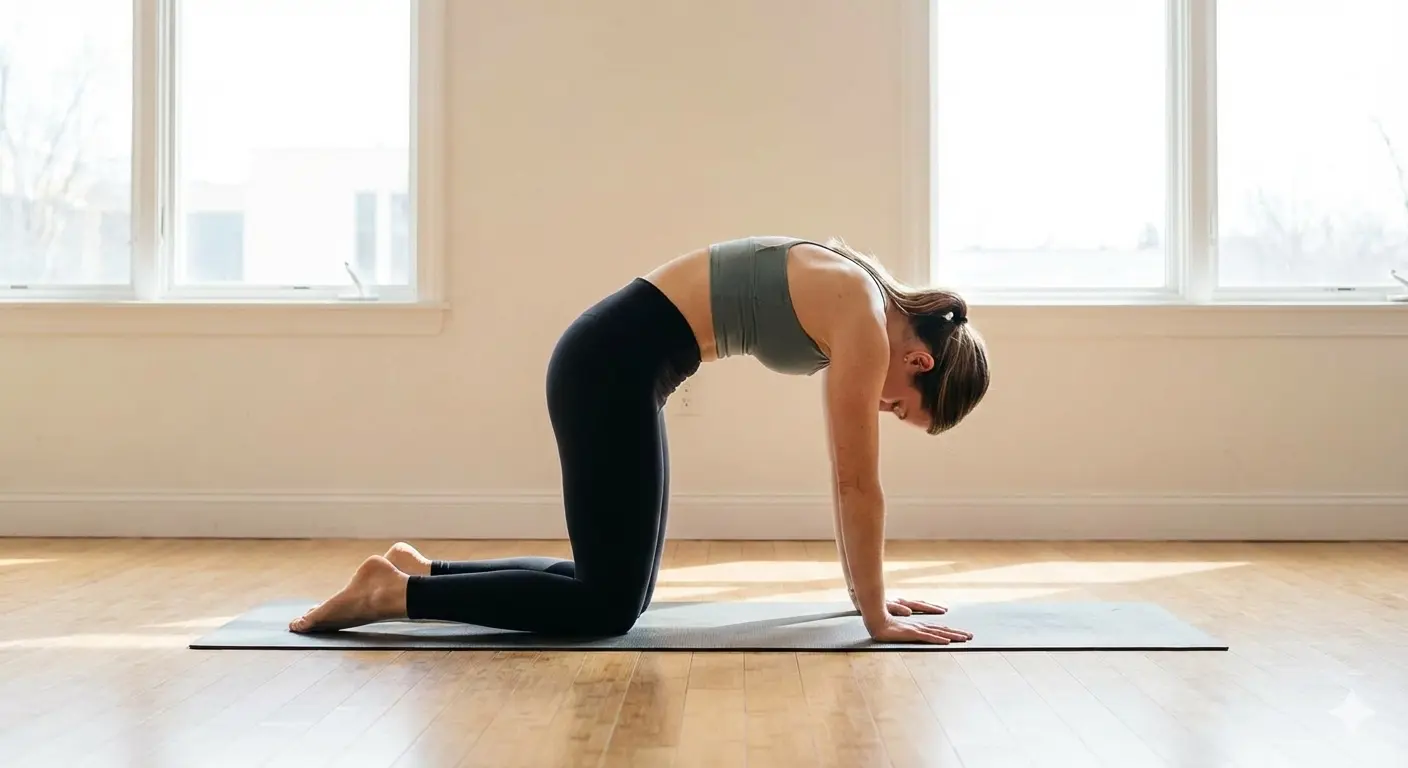
- Start on hands and knees.
- Inhale: arch your spine down (cow).
- Exhale: round your spine up (cat).
- Move slowly and rhythmically.
Focus: Feel each segment of your spine move — this increases spinal mobility and core motor control.
Move 2: Thread the Needle (1 Minute)

- From all fours, reach one arm under your body while rotating your chest.
- Hold for a second at the end range.
- Alternate sides.
Focus: Improves thoracic rotation, critical for posture and shoulder health.
B. The “Hip Mobility Deep Dive” (4 Minutes)
Your hips are the powerhouse of the body — they influence how you walk, squat, lift, sit, and even breathe. Poor hip mobility is one of the top contributors to low-back pain, tight hamstrings, knee pain, and posture issues. It’s also one of the most searched fitness concerns online, which is why this section of the routine goes deeper.
Modern lifestyles — desk work, long driving hours, constant sitting force the hips into a flexed, shortened position for most of the day. Meanwhile, strength training (squats, deadlifts, running) tightens the hip flexors and overworks the glutes without giving them space to move freely. That’s why this daily hip mobility routine not only stretches the hips but also improves rotation, stability, and joint control from every angle.
Below are three essential hip mobility exercises designed to unlock your hips safely and effectively in under five minutes.
Move 3: 90/90 Hip Switches (1 Minute)
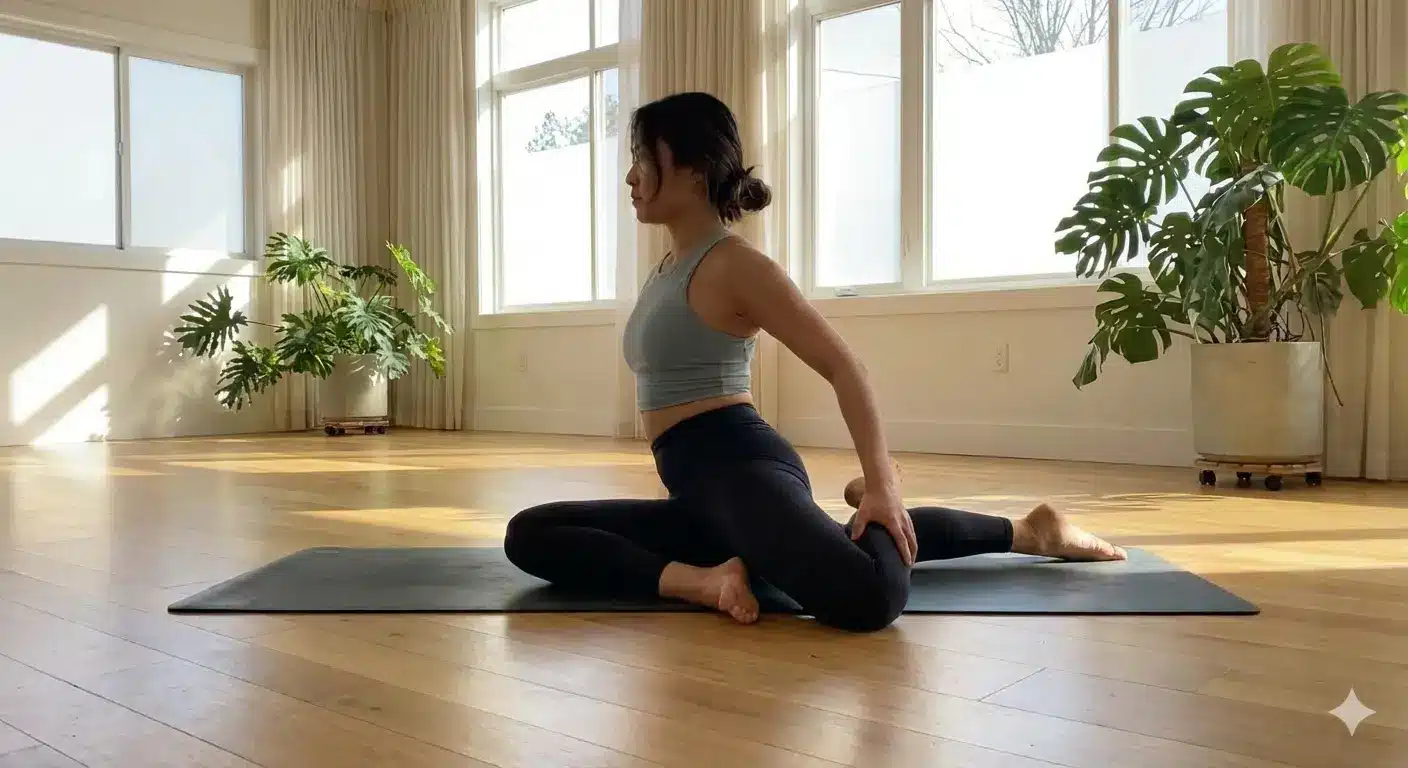
This is one of the most effective exercises for improving hip rotation — a range many people don’t even realize they’ve lost until they try this move.
How to Do It
- Sit on the floor with your front leg at a 90° angle and your back leg at 90°.
- Keep your chest tall and your spine neutral.
- Without using your hands (if possible), rotate your knees to the opposite side.
- Switch from side to side with control, not momentum.
Why This Move Matters
The hips move in three planes — flexion/extension, abduction/adduction, and internal/external rotation. Most exercises and stretches only train the first two, leaving rotation neglected.
Poor hip rotation can cause:
- Difficulty sitting cross-legged
- Pinching during squats
- Tight lower back
- Knees collapsing inward
- IT band tension
By improving both internal and external rotation, the 90/90 position helps reset hip mechanics, improves squat depth, and supports healthier running and lifting mechanics.
Coaching Tips for Maximum Benefit
- Keep both sit bones grounded to improve stability.
- Move slowly — treat this as “mobility strength,” not stretching.
- If you feel pinching, slightly adjust the angles until it disappears.
- Engage your core to keep the pelvis stable while the hips move.
Beginner Modification
Place one hand behind you to support the spine. This makes rotation smoother without overloading the hips.
Advanced Variation
Lean forward over the front leg to increase external rotation stretch, then lean toward the back leg for internal rotation work.
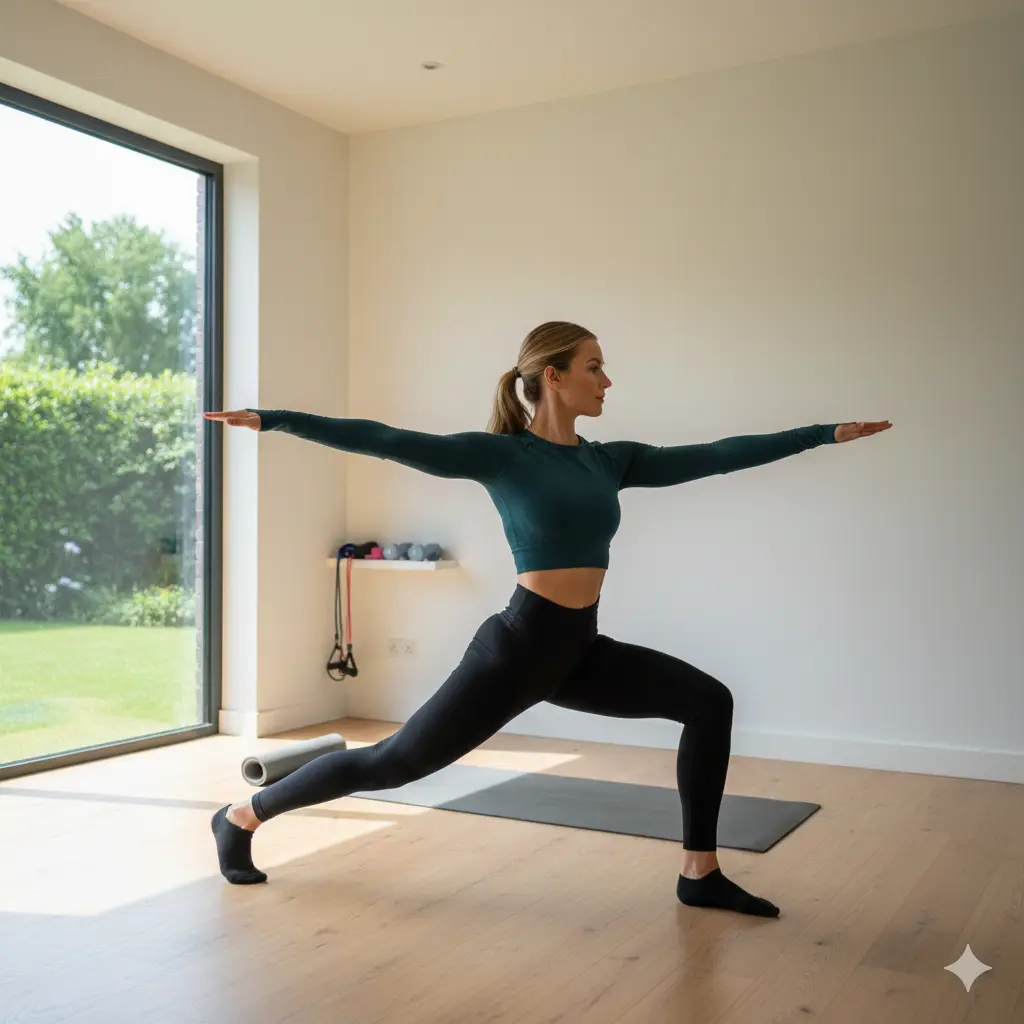
Move 4: The World’s Greatest Stretch (1.5 Minutes)
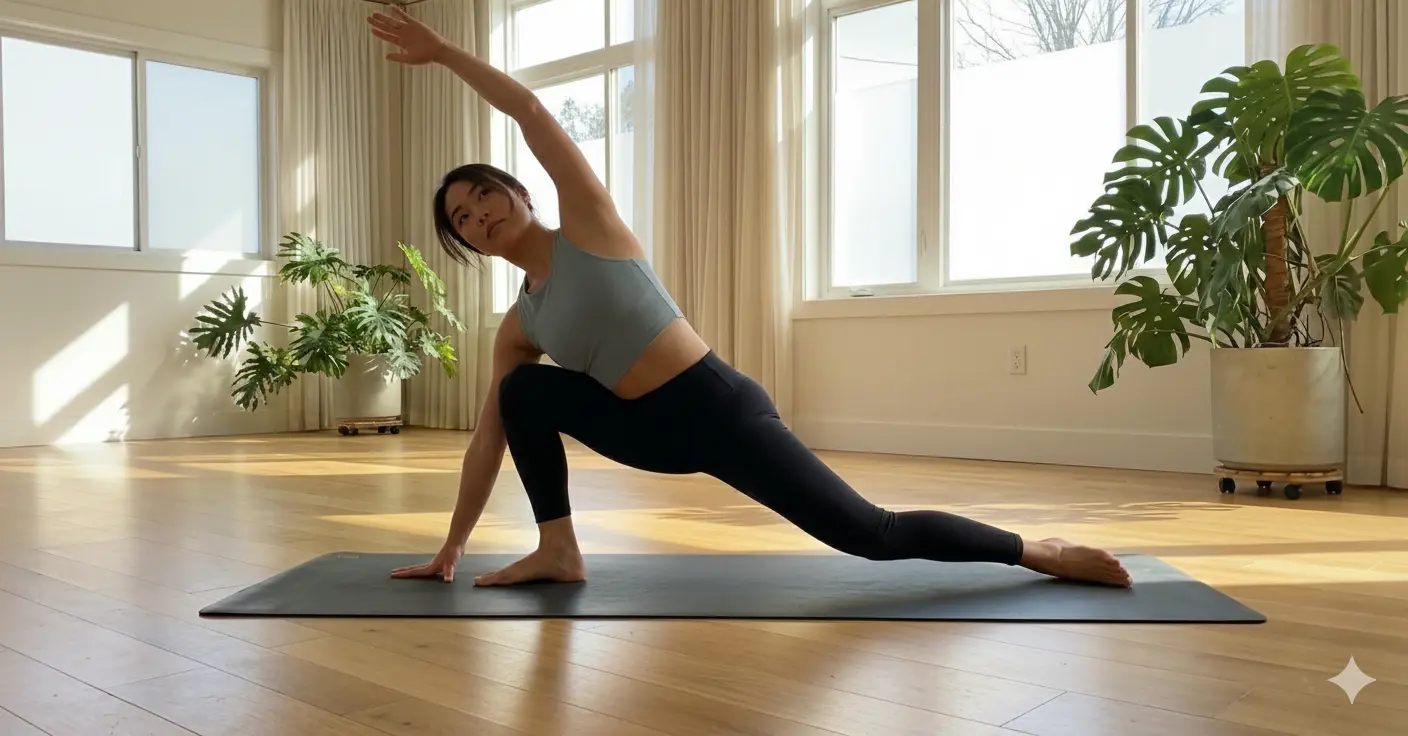
This stretch earns its dramatic name for a reason — it targets nearly everything contributing to hip tightness: hip flexors, hamstrings, adductors, glutes, and the thoracic spine.
How to Do It
- Begin in a high plank.
- Step your right foot outside your right hand.
- Drop your back knee if needed.
- Keep your front foot flat and hips square.
- Rotate your upper body toward the front knee and reach your arm overhead.
- Return to plank and switch sides.
Why This Move Matters
This stretch effectively combines:
- Hip flexor mobility (targets psoas & rectus femoris)
- Groin/adductor opening
- Thoracic rotation
- Glute activation
- Hamstring lengthening
All in a single flowing movement.
Tight hip flexors are one of the biggest reasons people struggle with:
- Lower back pain
- Rounded posture
- Limited squat depth
- Knee pain
- Tight glutes that “won’t activate.”
This stretch also integrates the front and back of the hip, creating a 360° mobility effect.
Pro Tips
- Don’t rush the rotation — breathe into it.
- Keep your front knee aligned over the toes.
- If your hips are very tight, elevate your hands on yoga blocks or a sturdy chair.
Why It Works So Fast
This movement teaches the hip to move in synergy with the spine and core — something that gets lost with long periods of sitting. Restoring this synergy is one of the fastest ways to feel “open” and move freely again.
Move 5: Deep Squat with Prying (1.5 Minutes)
Sitting in a deep squat is a natural human resting position — yet many adults can’t access it due to hip limitations, ankle stiffness, or tight adductors.
This pry squat restores that natural mobility.
How to Do It
- Stand with feet slightly wider than hip-width.
- Lower into a deep squat, keeping your heels on the floor.
- Bring your elbows inside your knees.
- Gently push your knees outward to open the hips.
- Shift side to side and rock forward/back.
- Keep chest tall and breathing relaxed.
What This Move Unlocks
This single movement improves:
- Hip flexion
- Adductor (inner thigh) mobility
- Glute activation
- Ankle dorsiflexion
- Pelvic floor control
- Lower back decompression
It also naturally improves the mechanics of squats, lunges, deadlifts, and daily movement patterns like bending or lifting.
Coaching Tips
- Keep your heels grounded — if they lift, widen your stance slightly.
- Stay tall — don’t collapse the chest toward the floor.
- Use your elbows as “levers” to create space.
- Move gently — this is a prying motion, not aggressive stretching.
Beginner Modification
Hold onto a door frame, pole, or couch for support if balance is difficult. This helps you access the squat position without falling backward.
Advanced Variation
Add gentle rotations:
- Place one hand on the floor.
- Reach the opposite arm overhead.
- Switch sides.
This trains hip mobility and thoracic spine rotation together.
Why This Hip Mobility Routine Is So Effective
This trio — 90/90 switches, World’s Greatest Stretch, and Prying Squat — covers all major hip functions:
| Hip Function | Exercise |
|---|---|
| Internal Rotation | 90/90 Switches |
| External Rotation | 90/90 Switches |
| Hip Flexor Length | World’s Greatest Stretch |
| Hamstring Length | World’s Greatest Stretch |
| Adductor Mobility | Prying Squat |
| Hip Flexion Depth | Prying Squat |
| Rotational Control | All Three |
| Glute Activation | Prying Squat + 90/90 |
This makes it a complete hip mobility routine, suitable for daily practice, warm-ups, cooldowns, or recovery days.
It targets the reasons most people experience:
- Tight hips
- Pinching during squats
- Hip flexor stiffness
- Glute inactivity
- Lower-back compensation
And because the routine is only a few minutes long, it fits effortlessly into your daily mobility routine, boosting long-term joint health without overwhelming your schedule
C. Shoulders & Upper Body (2 Minutes)
Upper body mobility keeps you moving pain-free overhead and helps fix the slouched posture many of us develop.
Move 6: Scapular CARs (1 Minute)
- Stand tall with arms by your side.
- Slowly rotate your shoulder joint in controlled arcs.
- Keep movement slow and muscular.
Focus: Improves shoulder stability and mobility at the same time.
Move 7: Wall Slides (1 Minute)
- Face a wall and press forearms up.
- Slide arms up and down while keeping elbows and wrists touching the wall.
- This opens the chest and activates the upper back muscles.
D. Lower Chain & Balance (2 Minutes)
Mobility isn’t only about joints — it’s also about control, balance, and integrated movement.
Move 8: Combat Stretch (1 Minute)
- Kneel on one knee.
- Gently press forward into the front leg.
- Focus on ankle dorsiflexion and calf mobility.
This helps with mobility in the lower chain and prepares your body for locomotion.
Move 9: Single-Leg RDL (Bodyweight) (1 Minute)
- Stand tall.
- Hinge from your hips, lifting one leg behind you.
- Keep chest tall and hips square.
- Return and switch legs.
Benefits: Enhances balance, glute activation, and hamstring mobility.
How to Make it a “Realistic” Habit
The best routine is the one you actually do — not the one you intend to do. Here’s how to make this daily mobility routine stick.
Time Blocking: Fit It Into Your Day
You don’t need a perfect morning to mobilize. Try these daily triggers:
- Right after you wake up
- During a work break
- Before/after a workout
- While coffee brews
Ten minutes may seem insignificant, but consistency compounds.
Habit Stacking: Make It Automatic
Whenever you habit stack — attaching a new behavior to an existing one — you make it easier to follow through.
Example: “After I pour my coffee in the morning, I do my 10-minute mobility routine.”
Or: “Before my shower at night, I open my body with this mobility session.” No gym. No equipment. Just movement.
Frequently Asked Questions (FAQ)
Can I Do This Every Day?
Absolutely! This mobility routine is low-intensity and designed for daily use. Unlike heavy workouts, mobility work is gentle and can actually help recovery. Fitness pros often recommend mobility sessions daily, or at least 5 times a week.
Should I Do This Before or After My Workout?
Here’s a simple rule:
Before workouts: Do this routine as a dynamic warm-up.
After workouts: Slow it down and focus on movement quality.
You can also split it — a quick 5-minute warm-up and a 5-minute cooldown.
When Will I See Results?
Consistency is key — most people start feeling:
Looser movement,
Less stiffness,
Improved posture,
…within 2–4 weeks of daily practice. Results vary, but the “daily movement habit” principle is where transformation starts.
Conclusion
Ten minutes. That’s all it takes to start moving better than you have in years. This 10-minute full-body mobility routine isn’t about becoming a contortionist. It’s about feeling free in your body:
- Less pain,
- Better posture,
- More power in your workouts, and
- Movement you feel confident in.
Take the Next Step Toward Your Mobility Goals
If you’re serious about your health and performance, join the thousands of people who make mobility a daily habit.
Ready to fuel this movement? Check out our guide on Beginner Nutrition Goals to optimize your recovery and support better mobility. Your body will thank you — for all 23 hours outside these 10-minute sessions.