


Winter is a beautiful season, but for your skin, it is a battlefield. The moment temperatures drop, the air inside your home heats up, creating a perfect storm for the destruction of your skin barrier. That familiar tight, itchy, and flaky feeling is your skin crying out for help.
If you are constantly battling dry patches and applying layer after layer of moisturizer without seeing lasting relief, you’re not alone. The problem isn’t that your moisturizer is bad; it’s that you might be using the wrong product at the wrong time, or failing to address the internal and environmental factors that are causing the damage.
The good news is that learning how to fix extremely dry skin in winter doesn’t require dozens of expensive products. It requires understanding a simple, two-part strategy: Barrier Repair (what you put on) and Internal/Environmental Stabilization (your habits and surroundings).
In this ultimate guide, we cut through the confusion to provide the definitive winter skin care routine backed by dermatological science. You will learn the crucial difference between simple hydration and true moisture sealing, and discover the powerhouse ingredients that guarantee relief.
The Root Cause: Why Winter Air Destroys Your Skin Barrier
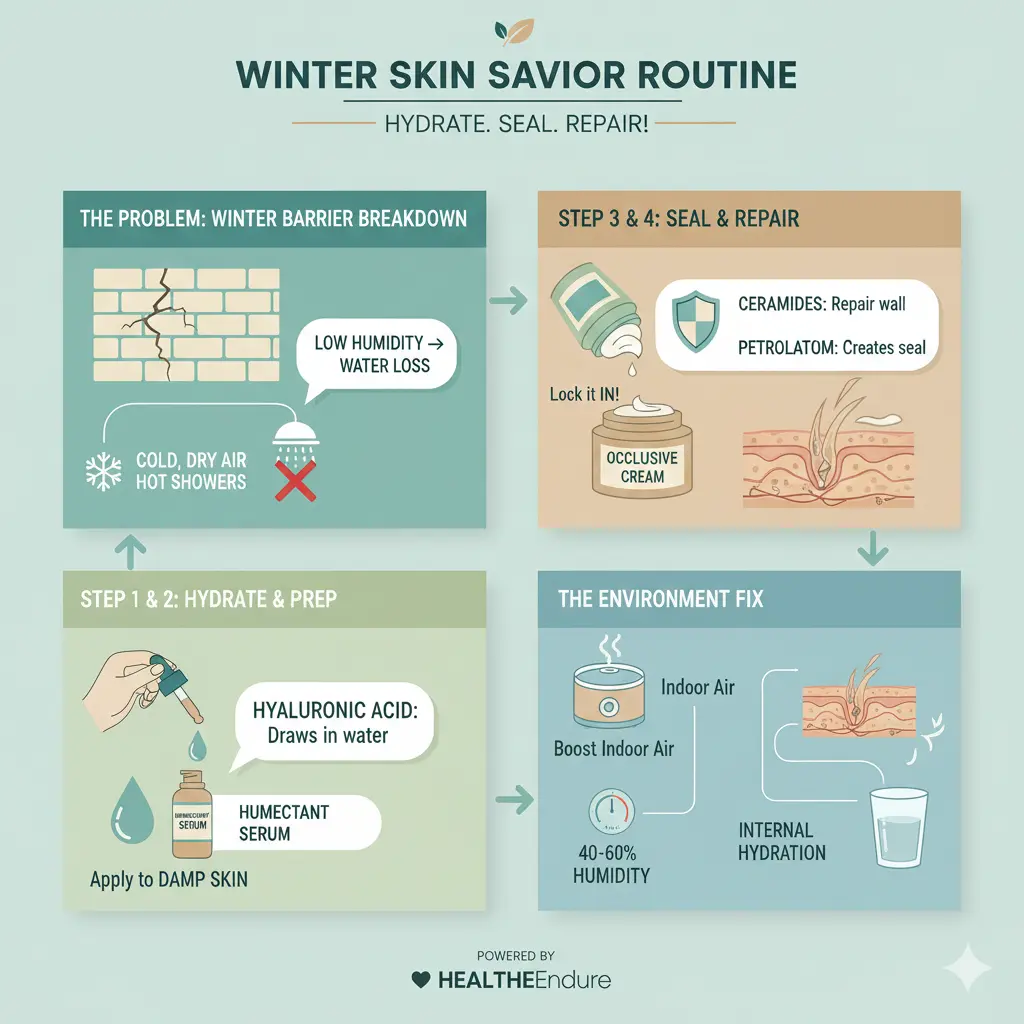
To effectively combat winter dryness, you must understand the enemy: Transepidermal Water Loss (TEWL).
Your skin is protected by a thin layer called the skin barrier, which acts like a wall of bricks and mortar. The “bricks” are your skin cells, and the “mortar” is made of lipids (fats), primarily ceramides and cholesterol.
In winter, three factors aggressively attack this barrier:
- Low Humidity: Cold air holds less moisture. When you step outside, the cold, dry air actively pulls water from your skin.
- Forced-Air Heating: The moment you go inside, your furnace kicks on, sucking moisture from the interior air. This low-humidity environment causes rapid water evaporation from your skin.
- Hot Showers: While comforting, hot water strips away your natural protective oils and severely depletes the natural ceramides that hold your barrier together.
The result is a cracked, compromised skin barrier, leading to the condition you know as extremely dry skin in winter.
The Essential Winter Skin Care Routine (4 Steps to Barrier Repair)
The key to a successful winter skin care routine is not adding more products, but structuring your existing products in a specific order to layer moisture and seal it in. This four-step framework focuses entirely on repair and prevention.
Step 1: Gentle Cleansing and Avoiding Barrier Damage
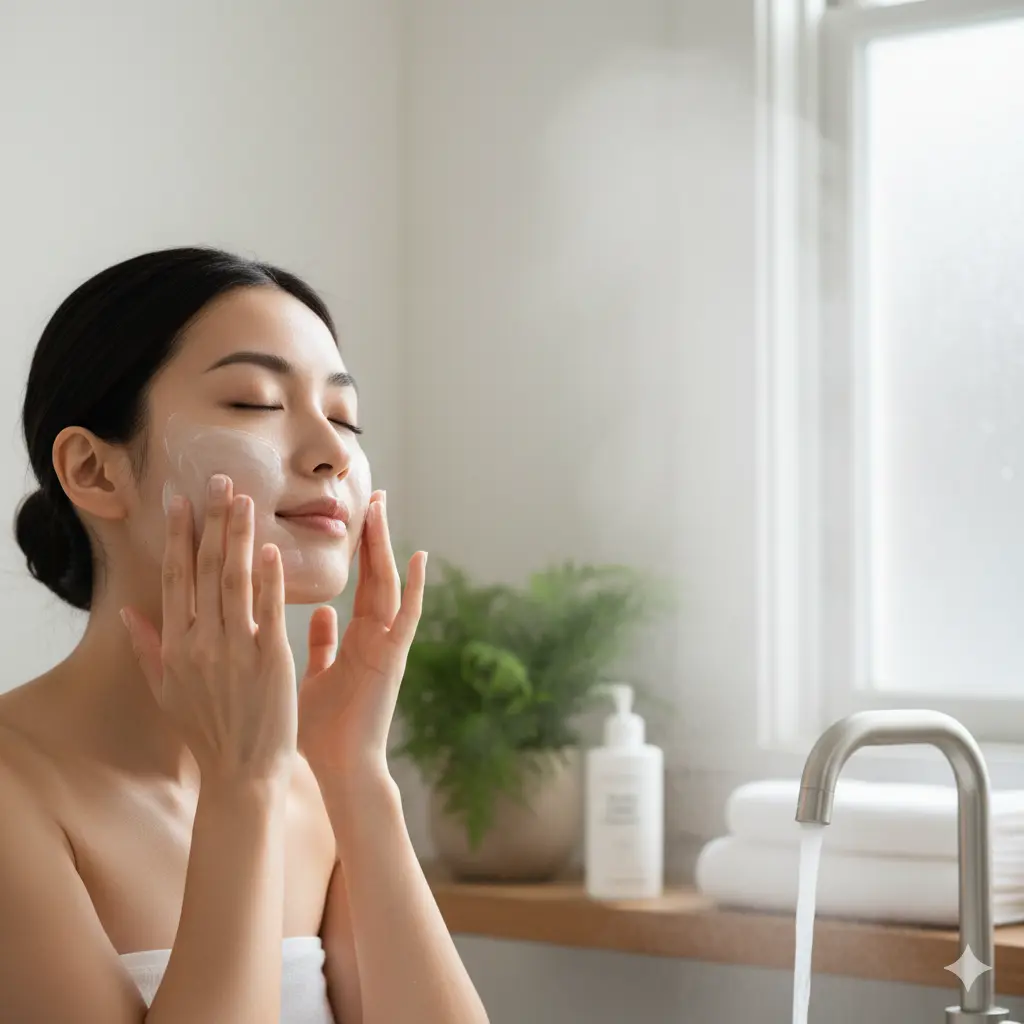
The repair process begins by eliminating the damage. Your summer cleanser, which might be effective at removing excess oil, is likely stripping your skin bare in winter.
Actionable Advice:
- Ditch the Foam: Avoid cleansers that create a high foam, as they often contain harsh surfactants (like sulfates) designed to aggressively strip oil. For dry skin, this strips away necessary lipids.
- Opt for Cream/Oil Cleansers: Switch to a hydrating cream, lotion, or oil-based cleanser. These formulations clean the skin gently while leaving behind a thin, moisturizing film.
- Keep it Lukewarm: While tempting, limit showers to 5-10 minutes and use lukewarm water. The hotter the water, the more severely you deplete your barrier lipids, leading to immediate dryness. Immediately after patting dry, move to Step 2.
Step 2: The Hydration Boost: Maximizing Hyaluronic Acid Benefits for Dry Skin
After cleansing, your skin needs immediate, direct hydration. This is where humectants—ingredients that attract and bind water—come into play. The superstar humectant is Hyaluronic Acid (HA).
The Science of HA: A single gram of hyaluronic acid can hold up to six liters of water. When applied topically, it pulls moisture from the environment and the deeper layers of the skin, plumping the skin cells.
How to Maximize Hyaluronic Acid Benefits for Dry Skin:
- Apply to Damp Skin: This is critical. Because HA pulls moisture, applying it to fully dry skin causes it to pull moisture from the deeper layers of your skin, ironically causing more dehydration over time. Always apply your HA serum immediately after washing or misting your face while the skin is still visibly damp.
- Layering: Apply your HA serum first, allowing it to soak into the skin and saturate the surface layers with water, preparing the skin for the ultimate seal in Step 3.
Step 3: The Ultimate Seal: Understanding Occlusives vs Humectants
This is the single most important step for true winter relief. Understanding the functional difference between occlusives vs humectants determines whether your moisturizer is actually working or just evaporating.
Humectants (like HA) add water, but occlusives create a physical barrier to prevent that water from escaping.
| Moisturizer Type | Function | Key Ingredients | Ideal Use in Winter |
| Humectants | Attract and bind water. Hydrates. | Hyaluronic Acid, Glycerin, Aloe Vera, Urea. | Applied first, to saturate the skin with moisture. |
| Occlusives | Create a physical, sealing barrier. Moisturizes. | Petrolatum, Mineral Oil, Dimethicone, Squalane. | Applied last to lock in all the hydration and prevent TEWL. |
The Role of Ceramides for Dry Skin:
Within this sealing layer, ceramides play a structural role. They are naturally occurring lipids that fill the gaps between your skin cells, ensuring the barrier is strong and intact. When searching for a powerful winter cream, always look for formulas containing ceramides for dry skin, as they actively rebuild the structure that cold air has depleted.
The Golden Rule: Always layer your Humectants (HA serum) before your Occlusive moisturizer (heavy cream).
Step 4: Protection During the Day (SPF is Non-Negotiable)
While UV rays are less intense in winter, they are still present and can be amplified by snow reflection. A damaged, dry skin barrier is highly vulnerable to UV damage. Ensure your daily routine concludes with a broad-spectrum SPF to prevent further inflammation and barrier damage.
Internal and Environmental Solutions (Stopping Dry Skin at the Source)
The most effective winter skin care routine addresses the external and internal factors that cause the problem, not just the symptoms.
Many people confuse these two separate conditions, which leads to using the wrong products.
- Skin Dryness (Lack of Oil): A skin type that lacks sufficient natural oils (sebum). Solution: Occlusives and rich moisturizers.
- Skin Dehydration (Lack of Water): A temporary skin condition that lacks water. Solution: Humectants and internal hydration.
Your skin can be both dry (lack oil) and dehydrated (lack water) in the winter. Focus on treating the dehydration internally by monitoring your water intake. Remember, your thirst mechanism is often dulled in the cold, so you must be proactive about drinking water, herbal tea, and consuming electrolytes.
The Environmental Fix: Humidifier for Dry Skin
This is one of the most cost-effective and crucial steps in how to fix extremely dry skin in winter. If your indoor temperature is 70°F (21°C) and the outside air is freezing, your indoor air humidity can drop below 10%—drier than the Sahara Desert.
- The Humidifier Solution: Investing in a humidifier for dry skin, especially in your bedroom, where you spend 7-9 hours per night, dramatically reduces TEWL.
- Optimal Setting: Keep the humidity level between 40% and 60%. Anything higher can encourage mold growth, and anything lower means your skin is losing water rapidly. Clean your unit regularly to prevent the spread of bacteria.
Expert-Reviewed: The Best Lotions for Winter Dry Skin
When selecting the best lotions for winter dry skin, move beyond simple brand names and look at the ingredient deck. A superior winter lotion must contain a strategic combination of all three lipid types needed for barrier repair: Occlusives, Humectants, and Ceramides.
Essential Ingredients to Search For:
- Barrier Rebuilders (Ceramides): Look for Ceramides AP, NP, or EOP. These replenish the “mortar” in your skin barrier.
- Ultimate Occlusives: Look for Petrolatum (Petroleum Jelly) or Dimethicone. While sometimes vilified, Petrolatum is scientifically the most effective occlusive for preventing water loss.
- Core Humectants: Look for Glycerin, followed by various forms of Hyaluronic Acid.
Product Recommendations by Function:
| Category | Ingredient Focus | Best for… |
| Ultimate Barrier Repair Cream | High Ceramides + Heavy Occlusives (Petrolatum/Mineral Oil) | Severely cracked, itchy, flaky skin (Apply to body at night). |
| Hydrating Serum | High Hyaluronic Acid + Glycerin | Applied to the face/neck first, under any heavy cream. |
| Targeted Relief Balm | High concentration of Occlusives (e.g., Aquaphor, Vaseline) | Small, stubborn patches on hands, elbows, and heels. |
FAQ: Simple Dry Skin Remedies at Home
What simple dry skin remedies at home really work?
While high-tech ingredients are powerful, several simple, affordable home remedies can provide significant relief:
Oatmeal Baths: Colloidal oatmeal has natural anti-inflammatory properties. Soaking in an oatmeal bath can soothe itchiness and redness associated with severely dry skin.
Coconut Oil as an Occlusive: Pure coconut oil can function as a great budget-friendly occlusive, sealing in moisture. It should be applied over a lightweight humectant moisturizer.
Cutting Alcohol-Based Products: Alcohol and witch-hazel-based toners are highly drying. Remove these from your winter skin care routine immediately.
Should I use my regular exfoliant in the winter?
No. Excessive or harsh exfoliation strips away the protective outer layer, making your skin barrier more vulnerable to the cold, dry air. Reduce physical exfoliation (scrubs) to once a month, and switch to gentle chemical exfoliants (like lactic acid) once a week, applied only on moisturized skin.
Will drinking more water fix my extremely dry skin?
Drinking more water primarily helps with dehydrated skin (lack of water in the body). If your skin barrier is compromised, that water will still evaporate rapidly. You need the Occlusives and Ceramides to hold the water you drink inside your skin. A combined strategy is necessary.
Conclusion: Lock in the Moisture, Defeat the Flake
To summarize how to fix extremely dry skin in winter, you must move beyond simply moisturizing. You need a strategic winter skin care routine built around two principles: Add Water (with Humectants like Hyaluronic Acid) and Seal It In (with Occlusives and barrier repair ingredients like Ceramides).
By implementing the 4-step routine, using a humidifier for dry skin indoors, and choosing lotions based on their ingredient science, you can finally restore your skin’s natural barrier. Stop fighting winter and start enjoying healthy, comfortable skin today.